
Gut Health: Salads, juices, and stomach cramps: Doctor explains how ‘clean’ diet is wrecking guts |
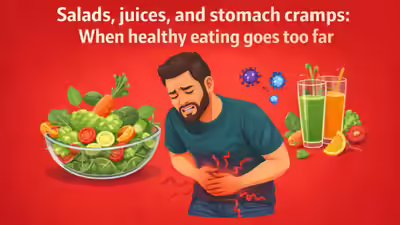
“Clean eating” sounds harmless, right? Fresh salads, smoothie bowls, cutting out sugar, saying no to anything processed. Scroll through social media and it feels like the gold standard of health. But here’s the thing, for some people, all that “clean” food is actually messing with their gut.More raw veggies. More fibre. More fermented foods. Less carbs. Less dairy. Less anything that looks fun. On paper, it sounds perfect. But in real life? Some guts are struggling. Bloating, constant gas, stomach cramps, unpredictable bathroom runs. And the person is confused because they’re technically doing everything “right.”
The illusion of eat this, not that
A 2025 Northwestern study found that juice-only spiked inflammatory bacteria, gut permeability vs. whole plants (beneficial shifts). The study looked at how drinking vegetable and fruit juices affects the tiny communities of bacteria living in our mouth and gut, which together are called the microbiome. Researchers asked 14 healthy adults to follow one of three short diets for three days: a juice-only diet, a diet of juice plus regular food, and a plant-based whole-food diet. Before and after the diets, scientists collected saliva, cheek swabs, and stool samples to see which bacteria were present and how the mix changed. The main finding was that certain bacteria linked with simple sugar metabolism and inflammation increased in number, while some “good” bacteria decreased. The researchers suggest that removing fiber (which normally feeds beneficial bacteria) and replacing it with high-sugar juices may disrupt microbial balance, especially in the mouth, which could have implications for oral and overall health.MayoClinic says not everyone should follow a non-gluten diet. “Unless you have celiac disease or gluten intolerance, you don’t need to avoid gluten, which is the protein found in wheat, barley and rye. Whole-wheat products have great nutritional benefits, including essential B vitamins and fiber,” it warns.
“Clean diet” reflects on restriction
“Across urban clinics, a noticeable pattern is emerging. Young, health-conscious adults, often in their twenties and thirties, are seeking help for bloating, irregular bowel habits, acid reflux, and unexplained fatigue. They exercise regularly, avoid smoking, drink sparingly, and describe their diets as “very clean,” says Dr. Venugopal Pareek, Senior Consultant – GI Laparoscopic, Bariatric & Robotic Surgeon, CARE Hospitals, Banjara Hills, Hyderabad.“That phrase, however, has gradually shifted in meaning. For many, it no longer implies balanced nutrition. Instead, it reflects restriction. Gluten is eliminated without a diagnosis of celiac disease. Dairy removed despite no confirmed lactose intolerance. Carbohydrates cut so drastically that fibre intake becomes inconsistent. Entire food groups avoided because of social media trends rather than medical advice,” he says highlighting the changed diet pattern. “The human gut does not respond well to dietary extremes. It depends on diversity.”
Biological and psychological impact
Dr. Venugopal Pareek then explains how this illusion around clean diet affects biological and psychological health.The large intestine houses trillions of microbes that help digest complex carbohydrates, produce short-chain fatty acids, regulate inflammation, and maintain the gut barrier. When diets become overly narrow, especially low in varied plant fibres, microbial diversity declines. Reduced diversity has been linked to bloating, constipation, increased gut sensitivity, and even low-grade inflammation. Ironically, an overly “clean” pattern of eating can disturb the very balance it aims to protect.There is also a psychological dimension that deserves attention. Labelling foods as “clean” or “toxic” can create quiet anxiety around meals. Heightened vigilance during eating alters the gut–brain axis, the bidirectional communication between the central nervous system and the digestive tract. Stress can increase gastric acid secretion, alter bowel motility, and amplify pain perception. The symptoms are not imagined; they are physiologically mediated.Another common issue is excessive fibre loading. Salads twice daily, multiple seed mixes, protein bars fortified with inulin or chicory root, and high-dose fibre supplements may sound beneficial. Yet fermentable fibres, known as FODMAPs, can produce significant gas and distension, particularly in individuals with visceral hypersensitivity or irritable bowel syndrome. Fibre is protective, but more is not always better.
Symptoms to note
Certain signs often suggest that “clean eating” has crossed into gut stress rather than gut support:
- Persistent bloating despite avoiding “trigger” foods
- Increasing food eliminations without symptom resolution
- Alternating constipation and loose stools after high-fibre meals
- Feeling physically anxious before eating
- Reliance on supplements or detox products to “fix” digestion
- Social withdrawal around shared meals
Diet’s role in disease prevention
While a wrong understanding about diet can affect gut health, this does not diminish the role of diet in preventing metabolic disease, fatty liver, cardiovascular illness, or colorectal cancer, says Dr. Venugopal Pareek and he adds that nutrition remains foundational to long-term health. The problem arises when balance gives way to rigidity.For those dealing with ongoing digestive discomfort despite strictly “clean” eating, it may be time to pause and reconsider a few basic principles:Reintroduce dietary variety gradually rather than eliminating additional foods.Try to get fibre from a wide mix of real foods, fruits, vegetables, lentils, whole grains, and fermented staples, rather than leaning too heavily on fortified or packaged options.Avoid self-diagnosing gluten or dairy intolerance without appropriate evaluation. Unnecessary restriction may alter gut adaptation over time.Pay attention to the emotional climate around meals. Chronic stress can manifest as digestive distress.Resilient digestive systems tend to thrive on consistency, diversity, and moderation. A sustainable way of eating leaves room for cultural foods, shared meals, and the occasional indulgence, without guilt, and without the body pushing back in subtle, uncomfortable ways.In many cases, gut health improves not with further purification, but with thoughtful rebalancing.Medical experts consulted This article includes expert inputs shared with TOI Health by: Dr. Venugopal Pareek, Senior Consultant – GI Laparoscopic, Bariatric & Robotic Surgeon, CARE Hospitals, Banjara Hills, HyderabadInputs were used to explain how the idea of healthy eating is going far and is affecting the biological and psychological health of individuals.