Eid ul-Fitr 2026 Moon Sighting timing Live Update : When will Eid be celebrated in India, Saudi Arabia and UAE ?
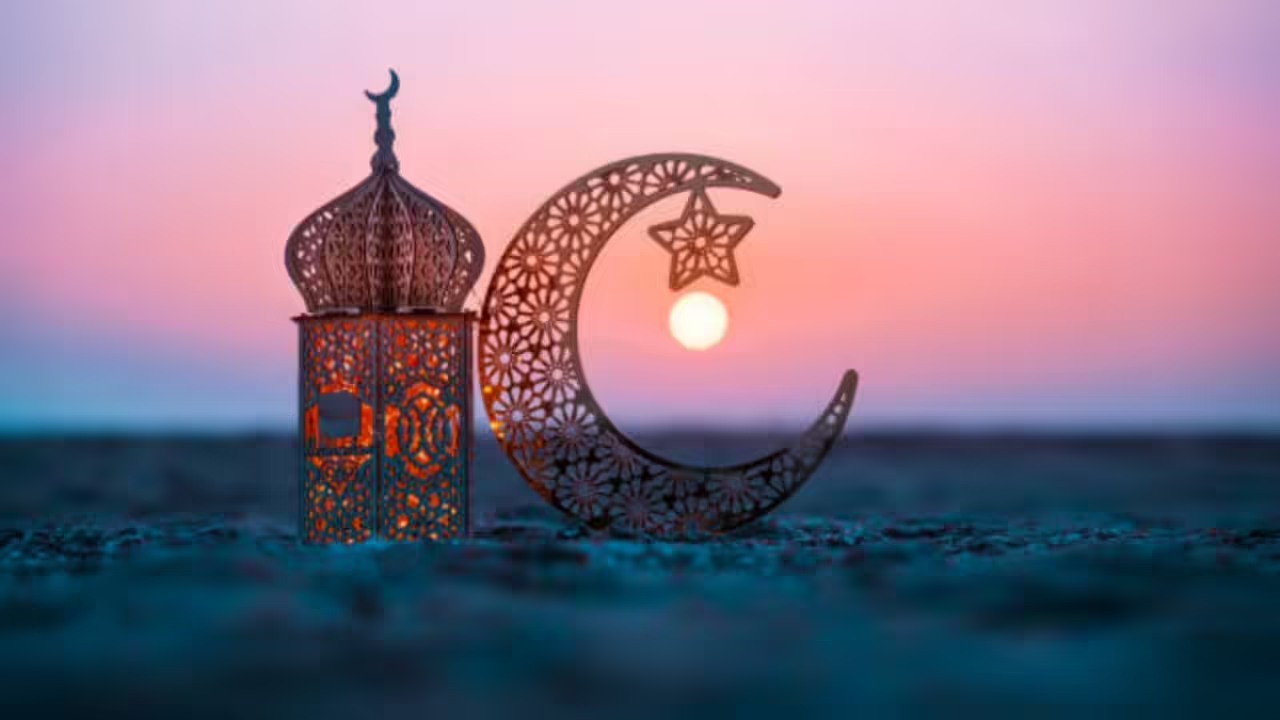
As Wednesday, March 18, corresponds to the 29th day of Ramadan in the year 1447 of the Islamic (Hijri) calendar, the anticipation for Eid has reached its peak. The determination of Eid depends on the sighting of the crescent moon, which signals the beginning of Shawwal, the tenth month in the Islamic lunar calendar. In Saudi Arabia, the Supreme Court has called upon citizens to observe the sky on the evening of March 18 in hopes of sighting the Shawwal crescent. If the moon is seen, Eid will be celebrated the following day.
However, in countries like India, the celebration may differ slightly due to geographical and atmospheric variations affecting moon visibility. Typically, India observes Eid a day after Saudi Arabia, as the crescent moon may not be visible there at the same time. If the moon is sighted in India on March 19, Eid will be celebrated on March 20; otherwise, it will be observed a day later. This variation highlights the localized nature of moon sighting in Islamic tradition.
Eid ul-Fitr, often referred to as the “Festival of Breaking the Fast,” is observed on the first day of Shawwal and may extend for up to three days of festivities. The festival begins with a special congregational prayer held in mosques or open grounds, followed by acts of charity, known as Zakat al-Fitr, which ensure that even the less fortunate can partake in the celebrations.
The essence of Eid lies in togetherness, compassion, and gratitude. Families gather to share meals, exchange greetings, and strengthen bonds. Traditional dishes, sweets, and new clothes add to the festive spirit. Importantly, Eid also serves as a reminder of the values cultivated during Ramadan—self-discipline, empathy, and devotion.
The significance of moon sighting underscores the deep connection between faith and natural cycles in Islam. Each new month begins only after the crescent is physically sighted, reinforcing a sense of unity and shared experience among Muslims worldwide. Ultimately, Eid ul-Fitr is not just a celebration, but a culmination of spiritual effort and a joyful return to everyday life with renewed faith and purpose.