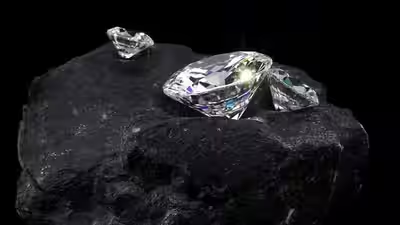
Scientists discovered what happens when diamond is hit at extreme speed, it can rapidly transform into graphite within microseconds |

Diamond is celebrated as one of the hardest materials known, but new research shows that even its famously rigid structure can be dramatically altered by an impact travelling at hypersonic speed. Scientists have found that diamond particles embedded in a specially engineered ceramic composite can undergo a near-complete transformation into graphite during a collision lasting…
Read More

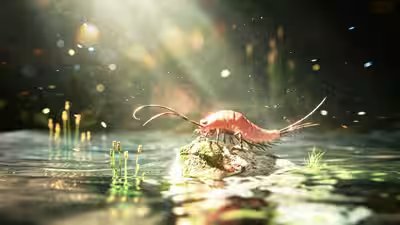
Insect Fossil Texas 324 Million Year: A 324-million-year-old fossil from Texas preserves an early insect with 24 legs and paddle-like limbs on its abdomen, suggesting insects did not leave water for land in one sudden evolutionary jump

Palaeoecological reconstruction of the Carboniferous stem-insect Chosha praecursor. (Image by NIGPAS) An international research team has identified a remarkable insect fossil from western Texas that could represent a crucial missing link in the story of insect evolution. The fossil, from the Late Mississippian period approximately 324 million years ago, belongs to a stem group of…

Read More

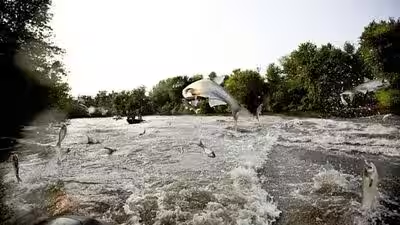
In 2009, Minnesota treated Pickerel Lake with fish poison to remove common carp; afterward water clarity rose nearly 600% and plant cover climbed from 4.6% to 90%

For decades, Pickerel Lake in Minnesota struggled with poor water quality, heavy algal growth and extremely low aquatic plant cover. The shallow lake had become dominated by common carp, a bottom-feeding fish that can disturb lake sediments and alter the movement of nutrients through an aquatic ecosystem.But after the invasive fish were removed in 2009,…

Read More

Researchers piecing together ancient tablets, inscriptions and a statue argue that three forgotten kings ruled Assyria more than 2,700 years ago, potentially changing part of the empire’s accepted chronology

Representative Image (AI-generated) For more than 2,700 years, the story of Assyria’s kings has survived through fragments of clay tablets, royal inscriptions, monuments and carefully preserved lists of rulers. Together, these records have allowed historians to reconstruct the succession of one of the ancient Near East’s most powerful kingdoms. Yet ancient history is rarely as…

Read More

McDonald’s-backed grants worth $2.4 million are unlocking nearly $99.1 million for conservation deals covering more than 100,650 acres of working ranches across 11 US states

McDonald’s has approximately 13,500 restaurants in US, and while the brand serves a variety of menu options across the country, it also supports other causes. On August 27, 2026, the National Fish and Wildlife Foundation (NFWF) announced nearly $2.4 million in grants, supported by funding from McDonald’s USA and several of its suppliers. The initiative…

Read More

Scientists spent 100 years discovering new animals and found that hotspots are emerging in unexpected places; it is now reshaping the understanding of biodiversity

Representative Image (AI-generated) For much of the past century, scientists have steadily expanded the catalogue of life on Earth, adding species that were previously unknown to science and refining the ranges of those already documented. But what happens when those discoveries are added back into the maps scientists use to understand global biodiversity? A new…

Read More

The Dead Sea has been building a salt floor for years. In 2019, scientists finally revealed a hidden process that keeps adding new salt every year. |

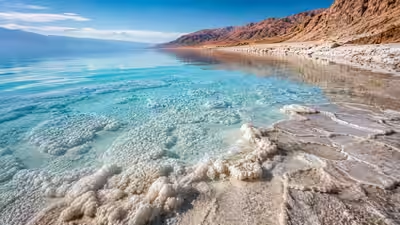
For years, the Dead Sea presented scientists with a genuine puzzle. Its upper waters, warmed by relentless sun and thickened by evaporation, seemed to shed salt each summer rather than accumulate it, while the lakebed far below kept gaining a fresh crust of crystals regardless of season. According to a 2016 study published in Limnology…

Read More

Scientists are turning discarded wood into foam to replace plastic in packaging and construction industries; it can decompose in soil within months

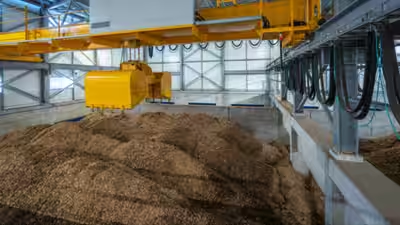
In Canada, wood waste from logging and areas affected by wildfires is finding an unexpected fate. A new pilot in the country has begun converting this material into a lightweight, biodegradable wood foam designed to replace products made with plastic foam, according to information released by the University of British Columbia (UBC). While discarded plastic…

Read More

In 2022, MIT researchers built a 4-inch, 3-layer cooler using evaporation and insulation to keep food fresh without electricity |

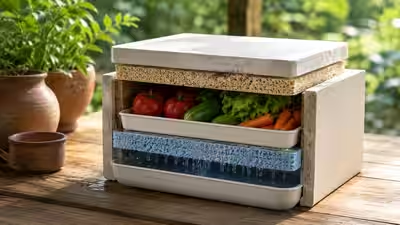
On a hot roof in Cambridge, Massachusetts, a small experimental device sat in the sun without a fan, compressor or electrical connection. Its job was simply to get colder than the air around it. Water moved through one part of the device, heat escaped through another, and layers of insulating material helped keep the cooling…

Read More

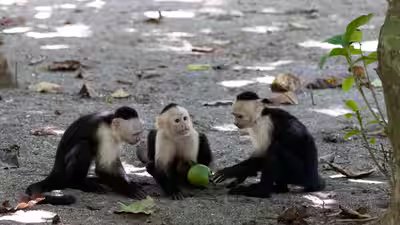
Scientists watched wild capuchin monkeys for 45 months and recorded around 280 vertebrate-eating events; when fruit became scarce, the monkeys increasingly turned to lizards, snakes and other animals for food

Capuchin monkeys (Representative Image/ Canva) For most people, monkeys are closely associated with fruit, leaves and insects. But when their preferred plant foods become harder to find, some capuchin monkeys appear willing to switch strategies. They hunt and eat small vertebrates, including mammals and reptiles, turning to animal prey as an important source of energy…

Read More