Are you reading books? Here’s what you might be protecting without realising
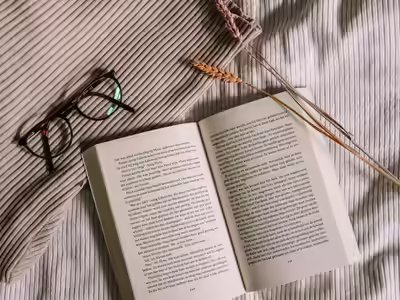

Are you one of those who loves reading books? Let’s rephrase the question for today’s generation: Have you ever read books? Those whose answers are an excited yes know the power of it. No wonder it is called a reader’s best friend. More than that, it provides you with a safe, amiable abode that you were always searching for. It cries with you, makes you smile, and imbibes your failures. We know the weight books carry, not just of the pages but of emotions.It is not an obsolete story when school corridors echoed with a thud of closing books, when aisles of the library were embellished with purpose. Those are the long-gone days when students measured their days in chapters completed. It was not how many social media posts you have scrolled through, but how many books you have read. While we constantly carry the remorse that it is a golden habit that we have lost, it is more than that. It is the ability to regulate the mind itself that we are risking to lose.
A generation fluent in outcomes, silent on meaning
We have lost one of the simplest ways to steady the mind. The numbers tell a story that classrooms echo. The Student Sync Index 2026, based on inputs from over 3,700 students, parents, and educators, shows how sharply priorities have shifted. Around 67% of students define success as getting into a good college. Close to 59% link it to marks. Only a fraction, barely 2%, see learning itself as meaningful. It’s not that ambition is misplaced. It’s that something essential has been edged out.Reading, once a space where ideas could be wrestled with and understood slowly, has become transactional. Students read to extract, not to explore. They learn how to arrive at answers, but rarely know how to sit with questions. And over time, that changes how the mind works.
What happens inside the brain when you read
Now here’s the part we don’t talk about enough. Reading is not just intellectual. It is physical. Biological, even. A piece by Big Think explores this in striking detail. What feels like a quiet, almost passive act, following lines on a page, is actually a full-body event at the level of the brain.Neuroscientist Stanislas Dehaene describes it through the idea of “neuronal recycling.” The brain didn’t evolve to read books. It repurposed older systems, those once used to track movement in the wild, to interpret signs of danger and adapted them for language.So when a student reads, multiple systems light up at once. Vision decodes letters. Language assigns meaning. Memory builds connections. Attention holds everything together.But something else happens too. In a world built on constant interruption, reading does the opposite. It asks you to stay. To follow one thread. To not switch.And in doing so, it gently shifts the body out of its stressed, alert state into something calmer. Heart rate slows. Breathing deepens. Muscles loosen. Reading, quite literally, tells the nervous system: you are safe enough to slow down.
Why stories feel so real
If you’ve ever felt your chest tighten while reading a tense scene, or found yourself smiling at a fictional moment, you’ve already experienced this.When students read fiction, the brain doesn’t treat it as distant. It simulates it. A scene of someone running activates areas linked to movement. Emotional conflict activates empathy circuits. It’s as if the brain rehearses life through stories, without the risks that real life carries.This is what makes reading quietly powerful for students. It gives them space to think, feel, and make sense of situations before they ever encounter them outside a book. A kind of practice ground, for decisions, for emotions, for understanding others. When that disappears, something important goes with it.
Why students are letting go of books
The shift didn’t happen overnight. Screens crept in gradually, then all at once. Social media, streaming, short-form videos, everything designed to hold attention briefly and then move it along. Reading, by contrast, asks for patience. And patience doesn’t compete easily in that environment.School hasn’t helped either. For many students, reading is now tied to pressure. Syllabi are dense. Time feels limited. The idea of reading for pleasure almost feels indulgent.At home, too, the change is visible. Conversations that once circled around books now orbit devices. Children watch more than they read, and often, they mirror what they see.
What this is costing students
The effects are showing up in ways that are hard to ignore. A Stanford University study found that early-grade students experienced a nearly 30% slowdown in reading fluency during pandemic disruptions. That matters because reading isn’t just another skill, it underpins almost every form of learning.If reading weakens, comprehension across subjects begins to falter. Research from Harvard University adds another layer, showing that gaps in foundational reading skills can begin as early as 18 months. If not addressed, they widen over time, affecting attention, reasoning, and the ability to think critically.In India, where screen exposure starts early for many children, the impact is becoming more visible. Students who drift away from reading often struggle with sustained focus. Their imagination narrows. Empathy takes a hit. And these are not just academic losses. They shape how a person navigates the world. When education stops being an experience, somewhere along the way, it becomes something to climb.
Is reading a ladder?
Reading, on the other hand, offers something very different. It turns learning into a space you can move through. Slowly, freely without a fixed endpoint.But when students engage only with prescribed material, they learn how to operate systems, not how to think beyond them. They become efficient, but not necessarily curious.And in a time where artificial intelligence can retrieve information instantly, that distinction matters more than ever. What will stand out is not what you know, but how you approach what you don’t.
Reading as a form of resistance
Bringing reading back into students’ lives is not about nostalgia. It’s about balance.In many ways, reading for pleasure has become a small act of resistance. Against distraction. Against constant urgency. Against the idea that everything must be fast and functional.The solutions don’t need to be dramatic.
- A fixed reading hour at home.
- Spaces in schools where books are discussed, not just assigned.
- Letting students choose what they read, instead of always directing them.
And perhaps most importantly, adults reading, visibly, consistently. Because habits are rarely taught. They are absorbed.
The power of returning to a page
There is something astonishingly reassuring about a book. It helps you get a rehearsal of the real-life event. The first heartbreak, love, success, and failures. We readers know we have lived all those lives multiple times in our minds more than in real selves.And when a student finally sits down with it, really sits, without distraction, something shifts. The mind settles. The noise dims. Thoughts begin to stretch out instead of colliding. In a world that constantly pulls attention in a hundred directions, reading does something almost radical.It brings it back. And maybe that’s what students need most right now, not just more information, but a way to hold their own attention long enough to understand it.Because learning was never meant to be a sprint. It was always meant to be lived through, one page at a time.