Anu Vaidyanathan makes Sundance debut; Opens up on AI and creativity in filmmaking | Kannada Movie News
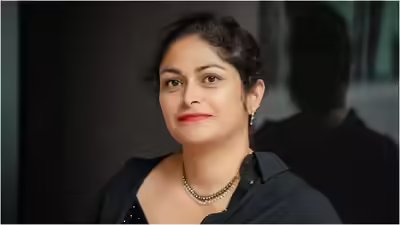
Filmmaker, engineer, comedian, and former elite athlete Anu Vaidyanathan has come full circle, returning to Park City years after training there as a professional triathlete, this time as a speaker at a global film festival. The moment marks her debut appearance at the festival, where she spoke about AI in filmmaking, authorship, and ethics. In a candid conversation, Anu reflected on how her early years of training alone in the mountains shaped the filmmaker she is today. “The younger version of me in Park City would tell the present version of me to never give up,” she says. “Persistence is very important when you’re an artist because the brickbats are too many and too often. Being an artist is a very tough job, you earn ridicule, not much money. Mostly, you do it because you don’t know any other way to live.” Anu’s unconventional journey spans engineering, elite sport, and now storytelling, a convergence she believes has deeply informed her worldview. Her debut documentary Dispatch explores themes of grief, migration, motherhood, and belonging, rooted in lived human experience. For Anu, that humanity is non-negotiable, and it’s why she remains wary of AI’s growing influence in creative fields. “I’m not a big fan of AI in filmmaking,” she admits. “The problem isn’t the technology itself. The problem is the makers of the tech and the companies swallowing public imagination. We have to ask: who bears the liability when something misfires?” As someone trained in engineering, Anu acknowledges that technology has always shaped art, and vice versa. But she believes the current AI discourse is dangerously concentrated in the hands of a few corporations. “Four or five big companies are overtaking the conversation around artificial intelligence, toying with civil liberties and blinding us into a one-way street,” she says. “We have to wonder whether we are infringing others’ work by using AI.” She is particularly vocal about copyright and authorship in the age of generative AI. “For anything to swallow years of written material and spit things out, I don’t think that’s responsible,” she says, arguing that original creators deserve protection and fair compensation. Despite working at the intersection of tech and art, Anu chooses not to use AI in her own filmmaking. “I don’t use AI in my work,” she says. “Creativity has to start with you first. If you’re using AI, you’re using it — that’s just it. I don’t believe authorship can be attributed to a machine.” She also points to the broader human cost of unchecked automation. “AI is powerful enough to replace human input by first taking that same human’s input and then making them redundant,” she says. “The person who suffers the most is the individual. We are being used almost like pawns.” For Anu, the real danger isn’t just in storytelling tools, but in how AI is creeping into high-stakes domains. “There is no human switch to pull when things go wrong,” she warns. “That’s what scares me. In cinema, the stakes are low. But in law, governance, or justice, who is responsible when something fails?” Her understanding of success has also evolved across three distinct lives, engineer, athlete, and artist. “As an athlete, success was: did I train my hardest? As a scientist, it was about solving hard problems with others. As an artist, success is both internal and external,” she reflects. “Internally, I have to find joy in the work. Externally, I have to learn how to collaborate. There is no solitary genius.” Despite her accomplishments, Anu resists traditional markers of fame. “The riches are not in the applause,” she says. “The longer and harder you’re willing to walk into your own psyche, that’s where the real wealth is.” To young creatives who feel torn between technology and art, Anu’s advice is simple, and deeply human. “Follow your instinct. That’s the one thing no AI can take away from you,” she says. “Leave your phone at home. Go out into the world. Ask someone for coffee. Learn through real human interaction.” As Anu completes Dispatch and continues her conversations on AI, identity, and endurance in storytelling, her journey stands as a reminder that technology may evolve, but meaningful stories still begin with lived experience, resilience, and the courage to stay human.