How Asim Munir is playing Trump and Xi at once, a ‘Melodi’ moment and rupee at 100
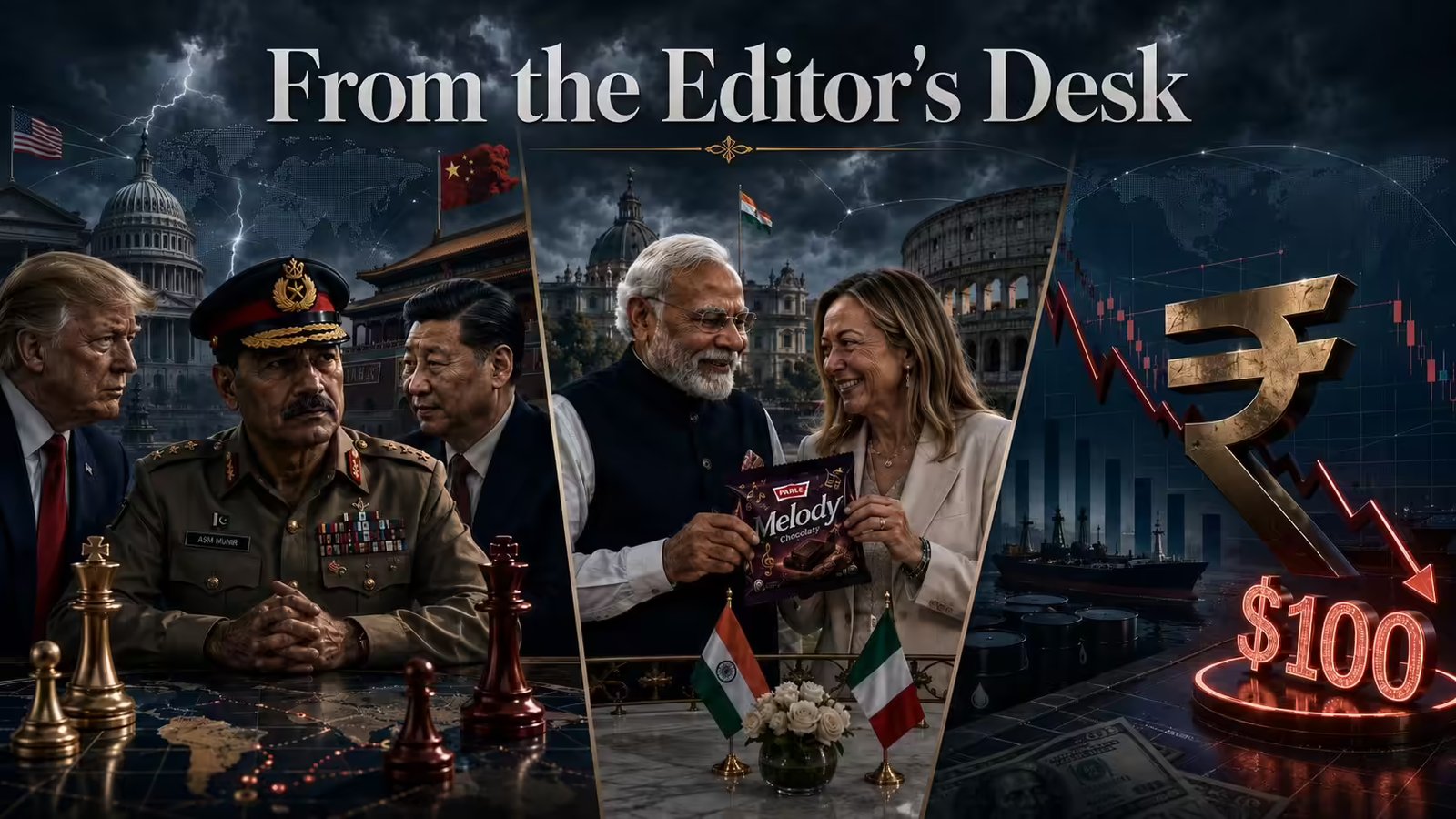
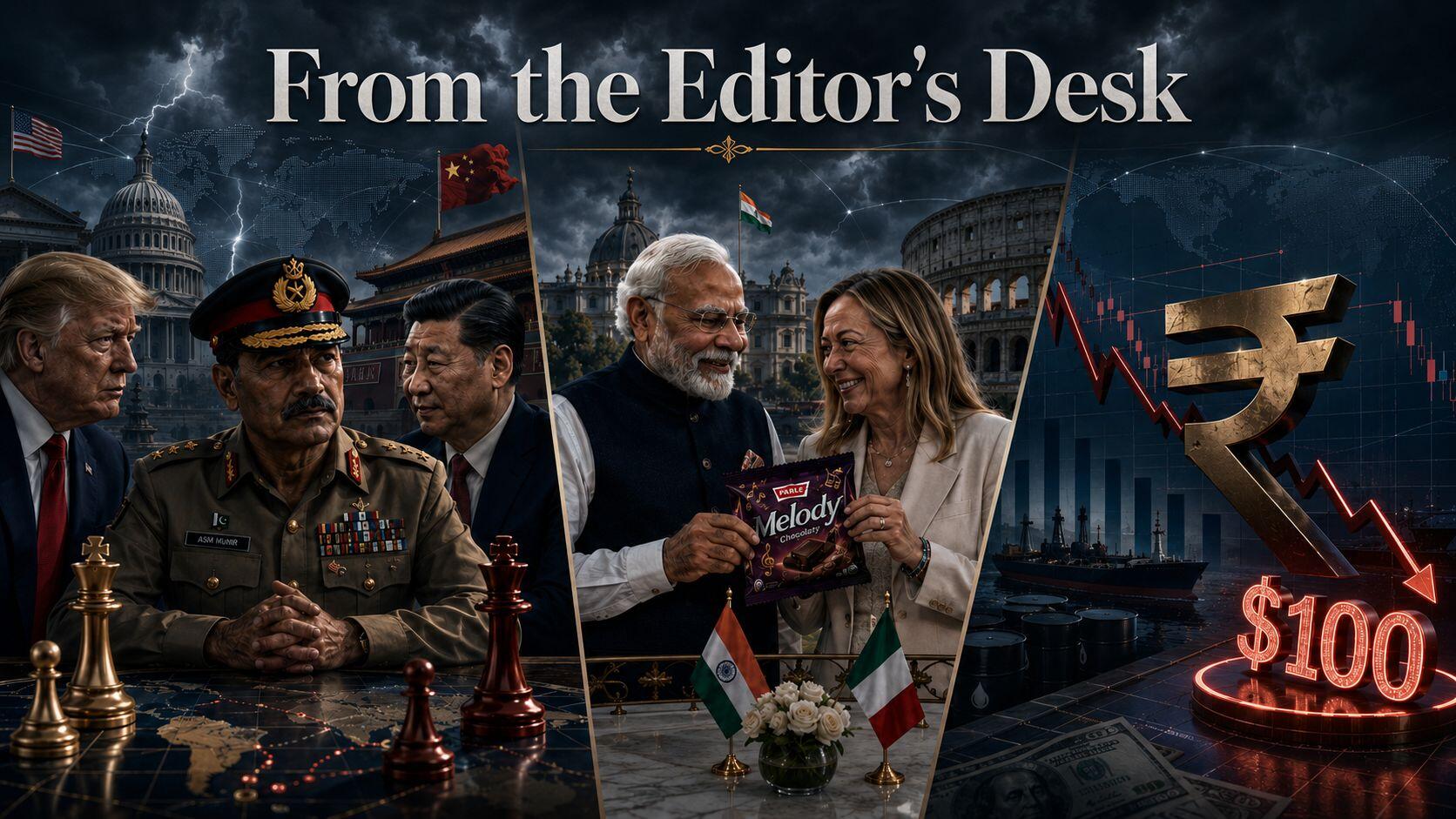
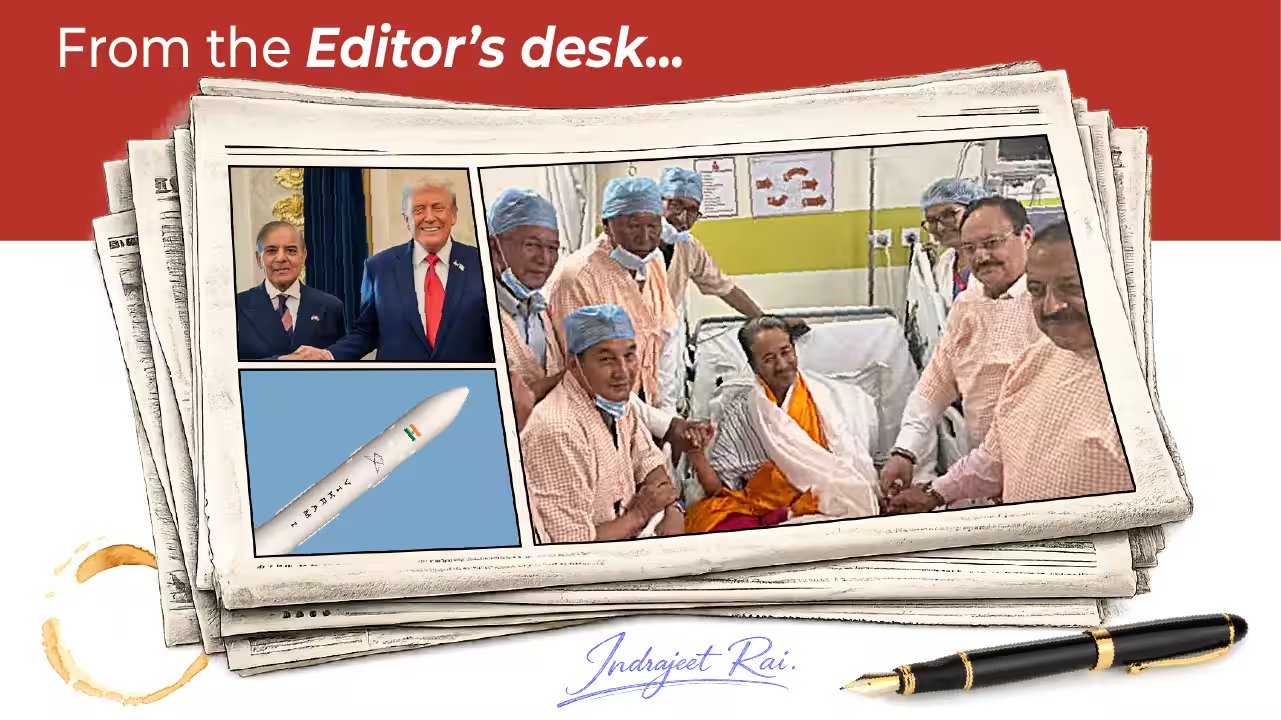
Following the latest social media fad, “At the request of Pakistan,” this week’s newsletter starts with Asim Munir’s “great game.”

PM Modi is doing “Melodi” diplomacy while quietly locking in oil and capital. Iran is charging gate fees at the world’s most important chokepoint. The rupee is trading like a meme stock. And India’s hottest towns are turning into man-made blast furnaces.
How Munir is taking Trump and Xi for a ride
Pakistan’s generals have a gift. They can invoice the US for fighting with the Taliban and then fighting against the Taliban.
Field Marshal Asim Munir seems to have turned that instinct into a doctrine.
To Washington, he presents Pakistan as a useful Muslim-world fixer. The general who can speak to Tehran, flatter Donald Trump and offer a basket of temptations: minerals, crypto, mediation and maybe even a peace-prize storyline.
To Xi Jinping, he is trying to keep the old language alive: all-weather friendship, iron brotherhood, CPEC and strategic depth. Never mind that Chinese projects have slowed; Gwadar remains insecure, and Beijing’s patience is wearing thin.
To the Gulf, Munir offers muscle: troops, jets, drones and the hint of a nuclear-backed security umbrella.
To Pakistanis, he offers order. To himself, he has offered everything. Munir can’t be prosecuted for anything in this lifetime.
But these contradictions may soon reach a critical point. Pakistan wants to be the postman between America and Iran while guarding the house of Iran’s regional rivals. It has positioned itself as a channel to Tehran, even as reports suggest it has deployed troops, aircraft, drones and Chinese air-defence systems to Saudi Arabia.
That is the Munir method. Talk peace in one room. Sell security in another. Collect rent in both.
The China part is more delicate. Munir is keeping China close enough to avoid rupture, but far enough to reassure Washington. CPEC is still described as a living dream, but the second phase has not matched the first burst of construction. Chinese workers have been attacked. Big projects have slowed. China has been denied a request to protect its citizens and projects in Pakistan. Basically, Munir wants Chinese money without Chinese constraints.
For now, the “great game” is working. Trump gets the spectacle. Xi preserves the fiction of strategic depth. Riyadh gets Pakistani muscle. Tehran gets a channel. Munir gets what Pakistan’s generals have long wanted: external validation, internal dominance, and strategic rent.
But “promote yourself by pleasing all” has a shelf life.
At some point, Trump will ask what Pakistan actually delivered. Xi will ask what Pakistan actually protected. Saudi Arabia and Iran will ask whose side Pakistan was really on. And Pakistanis may ask why their sovereignty is always being traded by men in uniform.
PM Modi’s ‘Melodi’ tour had a sweet clip, but Abu Dhabi was the real deal
PM Narendra Modi’s five-nation tour gave the internet what it wanted.
The “Melodi” moment with Italian Prime Minister Giorgia Meloni was made for social media. Modi gifted her Melody toffees. She laughed. The clip travelled fast. Searches jumped. Quick-commerce shelves moved. Investors, in a very Indian twist, chased the wrong Parle stock.
But the serious diplomacy was elsewhere.
Abu Dhabi was the stop that mattered.
India and the UAE announced six MoUs and a $5 billion investment package. The numbers were not decorative. Emirates NBD is to put $3 billion into RBL Bank. Abu Dhabi Investment Authority is to invest $1 billion with India’s National Infrastructure and Investment Fund. International Holding Company is to invest $1 billion in Sammaan Capital.
That is Gulf capital moving deeper into India’s financial bloodstream.
The energy piece matters even more. ADNOC could ramp up crude storage in India to as much as 30 million barrels. India’s existing strategic petroleum reserve is around 38 million barrels. A large UAE-linked storage addition would not just be another energy deal. It would be insurance.
The “Melodi” moment was a soft power moment. The UAE stop was a hard strategy: oil storage, investment flows, defense cooperation, and Gulf alignment at a time when one blocked waterway can become everyone’s problem.
The candy may have hogged the limelight. The real business was crude.
The rupee’s three-body problem
The primary purpose of a currency is to be in circulation, not in the news. The rupee has lately been doing too much of the second.
It has weakened to close to 97 against the dollar after a long losing run. It is down sharply this year and has become one of Asia’s worst-performing currencies. Traders are now whispering about 100 to the dollar, with the same grim fascination usually reserved for bad-weather maps.
All this is happening because the rupee has a three-body problem.
The first body is oil.
India imports around 90% of the oil it consumes. When crude rises, India needs more dollars to buy the same barrels. That puts pressure on the current account and makes the rupee more vulnerable.
The second body is capital.
Foreign investors have pulled large sums from Indian equities. When dollars leave, the rupee feels it. It feels even more so when global investors can earn attractive returns in dollar bonds without taking emerging-market currency risk.
The third body is confidence.
Once traders start believing that 100 is possible, the number becomes magnetic. Forward markets have already tested that zone. The spot market has not, helped in part by suspected RBI intervention through public-sector banks. But intervention can slow a fall. It cannot by itself change the weather.
The rupee is not falling because of one villain. It is falling because several forces are moving together: oil prices, foreign outflows, hedging costs, trade deficits and expectations.
There is a strange irony here. Indians are using physical rupees less than ever. UPI has made cash feel almost nostalgic. Yet the exchange rate is now shouting from the front page.
The rupee in your pocket may be disappearing. The rupee on the trading screen is making plenty of noise.
Banda’s warning: This is how climate change comes home
A hotter India is no longer a subject of 5-star hotel seminars. It is an address.
Banda in Uttar Pradesh has become a warning sign. Temperatures there have touched the high 40s. Readings of 47°C and 48°C no longer feel like freak events. They are becoming part of the season.
That is the frightening bit.
Meteorologists point to dry westerlies from the Thar desert, cloudless skies and harsh solar radiation. But the local story is just as important. Banda has very little green cover. Rivers are drying. Groundwater is shrinking. Sand mining, concrete and poor planning have stripped away natural cooling systems.
This is how climate change becomes local.
It is not just “global warming.” It is a road that softens in the afternoon. A tin roof that radiates like a griddle. A farm worker who cannot stop working. A delivery rider caught between heatstroke and lost income. A family hoping the power does not fail at night.
Some cities and states have heat action plans. They issue warnings, shift work hours, promote cool roofs and run public advisories. But the response is uneven. Too much of India still treats heat as a summer emergency rather than a structural risk.
Heat is now infrastructure policy. It is labour policy. It is health policy. It is housing policy. It is water policy. It is climate finance policy.
India does not just need more air-conditioners. It needs shaded streets, cooler roofs, better water access, redesigned public spaces, safer work rules and serious adaptation funding.
For now, households are adapting faster than governments. People shift schedules, avoid afternoons, use fans and coolers, wet curtains, sleep on floors and pray the electricity holds.
NACHO in Hormuz
The US-Iran war has reached the dangerous stage where both sides can claim they are holding firm, but neither has a clean exit.
Trump has his old TACO problem hanging over him: Trump Always Chickens Out. But the world may now be moving from TACO to WACO to NACHO: Not A Chance Hormuz Opens.
For now, Hormuz’s new reality is selective passage.
Friends go first. Others wait. Some pay.
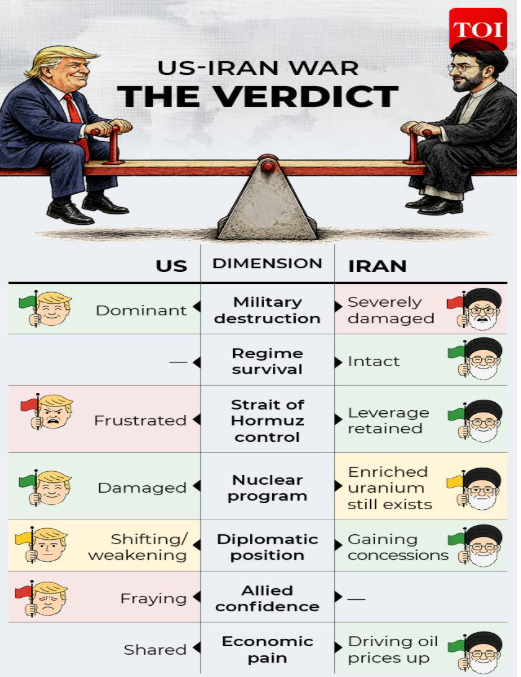

It is not just a naval story. It is a pricing mechanism.
For India, it is personal. India imports around 90% of its oil and about half its gas—a significant part of it through Hormuz. So New Delhi is doing what it is supposed to do. Quiet diplomacy. Embassy coordination. Get the ships out. Don’t become the headline.
Iran appears to be betting that Trump will blink first. The logic is simple. Control the chokepoint. Raise the cost. Let markets scream. Then force Washington into a compromise that Tehran can sell as victory.
Editor’s picks: Some of our most and must-read articles
Metro mosaics: World’s hottest city is in UP — What’s making Banda so unbearably hot
Watch: PM Modi’s surprise gift for Giorgia Meloni has a very ‘Melody’ twist
Two superpowers, one host: How Xi handled Trump and Putin differently
How Cristiano Ronaldo became Real Madrid’s destiny child after football’s greatest act of kindness
Disclaimer
Views expressed above are the author’s own.
END OF ARTICLE