NASA astronauts study cancer and cartilage treatments aboard the ISS as spacewalks near |
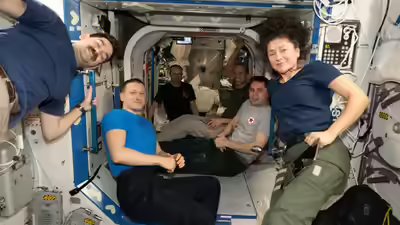
On 20 May 2026, biomedical research onboard the International Space Station had a focus on cancer research and blood-related experiments, as well as preparations for spacewalks by astronauts onboard. As noted by NASA, during Expedition 74, the crew on board the ISS utilises microgravity conditions to understand how different diseases develop in space conditions, especially cancer, as well as blood clots. Additionally, the astronauts and cosmonauts are taking care of the station systems and preparing for spacewalks, referred to as extravehicular activities (EVA). The latest article on the NASA official website describes the current work of the ISS crew in terms of biomedical experiments to improve treatment for cancer patients and blood behaviour in zero-gravity, as well as preparation for spacewalks.
Cancer research and blood studies in microgravity aboard the ISS
One of the aspects which NASA researchers concentrate on in their work is cancer cell behaviour and blood system activity in space. According to the latest news provided by NASA, the astronauts on board have been conducting various experiments concerning the effect cancer treatments have on biological samples during weightlessness.NASA representatives also mentioned that the crew members were exploring “how cancer and blood-clotting systems respond in space” using laboratory modules onboard the ISS. The studies include various experiments during which the samples would be exposed to radiation and microgravity to investigate the impact of these elements on cancer disease development.The most prominent benefit which can be obtained from space-related research concerns the opportunity to conduct cell-growth experiments in a 3D environment, as opposed to traditional flat culture used in laboratories on Earth. This makes the results closer to the natural behaviour of the tumour.Finally, NASA has started to conduct blood research on board. Thus, the astronauts have been examining clot formation under the influence of weightlessness in order to investigate the reasons why astronauts’ circulation and immune response are impacted differently.NASA has described the International Space Station as a “unique laboratory” where biological processes can be studied without the influence of gravity, opening new pathways for medical innovation.
Spacewalk preparations and cosmonaut training for orbital maintenance
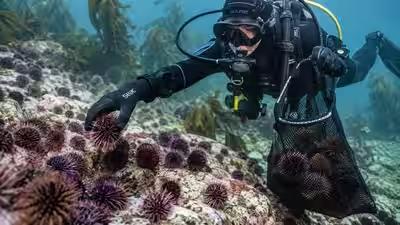
In addition to scientific experiments being conducted aboard the station, its cosmonauts are preparing themselves for walking out of the station and conducting extravehicular activities.The blog of NASA reveals that currently, astronauts are practising how to prepare themselves for the spacewalk, which is set to take place within the current month. Astronauts practice how to conduct these spacewalks both physically and mentally. Cosmonauts collaborating with Roscosmos are also involved in this activity.Spacewalks require careful preparation on Earth, where cosmonauts practice how to work under weightless conditions by diving into the water.Astronauts conducting such an extravehicular activity should work in a vacuum wearing heavy pressurised suits. This work is extremely hard for cosmonauts because of the limited mobility provided by space suits. Each mistake may turn into a disaster in space.The purpose of spacewalks is the maintenance of the station itself. It includes repairing the outer constructions of the station, installing new scientific apparatuses, and checking solar panels, which provide energy for the station.
How ISS research links space science and medical innovation
A connection between the cancer, blood, and operational spacewalk studies is indicative of the dual nature of modern human space flights: science and operations.Similarly, agencies like the European Space Agency conduct other studies in the field of biology, medicine, and material sciences, using the facilities provided by the International Space Station.It is expected that results obtained during studies will provide important insights into disease development and methods used to cure it. Scientists think that further research on cells in microgravity will be useful to find better treatments for complex diseases, including certain types of cancer.Furthermore, the spacewalk preparation provides necessary skills for the crew members that are needed in order to ensure proper maintenance of the station, as well as upgrading and repairing equipment used by the crew.It means that the International Space Station operates as an engineering facility as well as a science laboratory. This is why the station serves as an intermediate link between space research and developments in the field of medicine.