The closest thing India has to urban utopia
Disclaimer: (before some Bengaluru resident files an FIR for cultural trespass)
I write this as an outsider, a repeat visitor and therefore a dangerous man with confidence but limited municipal authority. This piece was triggered by a recent weekend visit, but the observations have been unfairly, lovingly and irresponsibly collected over the past twenty years and a bit. So, apologies in advance to those who live in the many parts of the city on and around the Outer Ring Road that I am still unsure of, unfamiliar with, and mildly frightened by.
My Bengaluru remains a partial, biased, tiffin-fed, MG Road-adjacent version of the city. In other words, completely unreliable which, naturally, makes it perfect for a personal essay. Also, in the interest of full disclosure and preserving what remains of journalistic credibility, none of the places mentioned here have paid me a dime, offered me equity, extended a tasting menu, or even thrown in a complimentary filter coffee. These opinions are entirely self-funded, occasionally misinformed, and generously fuelled by nostalgia, cholesterol, and traffic.

I have always believed that utopia, if it exists, will not announce itself with a master plan, a TED Talk, or a municipal vision document printed on recycled paper. It will arrive slightly late, mildly damp from an unexpected drizzle, stuck somewhere between Basavanagudi and Indiranagar, apologising for the traffic while insisting the dosa was worth it. That, to me, is Bengaluru. Not Bangalore exactly. Bangalore was the city of old advertisements and pensioned calm. Rain trees, convent schools, filter coffee, cantonment clubs and men who, I imagine, said ‘actually’ before disagreeing with you. Bengaluru is what happened when that city discovered venture capital, co-working spaces, Japanese cheesecake, cloud kitchens, craft beer, and the phrase ‘let’s catch up sometime’ as a complete social arrangement.
The official journey from Bangalore to Bengaluru took years. The Karnataka government accepted the proposal in 2005, the Union government cleared it later, and the change became official in 2014. But cities do not change because governments notify them. They change through accents, menus, traffic, rents, airport announcements, and the quiet embarrassment of saying “Bangalore” in a room where everyone else has already moved on. And yet, the old city stubbornly survives. You see it most clearly in Basavanagudi.
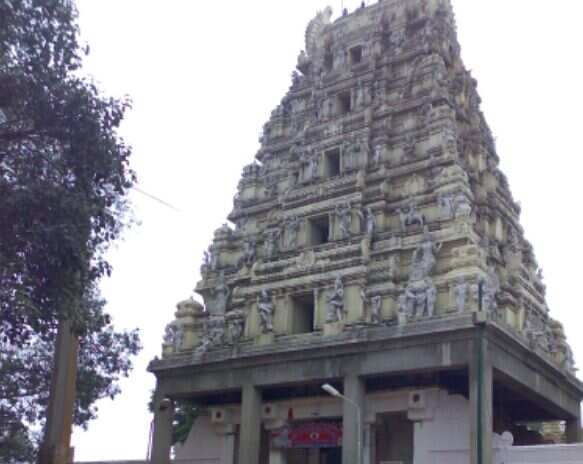

Basavanagudi is not merely a neighbourhood. It is a fully functional philosophy. One of Bengaluru’s oldest localities, named after the Bull Temple, it sits there with magnificent confidence, bordered by Gandhi Bazaar, old parks, old schools, old homes, old money, old routines, and the comforting belief that civilisation peaked somewhere around the invention of filter coffee. This is also where all my favourite tiffin rooms are, which means I take Basavanagudi extremely seriously. Gandhi Bazaar is where Bengaluru stops behaving like a tech capital and becomes a breakfast civilisation. Flowers, fruits, temples, vegetable sellers, old bakeries, darshinis, coffee bars, elderly walkers, scooters balancing improbable quantities of banana leaves or flowers and that smell of filter coffee that seems permanently suspended in the air like constitutional law.
This is where Vidyarthi Bhavan (my favourite tiffin room, which I missed on this trip) sits, not as a restaurant but as a civilisational claim. Started in 1943 as a students’ canteen, it has become one of Bengaluru’s great institutions, famous for its benne masala dose, queues, shared tables, steel tumblers, and absolute refusal to modernise for your convenience. It is perhaps one of the few places I have waited for my food. The wait outside Vidyarthi Bhavan is part of the meal; you are not merely dining there, it seems as though you are being processed by history. Dosas emerge from the kitchen at a speed suggesting military coordination. Butter glistens with complete disregard for your lipid profile. Strangers share tables because old Bengaluru still assumes human beings can coexist physically without needing an app interface.
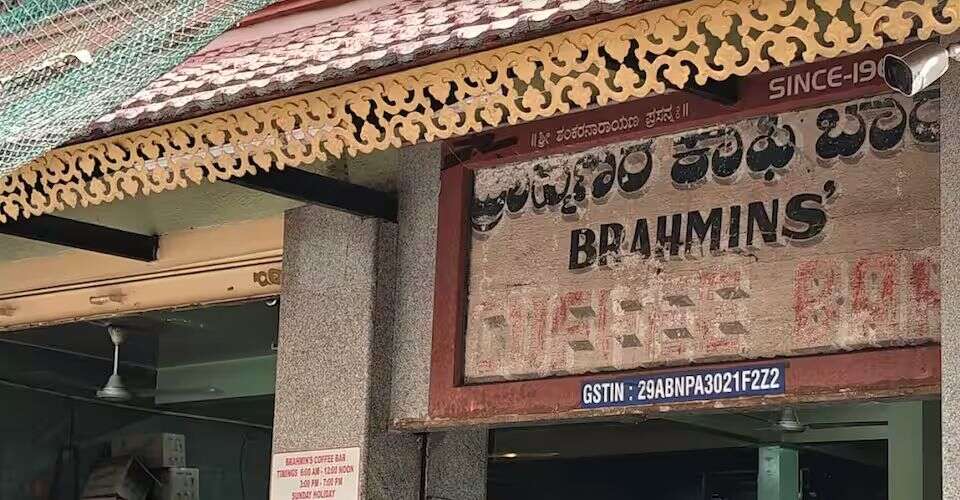
Then there is Brahmin’s Coffee Bar, that magnificent proof that capitalism need not always mean infinite choice. Idli, vada, chutney, coffee – that is all I have ever tasted on that menu (there’s tea and kharabath too). The establishment essentially tells you: this is breakfast, not a personality workshop. And this is why the Basavanagudi resident does not understand the rest of Bengaluru. Indiranagar is not ‘far’ geographically, it is far spiritually.

The Basavanagudi resident has achieved what urban planners, productivity gurus and Silicon Valley founders keep promising but never deliver: the complete 3 km life. Breakfast, temple, bakery, pharmacy, tailor, gossip, flowers, coffee, park, and at least three people who know what is wrong with the country — all within walking or scooter distance. Why would one leave?
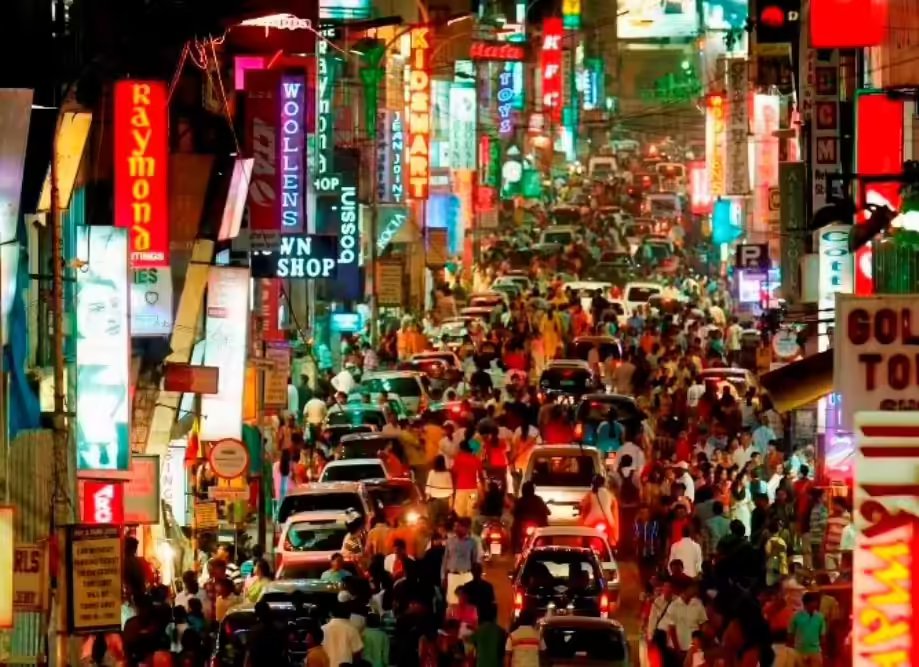
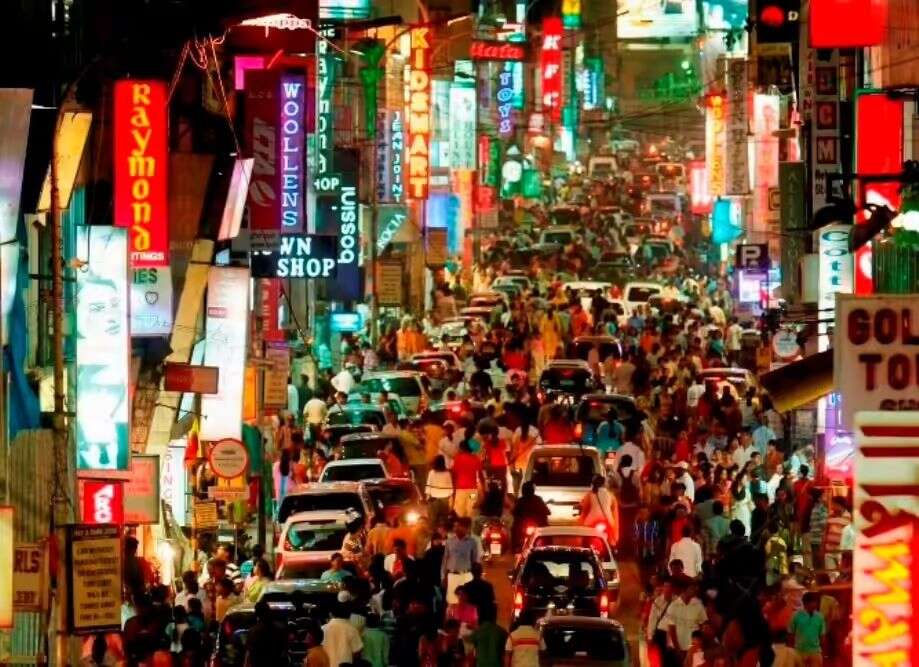
While I deeply admire the Basavanagudi philosophy, I almost never practise it myself. I am usually on MG Road or just off it. Residency Road, Brigade Road – somewhere in that old commercial heart of the city where colonial residue, corporate expense accounts, bookstores, pubs, hotels, startup optimism and traffic fumes all continue to coexist with remarkable resilience. MG Road still feels like Bengaluru negotiating with itself in public.
Once upon a time, this must have been polished old Bangalore. The boulevard of bookstores, military families, old pubs and leisurely shopping. Brigade Road was where teenagers came to feel modern. Residency Road was where business lunches quietly became career moves. The cantonment still lingers in the trees, the clubs, the road names, and the strange ability of this area to remain simultaneously chaotic and nostalgic. In parts, many years ago, it reminded me of Calcutta — and home.
Today, the stretch behaves like every version of Bengaluru collided at a traffic signal. Startup founders in expensive sneakers, retired generals entering old clubs, consultants discussing AI disruption over coffee, college students outside Church Street pretending existentialism was invented there. And someone (this is an actual person who was talking way too loudly) emerging from a luxury hotel after saying “let’s take this offline” seventeen times in one 20-minute meeting.
And then there is the traffic. Bengaluru does not merely have congestion; it has a philosophical relationship with immobility. It is one of the few places where time is a measure of distance. A six-kilometre journey can become a test of emotional resilience. Flyovers appear like unfinished promises, cab drivers confidently announce “ten minutes, saar” while the map resembles an active volcanic event. The city perhaps grew too fast. India’s technology capital brought jobs, money, startups, glass towers, ambition, and entire industries powered by caffeine and PowerPoint. It also brought congestion, rising housing costs, water anxiety and infrastructure that permanently feels like it is trying to submit an assignment five minutes before the deadline.
But then evening arrives, and somehow, impossibly, the city forgives itself. People step out again. Tables fill, conversations rise, and the weather performs its only consistently reliable civic function. The same population trapped in traffic two hours ago is suddenly drinking, laughing and discussing startup valuations with the energy of a civilisation that has collectively decided sleep is optional. Indiranagar glows. Koramangala hums. Church Street spills over. Brigade Road revives. Bengaluru’s nightlife is not merely nightlife anymore. It is urban therapy.
And then there is Toit.
Every city needs one establishment that becomes less a pub and more a metaphor. Toit, in Indiranagar, proudly describes itself as one of Bengaluru’s earliest microbreweries. That is modest. Toit is where Bengaluru converted beer into urban philosophy. Packed like sardines every evening, it contains software engineers, founders, expats, consultants, exhausted corporate warriors, and people loudly explaining blockchain to dates who visibly regret asking.
This is why Bengaluru is closest to utopia. Not because it is efficient. God no! Not because it is perfect. But because Bengaluru still feels alive.
It has CEOs who can take an afternoon off and take you to a splendid lunch overlooking a koi pond because somewhere beneath all the valuation decks and quarterly reviews, the city still believes leisure matters. It has founders discussing burn rates over benne dosa. It has Basavanagudi residents who believe civilisation ends at South End Circle and may secretly be right. It has old Bangalore softness wrapped inside new Bengaluru ambition.
Most cities eventually become only infrastructure. Bengaluru is one of those that is just temperament. Bangalore was the city people remembered with wistful nostalgia. Bengaluru is the city people negotiate with, complain about, fall in love with, leave, return to and defend irrationally in arguments. You curse it at 5.30 pm. By 8.30 pm, you are somewhere near Brigade Road or sitting inside Toit, wedged between impossible noise and impossible traffic, eating something you did not need, drinking something with a complicated name but a pleasant taste. Somewhere between Vidyarthi Bhavan and MG Road, between Gandhi Bazaar and Indiranagar, between filter coffee and craft beer, between Bangalore and Bengaluru, the city reveals its secret.
Utopia is not perfection. It is a place whose flaws you willingly schedule your life around.
Disclaimer
Views expressed above are the author’s own.
END OF ARTICLE