Petrol and diesel prices: Frozen for four years despite rising crude costs – how deep is India’s fuel price dilemma?
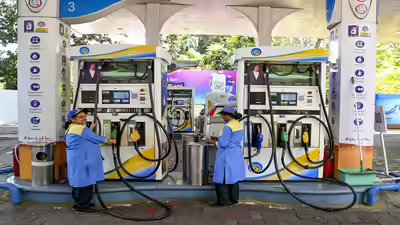
India may have enough fuel in its tanks for now but rising global crude prices combined with unchanged domestic rates are pointing towards a pressing question: How likely are petrol and diesel price hikes?The government has repeatedly assured citizens that there is no fuel shortage or rationing plan despite global energy market disruptions caused by geopolitical tensions and shipping challenges.
At the CII Annual Business Summit, Union petroleum minister Hardeep Singh Puri said fuel and cooking gas supplies remain stable, with India holding crude oil and LNG reserves for 69 days and LPG stocks for 45 days.Oil secretary Neeraj Mittal added that India has managed the past 67 days of disruptions through diversified sourcing, additional cargoes and strong refining capacity.“There is no need to panic. There are sufficient supplies. There is no rationing in place. It’s not going to happen,” Mittal said.Puri also noted that India has not seen any increase in fuel prices over the last four years and continues to hold adequate reserves despite ongoing disruptions linked to the Strait of Hormuz.“In the last four years, there has been no increase in prices. Today, we are in a situation where unlike other countries in the world, which have had to either face severe problems in terms of availability and supply, or where prices have gone up 50-60 per cent,” Puri said.He further added that uncertainty stemming from disruptions linked to the Strait of Hormuz, which began on February 28, has now stretched into its 75th day, but India has managed to turn the challenge into an opportunity by increasing domestic LPG production.Meanwhile, earlier on Sunday, Prime Minister Narendra Modi appealed to citizens to save fuel, reduce imports and exercise restraint in gold buying amid growing pressure on India’s foreign exchange reserves and wider external risks.
Stable retail prices despite rising global crude
Beneath the reassurance on supply lies a more difficult pricing reality.Petrol and diesel continue to be sold at rates unchanged for almost four years, even though international crude prices have surged sharply since the Middle East conflict erupted 10 weeks ago.Input costs have risen by over 50% during this period, but retail prices have remained stable, creating significant financial stress for oil marketing companies.As global fuel continues to become costlier, Puri has cautioned that state-run fuel retailers could incur losses of up to Rs 1 lakh crore in a single quarter if elevated crude prices continue while retail fuel rates remain unchanged“My oil companies are losing Rs 1,000 crore a day,” he said, adding that cumulative under-recoveries had risen to nearly Rs 1.98 lakh crore. He warned that losses of about Rs 1 lakh crore in a single quarter could erase the sector’s entire annual profits.
Heavy fiscal cost of cushioning consumers
While the Centre has so far softened the blow through excise duty cuts, these measures have come at a substantial fiscal cost.Oil secretary Neeraj Mittal said the government has already absorbed a large share of the global price shock through tax reductions on petrol and diesel, with the revenue impact pegged at around Rs 1.6 lakh crore.The Centre has already cut excise duty sharply to reduce pressure on consumers. Petrol excise duty was reduced to Rs 3 per litre from Rs 13, while diesel excise duty was brought down to zero from Rs 10 per litre. This alone has cost the government around Rs 14,000 crore every month in lost revenue.
Policy stance and rising pressure
A top government source said the “default mode of the government is to keep the prices and supplies stable”.For now, the Centre has decided to keep petrol and diesel prices unchanged. However, with crude prices rising, government finances under pressure and oil companies facing heavy daily losses, it may become increasingly pressurising.Meanwhile, in its five-point agenda the CII had suggested that the government should gradually withdraw the Rs 10 per litre central excise duty cut on petrol and diesel over the next six to nine months if crude prices begin to stabilise.“The Rs 10 per litre central excise cut on petrol and diesel, taken at significant cost to the exchequer, should be progressively rolled back in tranches over six to nine months as crude prices stabilise,” CII stated.At the same time, the government has continued adjusting its fuel tax strategy. From May 1, windfall tax on diesel exports was reduced to Rs 23 per litre from Rs 55.5 per litre, while export duty on aviation turbine fuel (ATF) was cut to Rs 33 per litre from Rs 42 per litre. However, domestic excise duties on petrol and diesel remain unchanged for now.
Price hikes elsewhere
Similar pressures are also visible internationally.In the UK, most electricity is generated through natural gas and renewables, but petrol prices have reached an 18-month high due to rising global oil prices, according to motoring organisation the RAC.Egypt has raised petrol prices and fares on public transport to limit the impact of the conflict on its public finances. It has also slowed down large, energy-intensive state projects and cut government vehicle fuel allowances by nearly a third.
Bottom line
For now, the Centre has decided to keep petrol and diesel prices unchanged and India continues to maintain strong fuel reserves and stable supplies.However, with crude prices rising, global disruptions intensifying, oil companies facing heavy daily losses, and the fiscal burden mounting, the question of a fuel price hike remains firmly on the table.The strategically crucial Strait of Hormuz has continued to see disruptions since February 28 when US and Israel launched joint strikes on Iran. After the attack, Tehran tightened its noose on the global oil pipeline that carries 20% of world’s energy supplies, pushing oil prices higher.