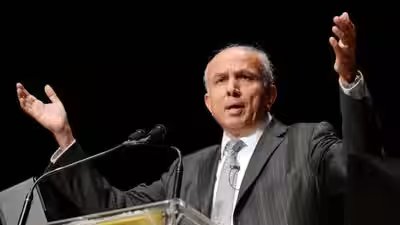
Omar Abdullah: ‘Has anyone forced you to drink?’: Omar Abdullah responds to uproar over liquor shops in J&K | Srinagar News
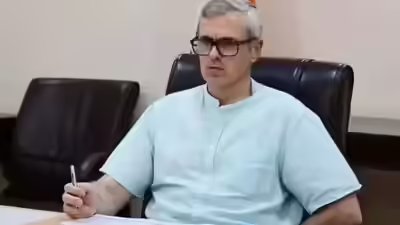
SRINAGAR: Amid J&K lieutenant governor Manoj Sinha’s Nasha Mukt J&K Abhiyan and criticism over leaving liquor shops across Jammu and Kashmir untouched, chief minister Omar Abdullah Monday said that liquor shops in J&K are for those who are being allowed by their religion to consume liquor, and no one is forcing anyone to liquor shops.“First of all, these liquor shops are for people whose religion allows them to consume alcohol. Secondly, no government in Jammu and Kashmir has banned these shops. It does not mean we want their use to increase. Only those whose religion permits alcohol consumption should use them. Our religion does not allow it and we do not want people to move in that direction,” the CM said, explaining his Sunday’s statement that no one is being forced to consume alcohol.“Many things happened during our rule. First, we did not open any new liquor shops. Second, our consistent effort was to ensure that no shop was located in a place where it could encourage our youth to take the wrong path.”On Sunday when asked why liquor shops were not being left untouched despite the J&K lieutenant governor’s anti-drug campaign, the CM said, “has anyone forced you to drink? You are going to liquor shops by your own choice. We are not dragging you there. We are not even advertising liquor sales. Our government has not increased the number of alcohol shops.” He said questions about what was happening under the Nasha Mukt J&K Abhiyan should be directed to the lieutenant governor, who has launched the campaign.Omar’s Sunday statement came under criticism forcing him to elaborate it today.“If what I said yesterday was so wrong, then what did they (Peoples’ Democratic Party) do when they were in power? What I said yesterday was also stated on record in the Assembly by the finance minister of the PDP.”“These liquor shops are not for everyone. People with different beliefs live in Jammu and Kashmir. People of different religions live here. People also come from outside Jammu and Kashmir. These shops are for them. They are not for local people. It is a simple matter. But my opponents have now made it a habit to distort things,” Omar said.The PDP representative Iltija Mufti targeted the chief minister over his liquor statements. “J&K CM’s expected U-Turn on the refusal to prohibit liquor shops lacks logic. He claims it’s wrong to impose a ban on Hindus consuming alcohol since their religion doesn’t forbid it. If this is the case how have Hindu majority states like Gujarat and Bihar banned alcohol successfully without a whimper? We are proud of J&Ks secular credentials but deeply unfortunate and insensitive for its Chief Minister to dismiss the religious sensibilities of the majority with such indifference,” Iltija said.On April 11, Sinha launched a 100-day intensive drive under the Nasha Mukt Abhiyan to make Jammu and Kashmir “drug-free.” The campaign has included large-scale awareness programmes by the civil administration and police, destruction of poppy cultivation, random urine testing of drivers and intensified crackdowns on drug networks. Awareness drives have also been conducted in schools and government institutions.According to a police figure, the Nasha Mukt J&K Abhiyan has led to the registration of 614 FIRs and the arrest of 646 people, while authorities conducted 216,123 awareness programmes across Jammu and Kashmir. Police also said it has apprehended 435 drug peddlers and identified 160 drug hotspots. The authorities have also demolished 37 houses allegedly linked to drug peddlers, attached immovable properties worth Rs 25.97 crore.However, the demolition of properties has come under sharp criticism from Minister of Health Sakina Itoo, who opposed the bulldozing of homes. “You tell me, are there more drug addicts in Jammu or in Kashmir? If I give you the health department’s figures, the number is higher in Jammu. Then why all this (demolishing of houses) is happening only in Kashmir? The way homes are being demolished and people’s properties attached, it is not good. If a child is addicted to drugs, our responsibility is to rehabilitate him. If a property is in the father’s name, why should it be demolished or seized,” Itoo said. “Our main aim should be clear. We have to save J&K from drugs. We have to stop drugs from entering here and protect our younger generation.”