
Quote of the day by Aristotle: “Educating the mind without educating the heart is no education at all.” | World News
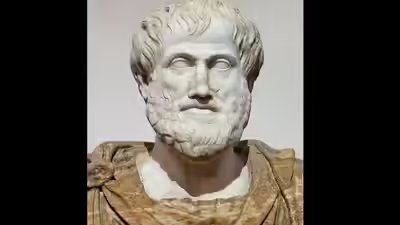
Education is often measured by marks, degrees, achievements and professional success. World schools and universities highly value intellectual development, competitive performance and academic excellence. But one quote from Aristotle still challenges the notion that knowledge is enough. His famous words, “Educating the mind without educating the heart is no education at all,” are as relevant today as they were centuries ago when they were first associated with his philosophy.The quote is simple but powerful in meaning. Intelligence alone does not make for a complete education unless there is compassion, empathy, ethics or emotional understanding. Aristotle thought learning was more than just learning facts or honing logic. It was also about forming character, conduct and moral judgment. In many ways, his words still inspire the current debates on emotional intelligence, ethical leadership, mental health and value-based education.Today, conversations about education are evolving rapidly. Parents, teachers, psychologists and employers are increasingly conscious of the importance of emotional awareness as well as academic achievement. Students can do very well in exams and yet have difficulty with relationships, empathy, stress or decision-making. This is exactly what Aristotle’s quote points to. It reminds us that true education should develop intellect and humanity together.
Quote of the day by Aristotle
“Educating the mind without educating the heart is no education at all.”
The deeper meaning hidden inside Aristotle’s quote
The quote seems simple at first glance. But in close examination, it is more profound. Aristotle distinguishes two types of development, the mind and the heart.The “mind” is the logic, the reasoning, the memory, the analysis, and the intellectual learning. This includes mathematics, science, philosophy, literature and all kinds of academic knowledge. Aristotle had a deep respect for intellectual growth and thought rational thinking was one of humanity’s greatest strengths.The “heart,” however, stands for something equally important. It has compassion, morality, empathy, emotional understanding, kindness, integrity and self-awareness. In Aristotle’s philosophy, a person with knowledge without humanity may abuse intelligence instead of bringing benefit to society.The quote suggests that education is not complete if it produces skilled individuals lacking emotional maturity and ethical values. In a society full of technically brilliant people but no compassion, you might have inequality, conflict, dishonesty or social division.This is a particularly relevant idea today, as modern education systems are heavily performance-oriented while emotional development is often neglected.
Why the quote still connects strongly with modern society
While Aristotle’s words are ancient Greek, they still resonate today, as many argue that modern life has made the imbalance between intellect and emotional well-being worse.The academic competition students face today starts at a very young age. Grades, entrance exams, salaries, and career achievements are often associated with success. Those are all good things, but psychologists and educators are increasingly saying that emotional health is being neglected.Discussion about anxiety, burnout, loneliness, and emotional exhaustion is more common in schools and workplaces. Many experts say emotional intelligence is now one of the most important life skills a person can develop. This idea is captured by Aristotle’s quote, centuries before modern psychology formally studied it.The statement also appeals to parents because it is about raising responsible and compassionate people, not just achievement. Today, many families value kindness, empathy and emotional resilience as much as academic success.
Emotional intelligence and Aristotle’s philosophy
This is what modern psychology calls “emotional intelligence” – the ability to understand emotions, to manage feelings, to communicate effectively and to empathise with others. Interestingly, this is just what Aristotle said.One can be academically gifted and struggle with anger, relationships, communication, or empathy. Emotional intelligence helps people manage conflict, make thoughtful decisions and relate to the feelings of others.Today, researchers often argue that emotional intelligence is a key factor in leadership, teamwork, parenting and mental health. Communication, empathy, adaptability and emotional maturity are more and more what employers are seeking in the workplace.Aristotle expresses the same principle in a much simpler form. He believed education should produce well-rounded people capable of intelligent thought and compassionate action.
Why schools today are focusing more on emotional learning
Slowly, educational institutions across the world are giving importance to emotional development along with academics. Many schools now have programmes on emotional well-being, mental health, communication skills and social learning.Teachers and psychologists have seen that students generally do better when they feel emotionally safe and understood. Emotional education helps children to be more confident, patient, empathetic and self-controlled.This is mirrored by the growing popularity of mindfulness practices, counselling programmes and life-skills education. Indeed, Aristotle’s quote is frequently shared in educational discussions because it encapsulates the goal of these shifts.The point is not to lower academic standards but to allow intelligence to grow together with humanity and ethical understanding.
The role of empathy in education
Empathy is one important element in “educating the heart.” Empathy is the capacity to understand another person’s feelings and experiences. It helps to build stronger relationships and healthier societies.Sometimes, knowledge without empathy is a dangerous thing. History has taught us that intelligence by itself does not lead to kindness or to moral behaviour. Some of history’s greatest social problems have resulted from educated people applying knowledge without compassion.Aristotle’s quote suggests that education should cultivate human thinking not only on their own success, but also on the responsibility for others.Empathy, too, is a key element of leadership. Leaders who understand human emotions are often better communicators and have better communities. That is one reason why many leadership programmes today are now incorporating training in emotional intelligence.
Why the quote remains popular on social media and in classrooms
In the digital age, inspirational quotes can spread fast online. However, only certain quotes continue to remain relevant for long periods of time. Aristotle’s words are still widely circulating because they speak to a concern that many people still recognise.Students often feel the urge to perform. Parents worry about emotional health. Teachers aim to reach a balance of academic achievement and personal development. Employers want emotionally mature professionals. Aristotle’s quote speaks directly to all these discussions.The quote is memorable too for its simplicity. It expresses a deep philosophical idea in very clear language. The reader immediately understands its core message without any specialised knowledge of philosophy.This availability has helped to make the quote popular over the generations, the cultures, and the educational systems.
Education as character formation
Aristotle did not see education as mere preparation for a job. It was practice for life itself. He believed that societies are better when citizens develop virtue, discipline, wisdom and ethical judgment.In ancient Greek philosophy, character was very important. Aristotle said that personality is formed over time by repeated habits. People become compassionate by doing compassionate deeds, honest by doing honest deeds, and disciplined by doing disciplined deeds.This belief is closely connected to current discussions about values education. These days, many schools aim to encourage cooperation, honesty, responsibility and respect as well as academic learning.In a quote from Aristotle, readers are reminded that education should help shape not only what people know but who they become.
Technology, knowledge, and the missing emotional balance
Modern technology has resulted in information that is more accessible than ever before. Students are able to look for facts, lessons and tutorials on the internet instantly. Artificial intelligence, digital learning and automation are rapidly transforming education.But many experts think emotional development is still hard to mimic in technology. People connection, understanding, empathy, mentorship and emotional connection still rely heavily on face-to-face interaction.In this context, the quote from Aristotle appears especially pertinent. It reminds people that education is not merely about imparting information. Knowledge is very important but so are emotional maturity and ethical awareness.As our societies become increasingly digital, conversations around loneliness, social isolation and emotional well-being continue to grow. Aristotle’s words remind us that the human being should remain the focus of learning.
Why Aristotle’s message continues to endure
What gives Aristotle’s quotation its power is the balance. It does not reject academic learning or intellectual growth. Instead, it argues that knowledge without humanity is incomplete.It is a common feeling in many societies today that achievement is celebrated and emotional well-being, kindness and ethical responsibility are all but ignored. Aristotle’s words speak directly to that imbalance.Also, the quote is timeless because human nature has not changed very much over the centuries. People still want to succeed, to be seen and understood. But intelligence does not determine the quality of human life as strongly as emotions, compassion and morality still do.And maybe that’s the reason the quote keeps coming up in classrooms, in motivational speeches, in education campaigns, and in conversations about parenting and leadership.
A reminder that true education goes beyond information
Ultimately, Aristotle’s quote portrays education as much more than just memorising facts or earning qualifications. It presents learning as a process that should shape both mind and character.In this view, the truly educated person is not only knowledgeable but also thoughtful, compassionate, emotionally aware, and ethically engaged. Such people add value not only through their skills but also through their behaviour towards others.In a world ever more driven by competition, technology and rapid change, the quote continues to provide an important reminder: intelligence may help people succeed, but humanity helps societies survive and grow together.And that’s why Aristotle’s words sound remarkably modern even centuries ago.