
The misfit next door and the art of making a good club sandwich
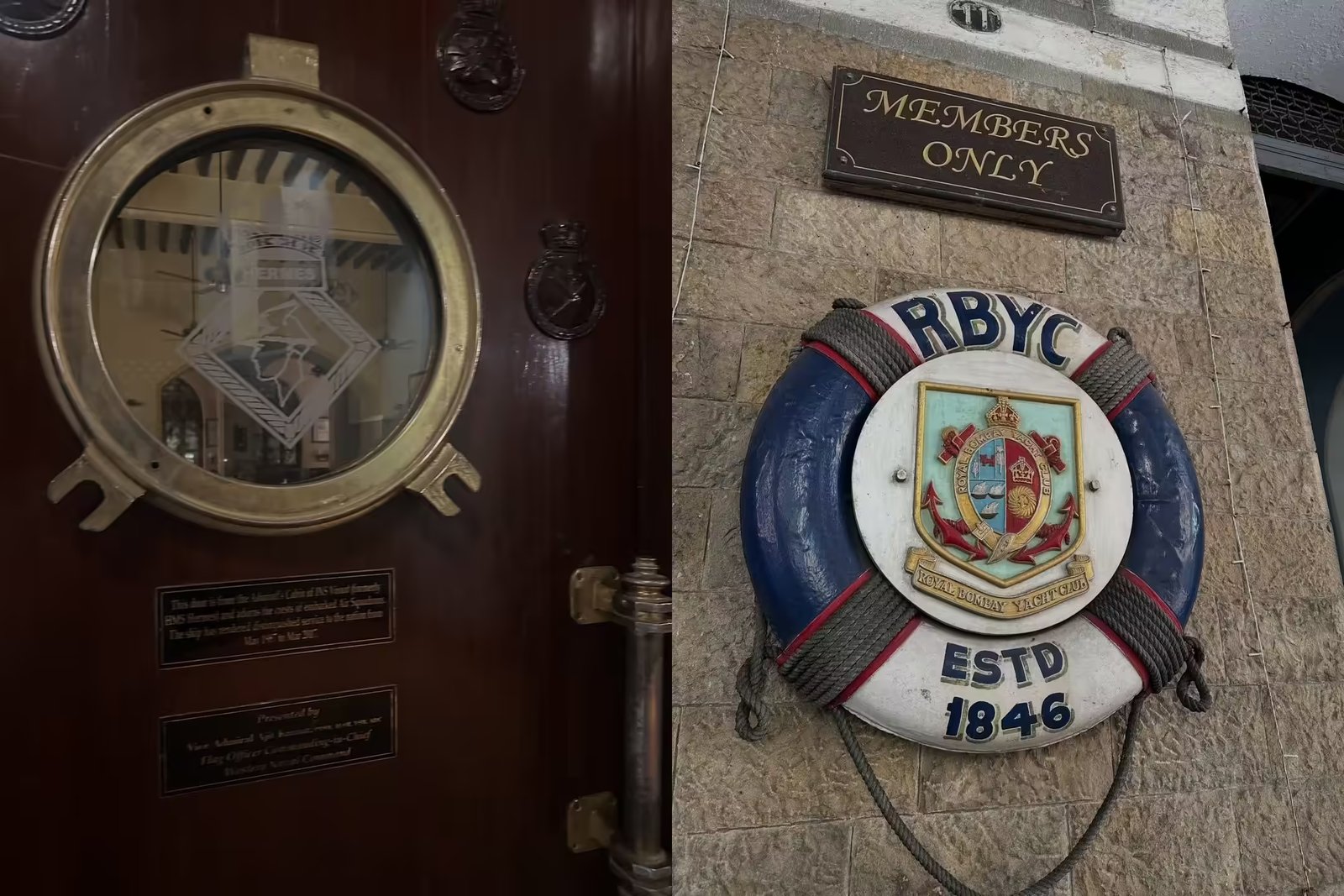
Right next to the Taj in Mumbai, that grand, perfectly lit overachiever of Indian hospitality, sits the Royal Bombay Yacht Club, looking like it has absolutely no interest in competing. If the Taj is a well-dressed host who knows exactly where the light falls, the Yacht Club is that old uncle in a cane chair who has seen too much to rearrange himself for anyone.
“Members Only,” the board says. Not aggressively. Not defensively, just factually like gravity. You walk in and the first thing that hits you is not nostalgia. It’s space. The sort of space that makes a Mumbai resident briefly check if they’ve accidentally wandered into a real estate hallucination. Six hundred square feet here is not a listing. It is a mood. A room so large that the furniture appears to have been introduced to each other but never formally acquainted. A table here, a chair there, a bed that looks like it has been where it is since Pandit Nehru was experimenting with roses. Nothing matches and yet everything belongs.

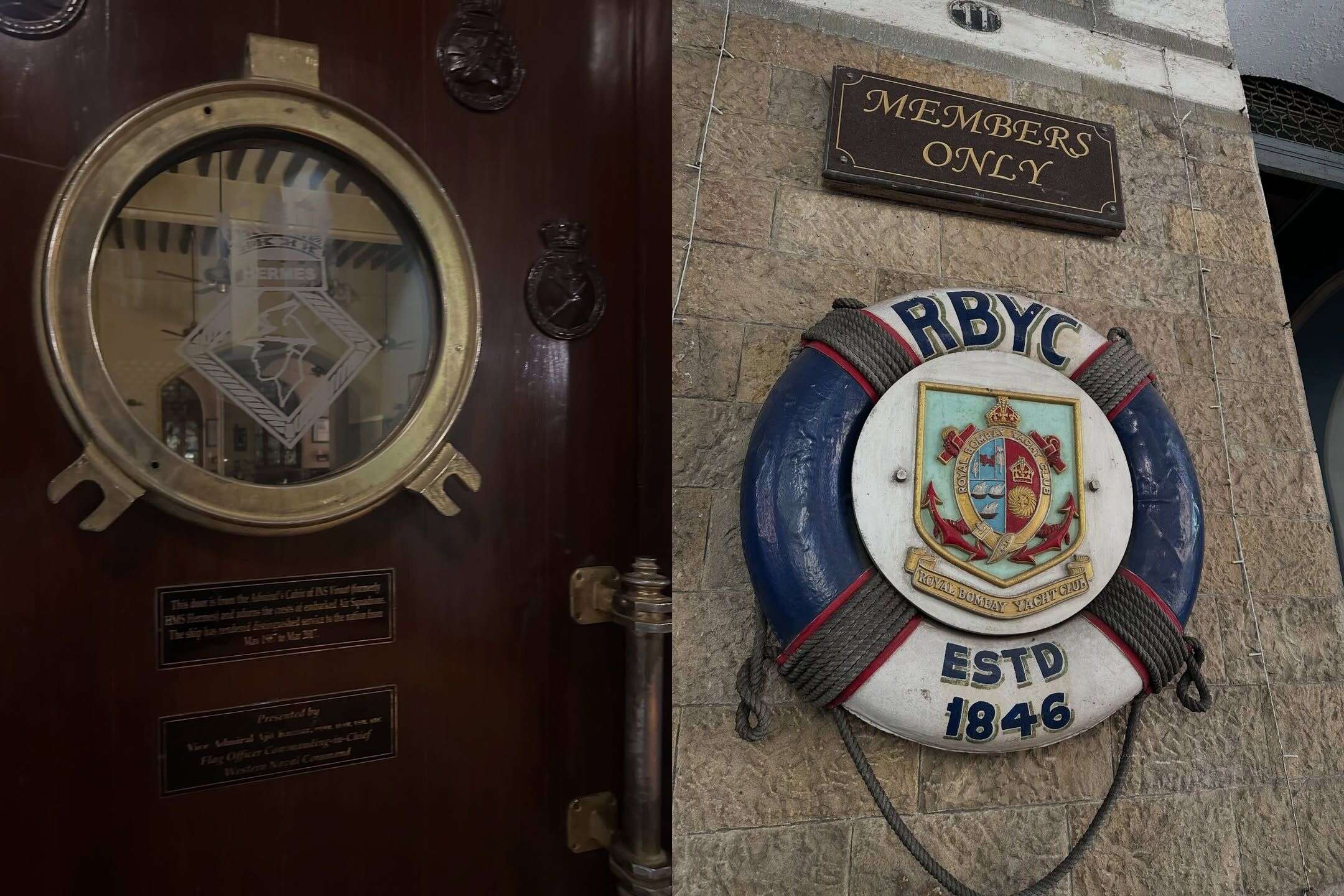
And then you remember this is not accidental. This is what happens when a place was built before Mumbai discovered scarcity as a personality trait. The Taj next door must have opinions. You can almost imagine it leaning over, in its impeccable colonial-heritage-meets-global-luxury accent, whispering, “At least pretend to care about presentation.” The Yacht Club, one suspects, would respond by ordering another beer and not finishing the sentence.
Here is the thing about privilege. There are levels to it. There is new money privilege, which is always slightly anxious. It curates, it explains, it tells you why the wood is reclaimed and the salt is Himalayan. It wants to be liked.
And then there is old privilege. It does not explain. It does not curate. It does not even particularly try. It simply exists, slightly rumpled, faintly amused, and entirely unconcerned about your opinion of it.

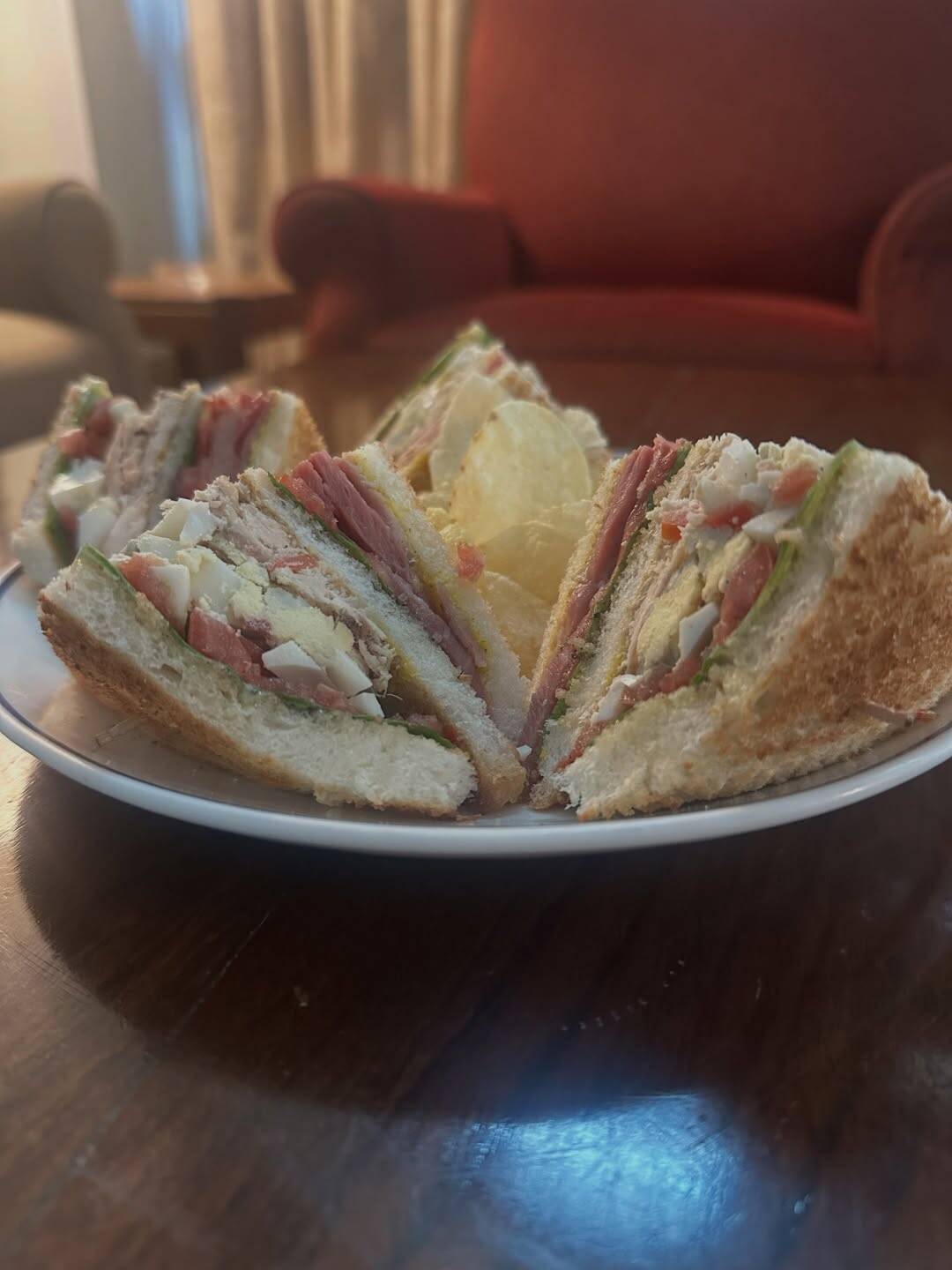
The sandwich arrives like that. A proper club sandwich. No reinvention, no apology, no deconstructed fusion monstrosity. This sandwich follows a discipline that most modern menus have quietly abandoned.
Three slices of toasted white bread. Not sourdough, not multigrain, not a philosophical statement. Just white bread, toasted evenly, buttered lightly. The first layer carries chicken, usually roasted or poached and sliced without drama, with a slick of mayonnaise and a leaf of lettuce that is there for texture more than virtue. The second layer is where things get serious. Crisp bacon, or in our more polite Indian adaptations, ham, sometimes both, with a slice of tomato that knows its place and does not leak into abstraction. A boiled egg, chopped or sliced, often finds its way in, binding the whole thing together with the quiet authority of protein.
Then the architecture – pressed gently, cut into triangles, held together with a toothpick that has no intention of being artisanal. Chips on the side. Not truffle, not hand-cut, not narrated, just chips. And a sachet of ketchup that arrives exactly as it left the factory, unburdened by plating anxiety. This is, in its own way, a system, and like most systems that work, it has survived by refusing improvement.
The beer follows a similar philosophy. Cold, reliable, blissfully ignorant of craft. It does what beer used to do before it developed opinions.
Outside, Mumbai is doing what Mumbai does. Pricing air. Negotiating space. Turning square footage into a competitive sport. Inside, a ceiling fan rotates with the confidence of something that has outlived several economic cycles and sees no reason to accelerate now; which, in the most unhurried manner, brings us back to privilege. Yes, it is impossible to ignore. This place was built in a time when access was not just restricted, it was designed that way. Europeans inside, Indians outside, the usual unpleasant architecture of colonial comfort. That history has not vanished simply because the upholstery has aged gracefully.
But here is the uncomfortable bit. Some privileges irritate you because they are loud. Some because they are unjust. And some because they are so effortless that they leave you slightly disarmed.
The Yacht Club belongs to the third category. It does not try to be relevant. It does not try to be inclusive in a performative, brochure-friendly way. It has simply continued. Quietly, stubbornly, perhaps a little out of place, a little out of time. A misfit, certainly.

But then again, come to think of it, so is Mumbai. A city that builds glass towers next to crumbling facades and calls it a skyline. A city where the Taj and the Yacht Club can stand side by side, one dazzling, the other indifferent, and both somehow feel exactly right.
And somewhere between the sandwich, the silence, and the improbable luxury of space, you realise like all urban landscapes with history, the maximum city has simply learned to hurry around the things that refuse to.
Disclaimer
Views expressed above are the author’s own.
END OF ARTICLE