
700-year-old Bolivian mummy tooth reveals scarlet fever bacterium before Europeans arrived |
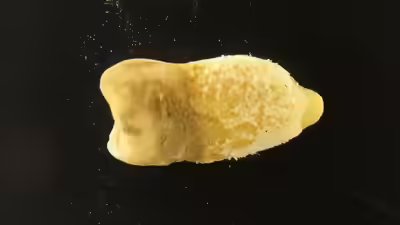
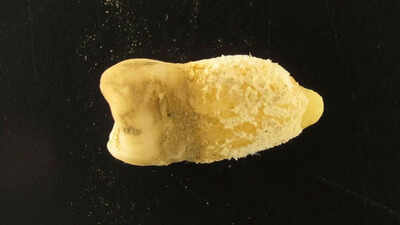
A 700-year-old mummy from the Bolivian Andes is quietly reshaping what scientists thought they knew about ancient diseases. Inside a single preserved tooth, researchers discovered genetic traces of Streptococcus pyogenes, the bacterium responsible for illnesses such as scarlet fever and strep throat. The remains date back to the 13th–14th century, a time long before Europeans reached the Americas. That detail alone has sparked debate among experts. It raises difficult questions about how infectious diseases spread in pre-Columbian societies. Was this bacterium already present in the Americas much earlier than assumed, or did it arrive through unknown ancient pathways? Scientists say the discovery is unexpected and still not fully understood.
Scarlet fever bacterium found in 700-year-old Bolivian mummy tooth
The discovery began with a naturally mummified individual preserved in the high-altitude regions of Bolivia. The remains, housed at the National Museum of Archaeology in La Paz, belonged to a young man who lived between 1283 and 1383 C.E.Researchers focused on a single tooth for genetic analysis. Teeth are known to preserve biological material extremely well, sometimes trapping traces of blood and bacteria for centuries. When the team examined the DNA, they found something unexpected. As reported by Discover Magazine, it was Streptococcus pyogenes, the bacterium linked to scarlet fever and other infections. Scientists reportedly did not set out to search for this pathogen. It appeared during broader microbial screening of the mummy’s genetic material.
What the ancient bacterium reveals
The identification of Streptococcus pyogenes in a pre-Columbian context is significant because it challenges long-held assumptions about disease history in the Americas. For years, many researchers believed scarlet fever-related bacteria were introduced after European contact. The ancient strain appears closely related to modern versions of the bacterium. This means its ability to cause disease was already well-established hundreds of years ago. It was not a primitive ancestor, but a fully functioning pathogen with many of the same virulence genes seen today.However, it is not identical to modern strains. Some genetic features are missing, which indicates that the bacterium was still evolving at that time. Experts suggest that this could represent an early branch in the evolutionary history of Streptococcus pyogenes.
How scientists rebuilt the ancient scarlet fever bacterium genome
The researchers undertook the process of reconstructing the pathogen’s genome through a method known as de novo assembly. The approach makes it possible for scientists to construct a DNA sequence from small fragments without needing an existing genome of a related contemporary species to serve as a comparison.The conservation state of the mummy played a vital part in the success of the research. The cold and arid atmosphere of the Bolivian highlands helped preserve the integrity of the genetic materials. Through the process of de novo assembly, researchers succeeded in almost entirely reconstructing the genome of the bacterium. Scientists discovered that the pathogen already contained numerous genes linked to virulence among modern variants of the microorganism.
Ancient scarlet fever bacteria found in humans and animals worldwide
After validating the results, the researchers then conducted tests on other DNA samples from the ancient world. Even more shocking results were revealed. The researchers discovered remnants of closely related Streptococcus bacteria in European human samples from about 4,000 years ago, as well as a closely related strain in gorilla samples from Africa from 200 years ago.The implication is that there could be more evidence of such bacteria across the ancient world and across many species, before any documented medical cases.