Impact Of Parental Behavior: Gauranga Das shares a powerful message for parents, most are missing this at home

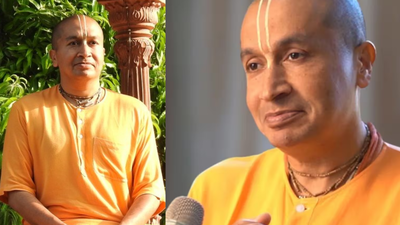
It was just a brief overheard conversation, but it carried the kind of weight that stays behind long after the moment is over. In a recent YouTube Shorts video, Gauranga Das recalls hearing a father and his young son speak, and the child says something simple, almost innocent: he will walk in his father’s footsteps. That one line becomes the starting point for a much larger reflection on parenting, because in it lies the quiet truth many families overlook every day.The moment works because it is so ordinary. There is no dramatic confrontation, no emotional breakdown, no polished speech. Just a child looking at his father and seeing a future shape. Gauranga Das uses that small exchange to make a point that lands hard: children do not only hear what parents say. They absorb what parents live.
The lesson children pick up before they can explain it
Parents often believe their greatest influence comes through instruction. They explain values, correct behaviour, repeat rules and try to steer children toward the right path. But as Gauranga Das’s message suggests, a child’s real education begins much earlier and much more quietly.

Children watch tone before they understand language. They notice how anger looks in a house. They absorb whether apologies are common or rare. They see how parents treat each other, how they speak to strangers, how they respond under pressure and whether kindness is just something they preach or something they practice. That is what makes the father-son anecdote so powerful. The child is not simply admiring his father. He is identifying him as a model. In that moment, the father is not just a parent. He is a blueprint.
What that means for modern parenting
The larger message here is uncomfortable in the best possible way. It asks parents to look at themselves before they look at their children’s behaviour. If a child is becoming aggressive, withdrawn, fearful or careless, the instinct is often to fix the child. But Gauranga Das’s point pushes the responsibility back toward the home.Children learn emotional habits the same way they learn speech patterns: through repetition. If they grow up in an environment where shouting solves everything, they may learn that volume is power. If they grow up seeing patience, they may learn restraint. If they see respect, they may carry respect into their own relationships. This is why parenting cannot be reduced to instructions alone. A lecture may shape a moment. Example shapes a lifetime.
The weight of a father’s footsteps
The phrase “follow in your footsteps” sounds affectionate, but it also carries a moral burden. It means that every daily action matters more than most parents realise. The way a father handles failure. The way he treats the mother of his child. The way he behaves when no one is watching. These are not small details. They are the silent lessons children remember and eventually repeat.Gauranga Das’s storytelling style works because he does not overcomplicate the truth. He takes one intimate scene and opens it up into a broader truth about character formation. A child does not grow up in the abstract. He grows up by watching patterns. He learns what adulthood looks like from the adults closest to him. That is why the most important parenting work often happens in invisible moments. Not in the advice itself, but in the behaviour that surrounds it.
Why the message resonates so strongly
Part of the reason this story connects so well is that it feels familiar. Most people can remember moments from childhood when a parent’s habits made more impact than their words. A child may forget a specific warning, but he rarely forgets the atmosphere of the house. He remembers whether truth was safe, whether mistakes were forgiven, and whether love felt steady or conditional.Gauranga Das’s message taps into that memory. It reminds parents that children are not passive listeners. They are active observers. They are always collecting clues about how to live. That is what gives the anecdote its emotional force. The boy saying he will walk in his father’s footsteps is not just a sweet line. It is a mirror. It reflects what every parent is teaching, whether intentionally or not.
The story behind the story
In the end, this is not just a story about a father and son. It is a story about responsibility. It asks a question that is simple but hard to escape: if your child copies you completely, who would they become? That is the quiet warning and the quiet wisdom in Gauranga Das’s message. Parenting is not only about shaping children. It is about shaping yourself in front of them, every day, in ways they can trust and eventually inherit. And that is why a single line from a child can become a lifelong reminder for parents: the footsteps children follow are being made in real time.