
India’s heat isn’t the only problem, our AC addiction is
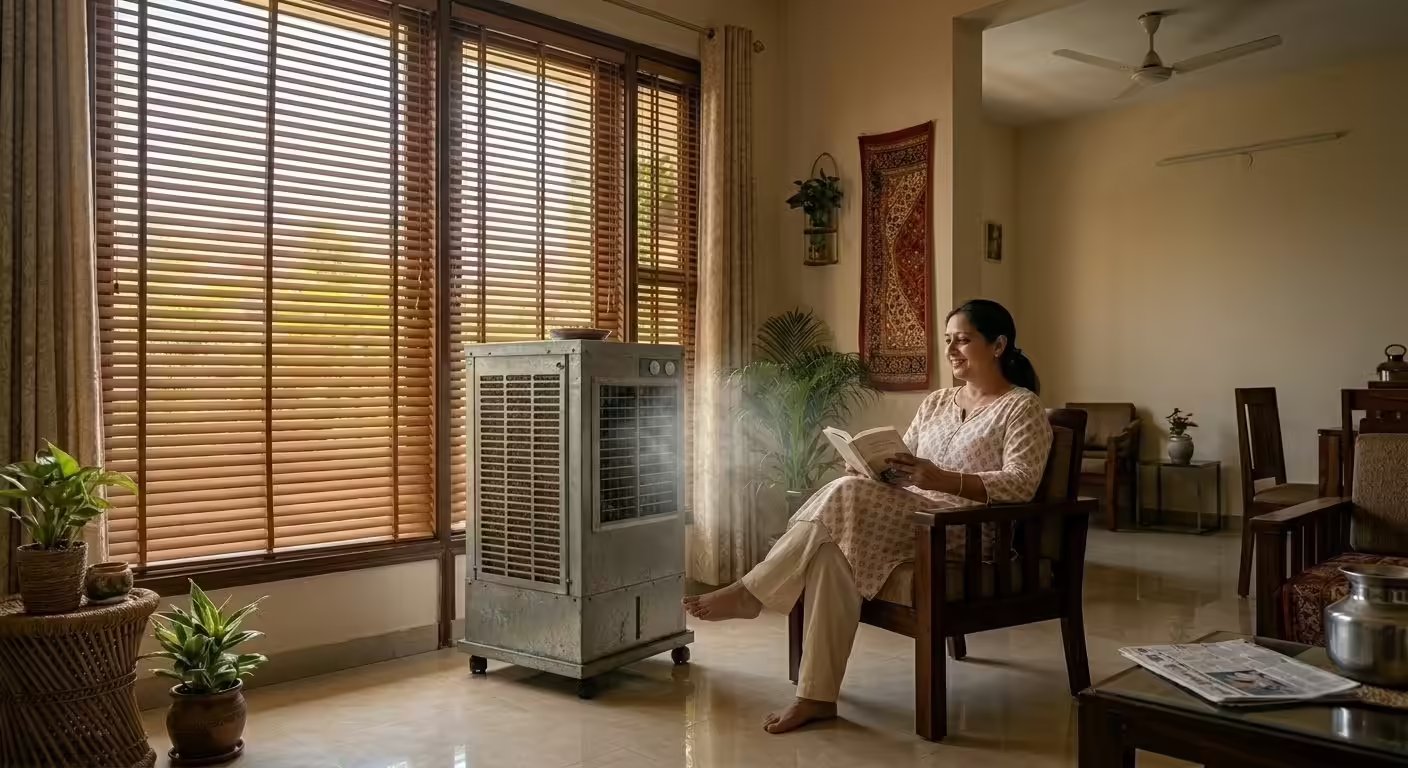
My city is simmering at 44 degrees, and I’m writing this from a room that feels perfectly comfortable.
Not because it’s chilled to 20 degrees, but because a desert cooler is doing what this climate actually needs. Which makes me wonder. When did comfort start meaning overcorrection?
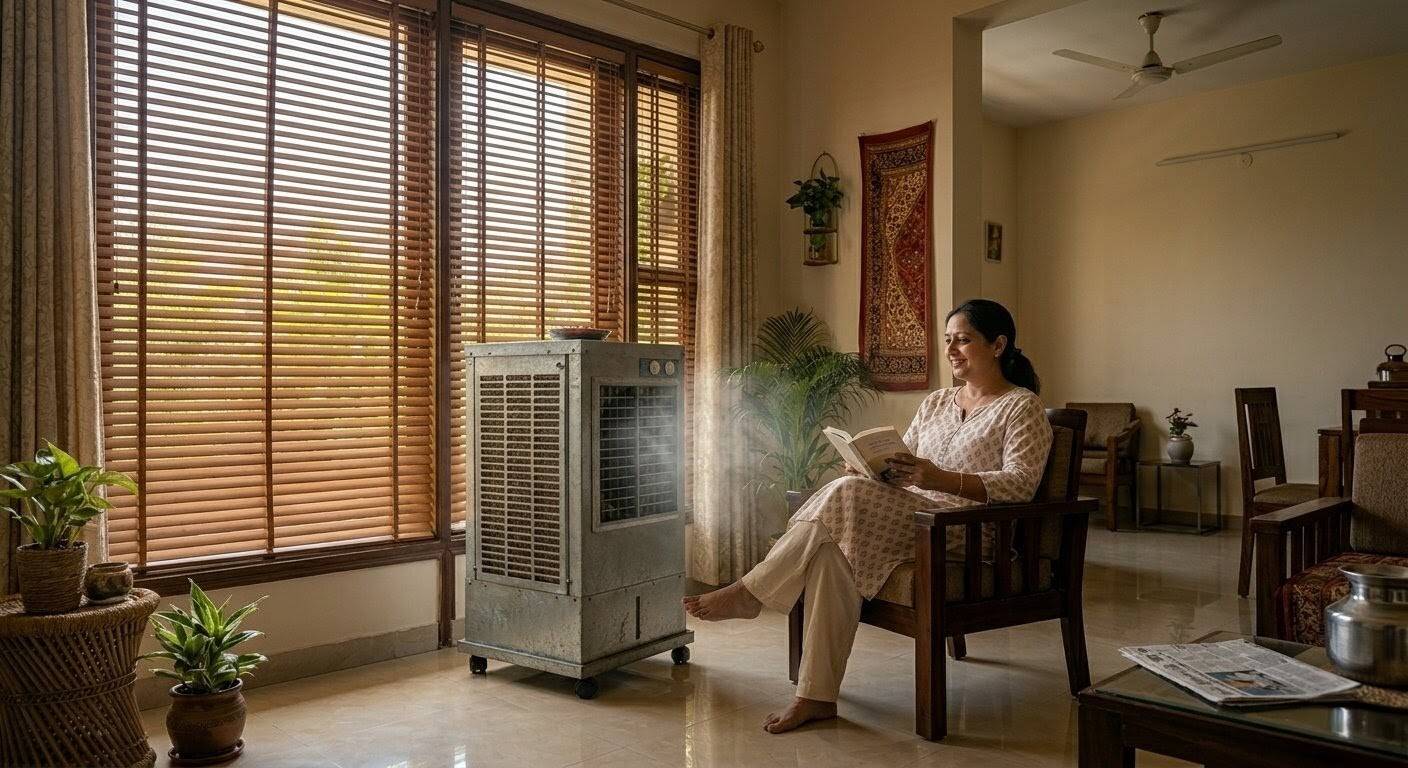

There was a time when 32 or even 35 degrees wasn’t treated like a personal emergency. It was just summer. We adapted. We slowed down in the afternoons, wore lighter fabrics, kept windows aligned for cross-ventilation. Air coolers weren’t a fallback. They were the default. They worked with the grain of the climate.
Today, that threshold has quietly collapsed. At 30 degrees, many of us reach for the remote. And not just for relief, but for a very specific kind of relief. Sealed rooms. Artificial chill. A number on the display that signals control. Somewhere along the way, comfort stopped being about living with the weather and became about defeating it.
Now put a number to that discomfort.
A cautious estimate for the region as a whole suggests that warming has broadly stayed in the same range as India’s overall trend over recent decades, roughly 0.5 to 0.9 degrees Celsius over the past forty years. Less than a degree. That’s the scale of physical change we are dealing with.
And yet, our behavioural response feels far more dramatic.
Meanwhile, India’s cooling story is already showing up in the grid: peak power demand touched 256.11 GW this April, while room AC sales more than doubled from 6 million in 2020 to 14 million in 2024.
These numbers tell a story. They tell that we are acting as if the climate has become unlivable, when in reality, a significant part of the shift has happened inside our homes and inside our heads. Our tolerance has shrunk faster than temperatures have risen. The thermostat has moved more aggressively than the climate itself.
This didn’t happen on its own. It was built, layer by layer, through aspiration.
Air conditioners were never marketed as just appliances. They were framed as upgrades to identity. The messaging was subtle but consistent. A cooler meant you were adjusting. An AC meant you had arrived. Over time, that narrative seeped into our instincts. We didn’t just change our purchasing choices. We changed our expectations of what “normal” should feel like.
And in doing so, we lost something we rarely account for. Resilience.
Because the uncomfortable truth is this. In large parts of India, especially across central regions that experience hot, dry summers, the climate still supports a far simpler, far more efficient solution. Evaporative cooling. The basic principle behind air coolers.
It’s not new technology. It’s not even sophisticated. Water evaporates, air cools, and a steady breeze makes high temperatures livable. No compressors grinding away. No refrigerants. No heavy energy draw.
The efficiency gap between this and air conditioning is not small. A typical room AC consumes around 1 to 1.5 kilowatts per hour. An air cooler operates at a fraction of that, often between 100 to 300 watts. In real terms, that means a cooler can use 60 to 80 percent less electricity. In some cases, even more.
Now stretch that difference across a summer.
What looks like a personal comfort choice starts becoming an energy story. One household switching from AC to cooler for even a few hours a day may not feel significant. But multiply that across millions of homes during peak summer months, and the impact becomes systemic.
This is exactly when India’s power demand begins to spike. Afternoons grow harsher, evenings stretch longer, and grids start feeling the pressure. Air conditioners, with their compressor-based cooling, add a heavy load precisely during these peak hours.
Now imagine a different pattern.
For the first two months of summer, when the heat is intense but the air is still dry, households rely primarily on air coolers. Only when humidity rises with the monsoon does the shift to air conditioning begin. That simple sequencing, aligning technology with climate, can shave off a meaningful portion of peak electricity demand.
Fewer spikes. Less stress on local feeders. Reduced reliance on expensive peaking power. And importantly, lower household electricity bills.
And yet, this option remains underused. Not because it doesn’t work, but because it doesn’t signal aspiration.
We’ve quietly assigned status to inefficiency.
A cooler asks for a slightly open window. It allows outside air to flow in. It cools without isolating you from your surroundings. In contrast, an AC demands closure. Shut the windows. Seal the room. Create an artificial environment that exists independent of what’s happening outside.
One approach negotiates with the climate. The other tries to override it.
For decades, we chose the former. Then somewhere along the line, we started equating the latter with progress.
This is not an argument to abandon air conditioners. There are days, especially in peak humidity, when they are necessary. But making them the default response to heat, even when the climate doesn’t demand it, is a choice worth questioning.
Because this is not just about appliances. It is about how markets reshape needs.
If we continue to let aspiration define comfort, we will keep chasing lower temperatures at higher costs. Higher bills, higher energy demand, greater strain on already stretched systems.
But if we step back and recalibrate, even slightly, the equation changes.
Using air coolers through the dry heat months is not a compromise. It is a smarter alignment of technology with geography. It reduces energy consumption without sacrificing livability. It brings back a form of comfort that is less about domination and more about coexistence.
Maybe the real shift we need is not technological, but psychological.
To accept that comfort does not have to mean 20 degrees.
Sometimes, it can simply mean breathing easy at 30.
Disclaimer
Views expressed above are the author’s own.
END OF ARTICLE