
White House Incident: ‘All he needed was a room key’: Gaps that let a gunman get close to Trump during White House dinner
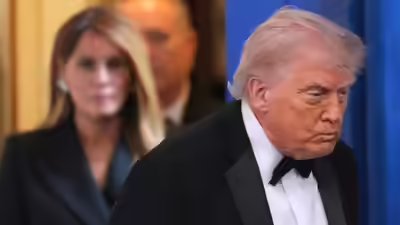
A gunman opening fire inside the hotel hosting the White House Correspondents’ Association dinner has triggered urgent questions about whether gaps in security allowed him to get dangerously close to Donald Trump and other senior officials. The incident, which unfolded late on Saturday night at the Washington Hilton, forced the President and his cabinet to be rushed out as guests took cover, according to Reuters.Authorities say the suspect, armed with a shotgun, handgun and knives, charged a Secret Service checkpoint in the hotel lobby before being tackled and arrested. A Secret Service agent was injured, while the suspect was taken to hospital for evaluation.
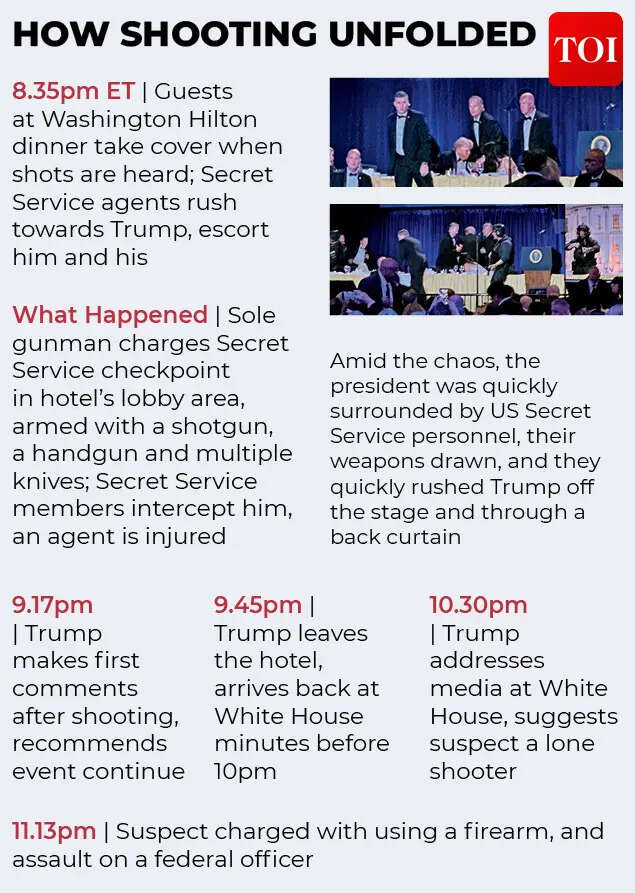
Yet even as officials praised the rapid response, attention has shifted to how the attacker was able to reach the hotel interior at all during one of Washington’s most tightly guarded annual events. Reports suggest that the answer may lie in a combination of access loopholes, a sprawling venue, and a security perimeter that may not have gone far enough.Law enforcement officials told Reuters that while the protective plan ultimately worked, stopping the gunman before he reached the ballroom the fact that shots were heard inside the venue exposed vulnerabilities. Unlike Trump’s campaign rallies, where outer security rings are often expansive, guests at the dinner reportedly needed only a ticket to enter the hotel itself. Metal detectors were placed closer to the ballroom rather than at the outermost access points. “He didn’t beat the security plan the night of the dinner. He beat it the day he made the reservation,” Jason Pack, a former FBI official told WSJ. “They built that perimeter to stop an army. Turns out all he needed was a room key.”
Hotel access and planning gaps emerge
More detailed accounts from The Wall Street Journal point to deeper structural issues. The suspect, identified as a 31-year-old man from California, had checked into the hotel days before the event, effectively bypassing external screening. “He didn’t beat the security plan the night of the dinner. He beat it the day he made the reservation,” a former FBI official told the publication.Guests described relatively light verification checks at entry points, with tickets not always scanned and identification not consistently required. Once inside, individuals could access parts of the hotel without passing through security screening, only encountering magnetometers closer to the main event space.The attacker himself appeared to highlight these gaps in a manifesto, writing that he had expected “security cameras at every bend” but instead found minimal checks inside the hotel. Investigators are still tracing his exact movements from his room to the lobby, where he was eventually intercepted.Despite the breach, officials have maintained that the layered defence system prevented a far worse outcome. Acting Attorney General Todd Blanche said, “The system worked. We stopped the suspect.”