Expanding our consciousness
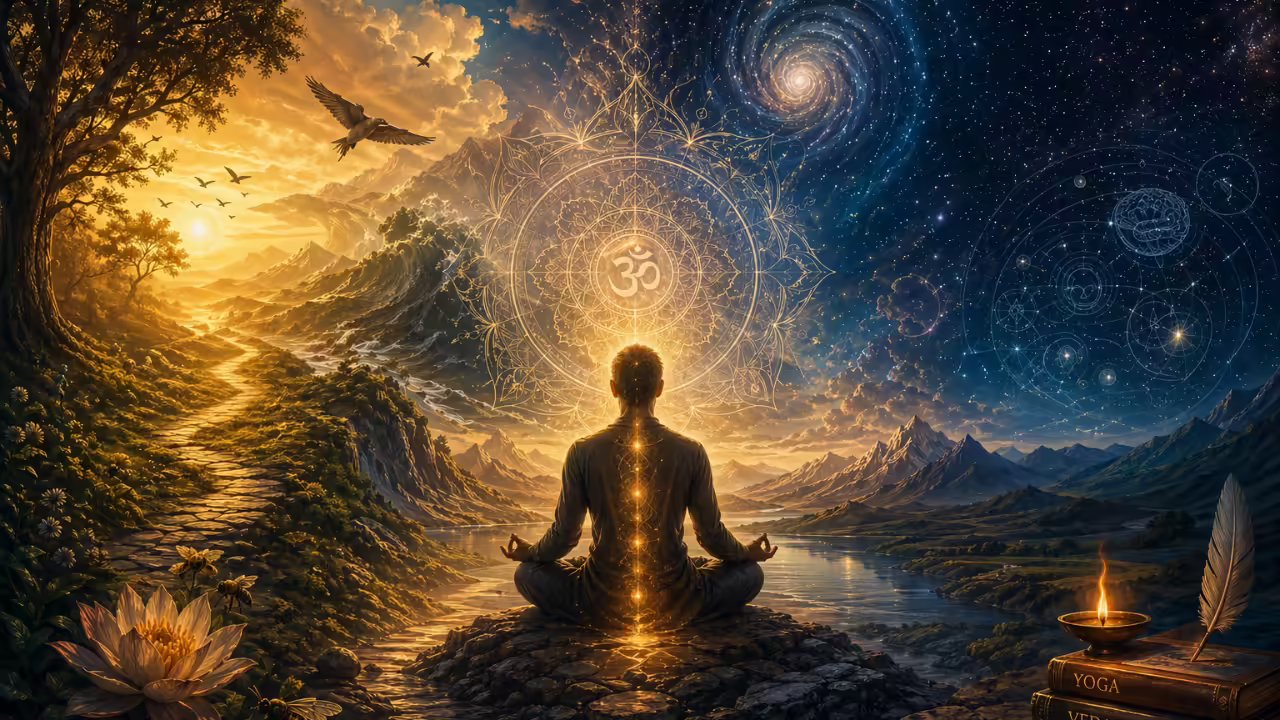
The human quest to understand God and the purpose of existence lies at the heart of spiritual inquiry, especially within the profound traditions of Hindu philosophy. One of the earliest realizations in this journey is that God cannot be grasped by intellect alone. Logic and analysis, though powerful tools for navigating the material world, fall short when applied to the Infinite. The Divine transcends the boundaries of thought. To truly know God, one must rise beyond the restless activity of the mind and enter a higher state of awareness—intuitive, direct, and experiential.
This elevated awareness is often described as universal consciousness—a state in which one realizes that the essence within oneself is not separate from the essence that permeates the entire cosmos. The sages illustrated this truth through simple yet profound metaphors: just as waves—small or large—arise from the same ocean, all beings arise from the same Divine Reality. Differences exist only in appearance; in essence, everything is an expression of the same infinite Spirit. To perceive this truth is to awaken from the illusion of separateness.
Yet such realization is not easily attained. The human mind, conditioned by sensory experiences and habitual patterns, is limited in its ability to comprehend the Infinite. Attempting to contain God within ordinary consciousness is like trying to hold the ocean in a small cup—the cup must first be expanded. In the same way, our faculties—attention, concentration, and intuition—must be refined and enlarged. This expansion of consciousness is the true purpose of spiritual practice.
At the root of human limitation lies ignorance—not merely a lack of knowledge, but a fundamental misidentification of the self with the body and ego rather than the soul. In Hindu philosophy, this ignorance is considered the greatest of errors. The soul, though inherently infinite, assumes finitude by identifying with the temporary. It forgets its divine origin and begins to live as though bound by birth, death, pleasure, and pain. Yet the scriptures affirm that all souls are reflections of the Divine. As ordinary beings, we are expressions of God’s creation; as realized beings, we recognize ourselves as participants in His very nature.
Every human being, therefore, is a channel of immeasurable consciousness. We are not isolated entities, but receivers of the subtle laws that govern existence. Just as a radio receives signals when tuned to the right frequency, the human mind can receive higher truths when properly attuned through discipline and awareness. The divinity we seek outside already resides within us, awaiting awakening.
As children of the Divine, we are endowed with extraordinary gifts—free will, reason, and the capacity for conscious action. These are both privileges and responsibilities. Life is not meant to be confined to narrow self-interest. It is meant to be experienced fully and then transcended. Yet many become so absorbed in the “movie” of the world that they forget it is only a temporary stage.
The challenge, therefore, is to live in the world without becoming bound by it. This requires evenness of mind—an inner balance that remains undisturbed amid changing circumstances. From the perspective of the soul, no one is greater or lesser than another; all are expressions of the same Reality, differing only in awareness. The analogy of the fly and the honeybee illustrates this beautifully: the fly is drawn to both filth and sweetness, while the honeybee seeks only nectar. Similarly, the unrefined mind becomes entangled in everything, while the purified mind seeks only what uplifts.
Despite its involvement in the world, the soul itself remains untouched—pure, eternal, and luminous. Through the influence of māyā, however, it becomes identified with change and limitation. Spiritual evolution is the gradual dissolution of this false identification. When awakening occurs, one realizes that to know God is to know everything, for God is the source of all that exists.
The path to such realization lies in meditation. Meditation is not merely a technique but a doorway—the essential means through which one experiences the Divine directly. By withdrawing attention from external distractions, the mind becomes calm, focused, and expansive. In this stillness, one experiences completeness—not through external acquisition, but through inner realization.
The discipline of yoga, especially Rāja Yoga, offers a systematic path for this transformation. Yoga means union—the merging of individual consciousness with universal consciousness. It provides practical methods for mastering the body, calming the mind, and awakening intuition. Contrary to common belief, yoga does not reject action; it refines it. True yoga lies in performing actions with awareness, detachment, and dedication to the Divine.
Closely related is the philosophy of Vedānta, which proclaims that all existence is one—Brahman, the infinite Spirit. The apparent division between matter and spirit is an illusion created by māyā. However, this truth must be experienced, not merely understood intellectually. Without inner discipline, Vedantic knowledge remains abstract.
The Sāṅkhya system complements this by analyzing the nature of suffering. It teaches that suffering arises from misidentifying the self with the body and mind. True religion, therefore, lies in the complete cessation of this suffering through right knowledge and inner awakening.
Even doubt has a role in this journey. It prevents blind belief and encourages deeper inquiry. Yet, ultimate truth cannot be grasped by intellect alone. The mind can interpret appearances, but it cannot perceive the underlying reality. That requires direct experience through meditation.
Ethical transformation is equally essential. True spirituality expands one’s identity beyond the self. There is a lower selfishness that seeks personal gain, and a higher, sacred selfishness that finds joy in the well-being of others. To feel and act for others is to align oneself with the Divine. Emotions like anger and desire need not be suppressed blindly; they can be transformed into constructive forces.
Detachment from the body is another key step. This does not mean neglect, but transcendence. Through discipline and inward focus, one can rise above bodily identification even while living an active life. The true hermitage is within.
Renunciation, therefore, is not external withdrawal, but internal freedom. The true renunciant is one who lives in the world yet remains centred in the Divine. Every action, when performed with awareness and dedication, becomes a means of liberation.
Human life is not meant to be lived unconsciously. To live without awareness is to remain bound. True freedom lies in the destruction of ignorance through both reason and direct spiritual experience.
Much of our potential remains dormant simply because it is not cultivated. Human beings possess immense inner capacities—intuitive, mental, and spiritual. These can be awakened through conscious effort. Even subtle interactions carry energy; the presence of spiritually awakened individuals can uplift others in profound ways.
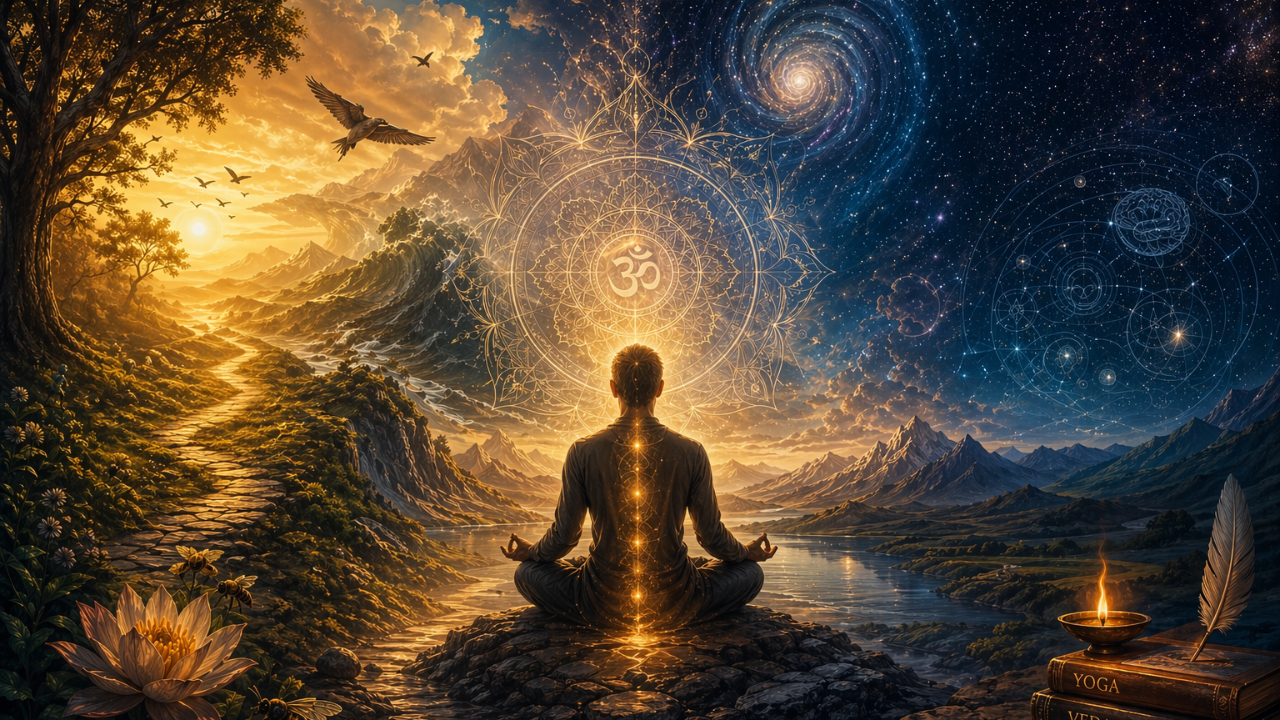

Ultimately, life is a journey toward the expansion of consciousness—from limitation to infinity. To understand the Divine drama is not merely to observe it, but to participate in it consciously, grow through it, and transcend it. When one realizes unity with the Infinite, the search ends. One discovers that the goal was never separate—the seeker and the sought were always one.
Disclaimer
Views expressed above are the author’s own.
END OF ARTICLE