
Why China chose to stay on the sidelines of the war in West Asia
Merely because the People’s Republic of China has been peripheral to the conflict in the Gulf should not be taken to mean that it does not have the capacity to get involved. Just as the attack on Iran was a war of choice for Washington, so too has Beijing chosen to remain aloof. The Chinese are a deliberate people. They do not hasten to judge without a detailed study of any situation. Although China has been seemingly passive aside from its clear condemnation of the US-Israeli attack and the assassination of Iran’s supreme leader, a behaviour that some in the West might conflate with a lack of capacity to influence events, what China is doing is reflecting on the implications of the war.

The Chinese leadership might be amused by the international isolation in which Washington finds itself, with neither allies nor partners coming to America’s assistance after having suffered a whole year of insult and indignity at their hands, but other lessons from this war are not as sanguine. In the 1991 Gulf War, the impressive display of American technology liberated China from the Maoist idea of ‘people’s war’ and convinced it to rapidly modernise its military. Today, the PLA is the most modern and powerful military after the US. But the Iran conflict has, ironically, demonstrated that even with a technologically superior military, war is neither quick nor decisive when the smaller adversary is determined to resist by deploying asymmetric deterrence. Taking territory requires boots on the ground, and China hasn’t fought a real war since 1979. Why is this learning important for the Chinese? Because they have declared that they will reunify with Taiwan by any and all means before 2049. On paper, Taiwan is the weaker party but, as Iran demonstrates, a disciplined leadership that continues to function despite decapitation strikes and technological deficiencies can hold a powerful adversary at bay.
The Iran war also holds crucial lessons for China in what might be an eventual Sino-US conflict over Taiwan. Here too, what is at stake is a critical waterway (Taiwan Strait), through which nearly 20% of global maritime trade passes. China has the potential to disrupt, if not to block it— a move that is likely to meet with strong opposition from the US. Iran’s success or failure in using its leverage over the crucial strait of Hormuz to forge peace and a new order in the Gulf will hold valuable lessons for the Chinese. American strategy, tactics, and the performance of weapons platforms, as well as the use of AI for precision targeting, are, therefore, likely to be subjects of intense scrutiny by the PLA. At the same time, the Chinese are also likely to take away other lessons — targeting American bases in third countries in case of war, as well as the hardening of their own infrastructure against potential US attack. Since the fourth plenum of the central committee in 2025, President Xi Jinping has called for the securitisation of critical supply chains in order to make them ‘risk-free’. This trend will inevitably strengthen, as will another. Iran’s theocratic leadership has shown how an ideologically cohesive organisation can operate despite murderous assaults by the adversary. The takeaway for China’s leader is to double down on internal hardening within the party-state through greater ideological cohesion and by doubling their guard against the penetration of foreign ideologies that might weaken the Communist Party. Reports that the Americans funnelled weapons into Iran in early 2026 in the hope that it might spark an armed insurrection will enhance Chinese paranoia with significant domestic implications.
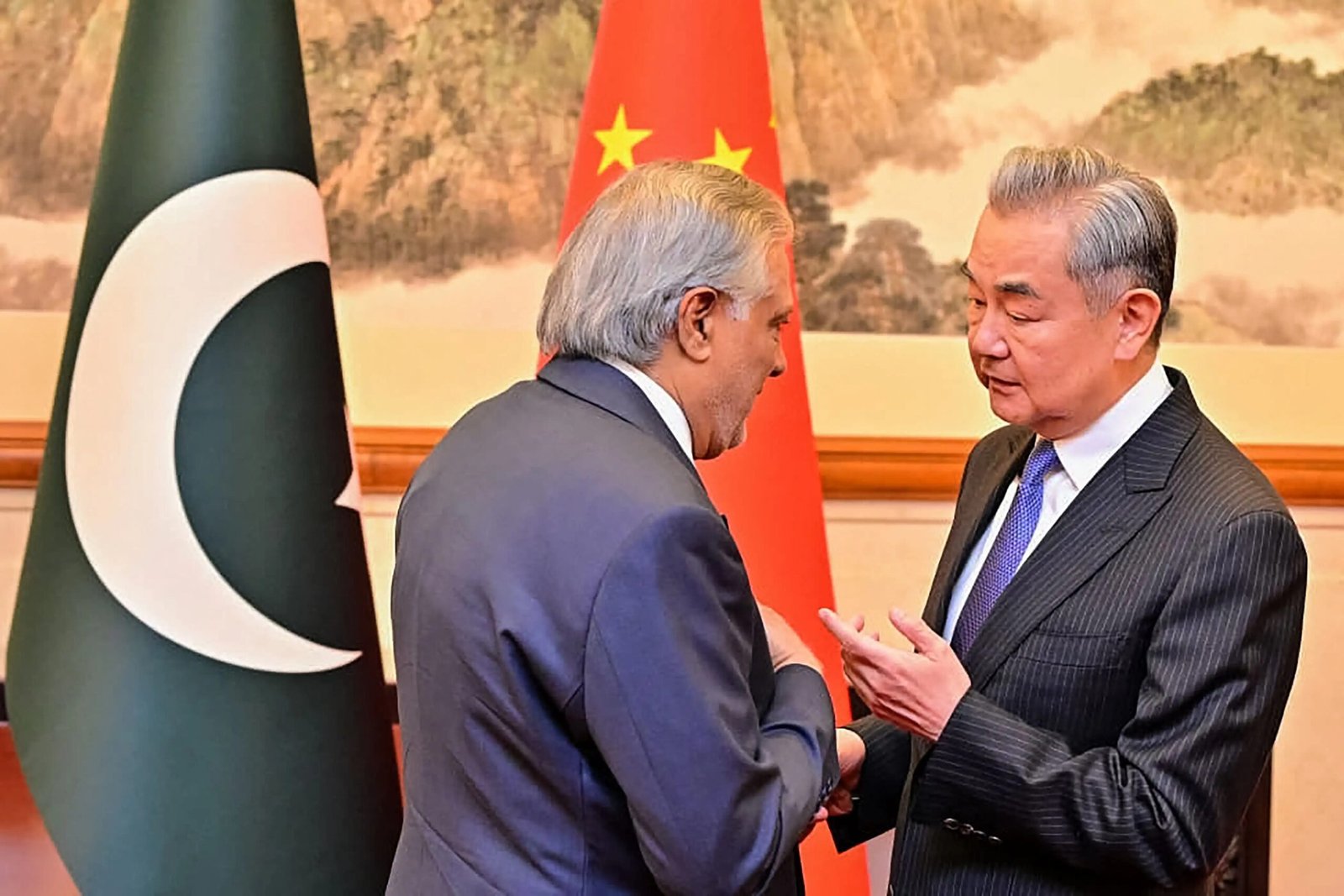
Coming back to the question of why China sat on the sidelines for most of this conflict, in this instance, it was content with allowing Pakistan to run the mediation in the knowledge that its proxy would consult with and take into consideration Chinese interests in any potential peace settlement. In the meantime, China can continue to enable Iran to facilitate oil transactions through grey shipping and banking channels, as well as to provide crucial dual-use items, while also doing business with the Gulf states. According to reports, in early March, China supplied sodium perchlorate, a precursor for missiles, to Iran, and it continues to be the largest buyer of Iranian oil. Its assistance also takes other forms — social media and so-called non-governmental companies (MizarVision, for example) that allow it to provide Iran with images and information detailing the location of US forces and movements with plausible deniability. And there is every likelihood that China’s BeiDou system (an alternative to the US GPS) is being used by the Iranian military for targeting its adversaries. It suits China to operate from the shadows.
The Chinese stand to benefit from the ceasefire irrespective of the form or shape that the peace might take. First, Iran would likely become more dependent on China in any circumstances, which would also give it first rights to profitably rebuild infrastructure in exchange for Iranian crude oil. Second, it would bind Iran even closer in a strategic sense to China in a critical geography (proximity of two critical choke-points — Hormuz and Bab el-Mandeb), possibly with future basing facilities. At the very least, it would enhance China’s strategic footprint in the northern Indian Ocean. Third, it would solidify the China-led effort to unite the Eurasian landmass as a bloc. China steered Iran’s entry into the SCO (2023) and BRICS (2024) with this long-term strategic goal in mind. Binding Iran and Russia still closer to China (together with Pakistan) reduces the possibility of American subversion from its western areas (which are the sensitive border regions of Xinjiang and Tibet). The US-led war might, ironically, serve China’s national security goals in more than one way.
But, perhaps, the most consequential outcome for China is that the US has demonstrated the limits of its power in this war. They no longer have the monopoly on technology, equipment, or information. China can provide alternative technology, advanced weapons, satellite-based navigation systems, AI-enabled platforms, banking channels, shipping lines, and dual-use items. It marks the end of Western hegemony. Therein, perhaps, lies the most important benefit for China from this war. Whether they will use the opportunity wisely or fall to hubris is another matter.
Disclaimer
Views expressed above are the author’s own.
END OF ARTICLE