No to petrol: 2-wheelers to go electric in city in 2 years | Delhi News
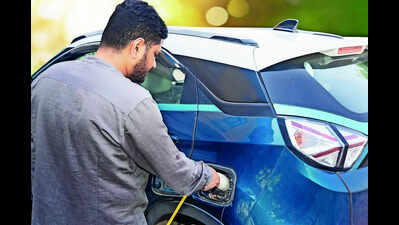
New Delhi: The Delhi electric vehicle policy 2.0 places the two-wheeler segment at the forefront of govt’s electrification roadmap, mandating that only electric two-wheelers will be allowed for new registrations from April 1, 2028.Two-wheeler users form the largest group on the city roads, with 67.7% of its total vehicle fleet. Used commonly by office-goers and students, the number of two-wheelers has gone up in recent times with the expansion of the gig economy and bike taxis.In the three-wheeler segment, all new registrations of autos will be restricted to electric models starting Jan 1, 2027, effectively phasing out their non-electric variants.In the school transport sector, the draft policy proposes a phased adoption of electric buses. All schools will be required to meet minimum electrification targets for their bus fleets over a defined timeline. At least 10% of the total fleet — owned, leased or hired — will be electric within two years from the date of the policy notification. This share will rise to 20% by the end of three years. By March 31, 2030, a minimum of 30% of all school buses must be electric. The education department has been asked to ensure compliance.From Jan 1, 2026, cab operators and delivery companies are not allowed to add new petrol or diesel vehicles to their fleets in certain categories, including small four-wheeler goods vehicles and two-wheelers. However, they can still add BS-VI standard petrol two-wheelers until Dec 31, 2026.Transport minister Pankaj Kumar Singh said, ‘Our EV policy is designed to make clean mobility accessible and affordable while significantly reducing pollution. By offering tax exemptions, incentives and expanding charging infrastructure, we aim to accelerate the transition to electric vehicles and build a sustainable transport system for the future.”Lauding the moves, including transitioning all new govt vehicle procurement to electric and setting electrification targets for two- and three-wheelers and school buses, the managing director for India at International Council on Clean Transportation, Amit Bhatt, said the decisions “signal a strong and decisive move towards clean mobility”.“If implemented effectively, these measures could represent one of the most significant transport reforms undertaken by any state in recent years to improve air quality,” he added.Sunil Dahiya, founder of environmental think-tank Envirocatalysts, said, “To make this even better, govt should mandate that EV charging comes predominantly from renewable sources using ‘time of day’ tariff to avoid shifting pollution to power plants.” By setting hard deadlines for electric three-wheelers by 2027 and two-wheelers by 2028, “Delhi is making progress towards a breathable future”, he added.Anil Chhikara, a faculty member at Asian Institute of Transport Development, however, said, “A ban on new registrations of petrol two-wheelers will create panic. Delhi can instead adopt a mixed fleet of conventional and electric two-wheelers as EV two-wheelers have their own constraints. Private EVs should be promoted based on their merits, not forced upon consumers or subsidised at the expense of taxpayers.”The EV policy 2.0, he claimed, appears to be a modified version of the earlier policy, with limited fresh direction. “Delhi’s primary need is decongestion rather than adding more private vehicles to already crowded roads.”Chhikara emphasised that public funds should be prioritised for strengthening public transport as seen in South America, Singapore and Ukraine, and enabling a shift away from private vehicle use. “Investment should focus on subsidised last-mile EV connectivity and making common mobility cards more affordable,” he added.