
Why the US-Iran pause is already unravelling
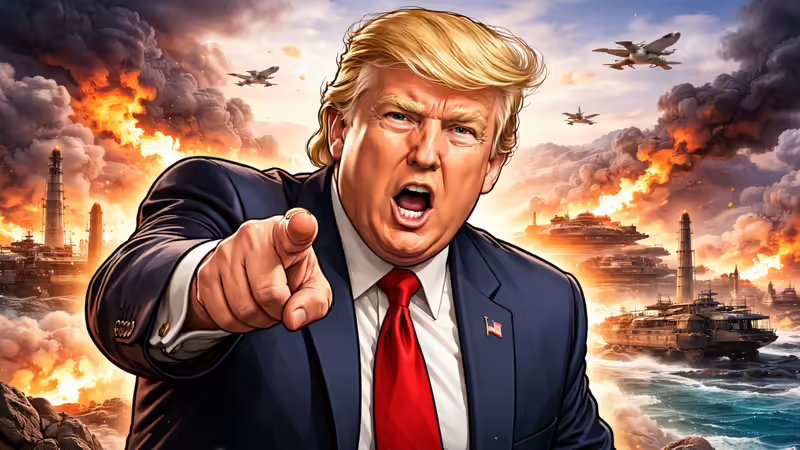
A ceasefire announced in ambiguity, threatened in the same breath by its own architect, and brokered by a state that once hid Osama bin Laden next to its military academy. This is not peace — it is a coercive pause with a fourteen-day expiry date.
The ink was barely dry before the contradictions began tearing it apart. What we are witnessing is not a ceasefire. It is a theatrical pause dressed up as diplomacy.
The announcement on the night of April 7 was greeted with the predictable euphoria of markets — stock indices surged, oil dropped below $100, and the word “peace” was used freely. It lasted less than twenty-four hours before the architecture began to crack.
Consider what the architect of this “peace” was saying even as the deal was being celebrated. In a Truth Social post timestamped 09:16 on April 9, Donald Trump declared that all US ships, aircraft, military personnel, weaponry and ammunition would remain in place around Iran “until such time as the REAL AGREEMENT reached is fully complied with.” He added — in capital letters — that if compliance faltered, “the ‘Shootin’ Starts,’ bigger, and better, and stronger than anyone has ever seen before.”
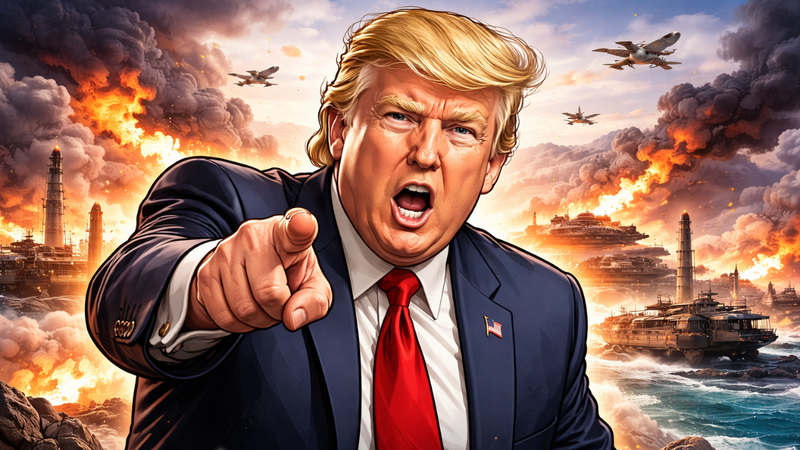

This is not the language of a statesman consolidating a peace. It is the language of a hostage negotiation conducted at gunpoint. A ceasefire that one signatory announces while simultaneously threatening annihilation is not a ceasefire at all — it is a coercive pause. The gap between the rhetoric of resolution and the rhetoric of threat is itself a measure of how fragile this arrangement is.
Iran’s Supreme National Security Council published its 10-point plan with remarkable candour: passage through the Strait of Hormuz would be reopened “in coordination with Iran’s armed forces,” explicitly guaranteeing what Tehran calls “Iran’s dominance” over the waterway. This is not a return to the pre-war status quo. It is Iran converting a wartime tactic into a permanent structural position.
Before the war, the Strait was governed by the internationally recognised Traffic Separation Scheme adopted by the IMO in 1968. Iran now seeks to replace that multilateral framework with bilateral gatekeeping. The difference between “the strait is open” and “the strait is open subject to coordination with Iranian armed forces” is not semantic. It is strategic.
The leverage is not in any transit premium. It is in the veto. Iran now holds a formalised capacity to halt one-fifth of the world’s daily seaborne oil supply. That is not a concession Iran made to the United States. That is a concession the United States made to Iran.
Iran’s 10-point plan explicitly conditions the deal on ending the war against “all components of the resistance axis” — naming Hezbollah. Israel and Washington have stated, with equal clarity, that the ceasefire does not constrain Israeli operations in Lebanon. Within hours of the announcement, Israel carried out what the UN described as the largest coordinated strikes on Lebanon since the war began. The Lebanese health ministry reported at least 182 killed.
Both sides cannot be correct. Either two fundamentally different agreements were simultaneously announced as one, or one party is misrepresenting what was agreed. Neither scenario is a foundation for durable peace.
The Pakistan problem
There is a further credibility issue that has received insufficient attention: the role of Pakistan as broker.
Pakistan’s prime minister served as the intermediary through which this deal was assembled — a striking choice for a country with a long and documented history of harbouring the very networks the United States has spent two decades fighting. Osama bin Laden was found not in a cave but in a walled compound in Abbottabad, a short walk from Pakistan’s premier military academy. The Haqqani network, Lashkar-e-Taiba, and elements of the Afghan Taliban have all at various points operated with varying degrees of tolerance, if not active support, from within Pakistani territory.
To now cast Pakistan as a credible neutral interlocutor — between a US military campaign and an Iranian state the US designates a sponsor of terrorism — requires a suspension of institutional memory that borders on the wilful. A brokered agreement is only as reliable as its broker. When the broker’s own record on state-sponsored violence is contested, the agreement inherits that uncertainty.
A genuine resolution would need at minimum four things not currently on the table: a multilateral framework with clear verification mechanisms; clarity on Lebanon that both Israel and Iran can accept; a negotiated arrangement on Hormuz that restores the international legal framework rather than formalising Iranian gatekeeping over a global commons; and sequenced, verifiable sanctions relief rather than the blanket immediate lifting Iran demands and Washington cannot realistically deliver.
None of this is impossible. But none of it is happening over two days of talks in Islamabad.
What we have is a pause, not a peace — achieved under duress, announced in ambiguity, threatened with resumption by its own principal, and brokered by a state whose credibility on the very issues at stake is deeply compromised. The next fourteen days will tell us whether the guns stay silent. The words being used suggest they may not.
Disclaimer
Views expressed above are the author’s own.
END OF ARTICLE