
Artemis II astronauts capture solar eclipse as they flew around far side of Moon; Mars spotted in frame
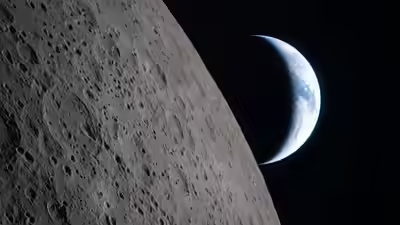
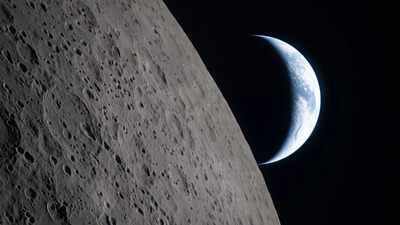
Astronauts on Nasa’s Artemis II mission have captured a rare image of the Moon eclipsing the Sun, with Mars and two other planets visible in the same frame. The photograph, taken during the crew’s deep-space journey, shows the Moon completely blocking the Sun and revealing the glowing solar corona. Just off the lower right edge of the Moon, three bright points of light appear, with the middle one having a subtle reddish tint. Nasa confirmed that this object is Mars, while the other two are likely bright planets visible due to the dramatic drop in sunlight during the eclipse.
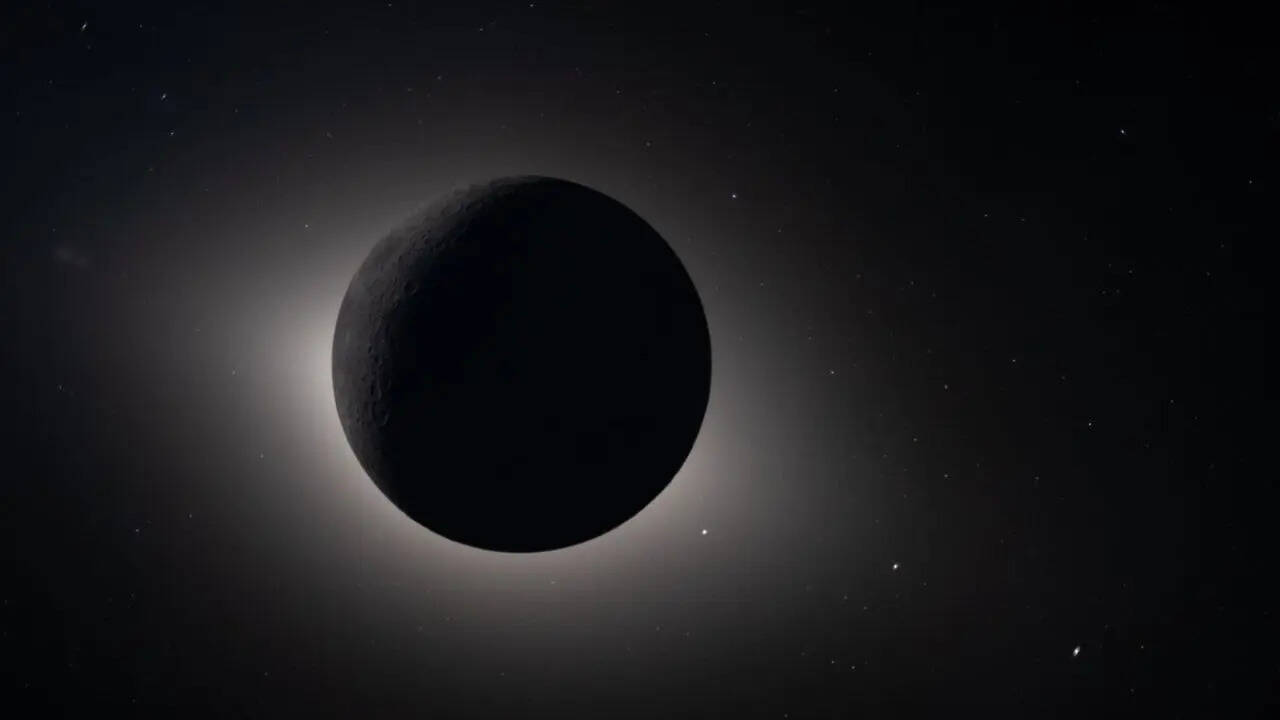
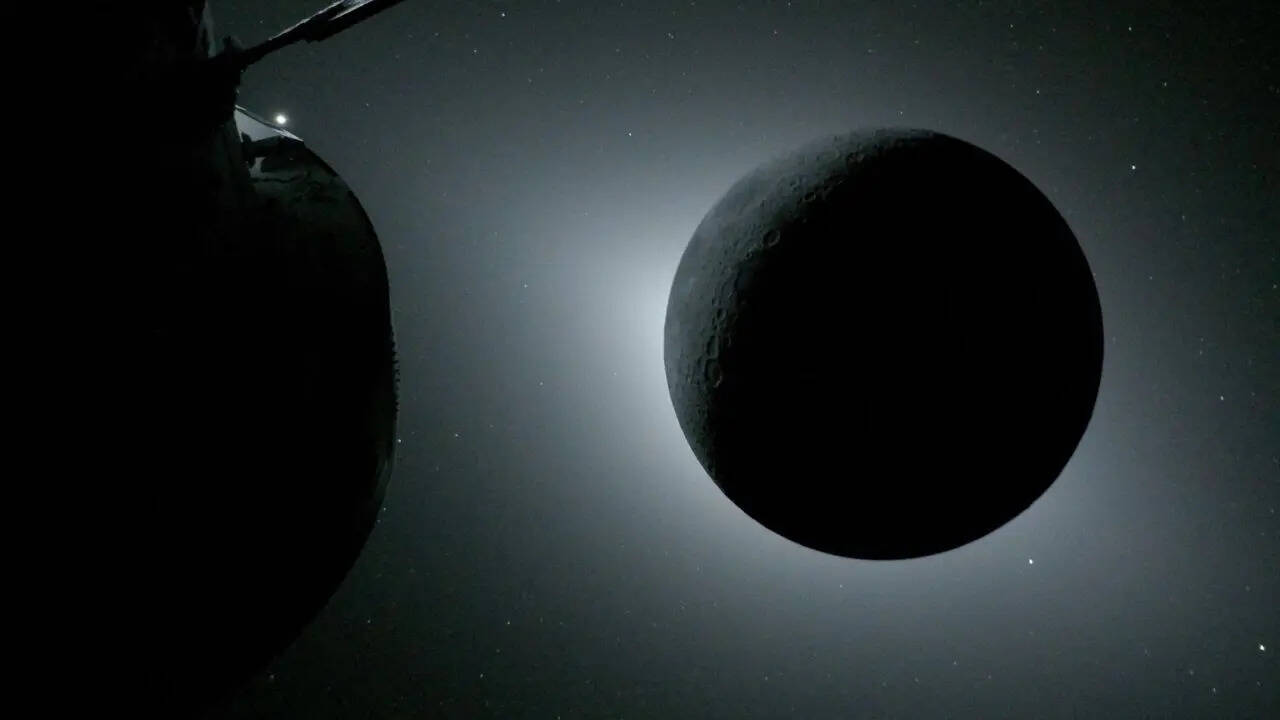
Images taken on April 6 from cameras mounted on the Orion spacecraft’s solar array wings also captured the Moon as a dark, sharply defined sphere backlit by the Sun, with its cratered surface faintly visible along the edge. Part of Orion’s structure appears in silhouette in the foreground, emphasising the spacecraft’s position during the alignment.
The moment comes as part of Nasa’s broader Artemis program, which aims to return humans to the Moon for the first time since the Apollo era. Launched aboard the Space Launch System rocket, the crew is travelling in the Orion spacecraft, designed for long-duration missions beyond low Earth orbit. This mission is a key step toward establishing a sustained human presence around the Moon.
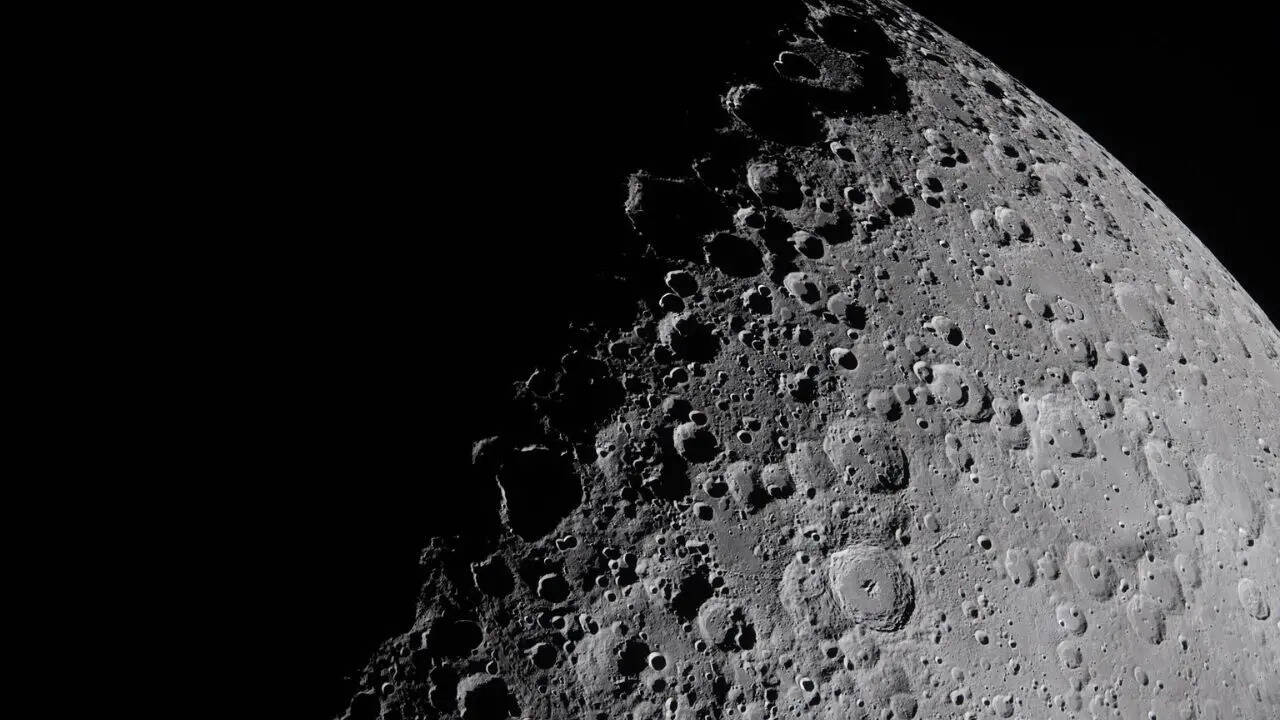
Unlike the Apollo missions, which focused on brief lunar landings, Artemis is designed for long-term exploration. The current crew—Reid Wiseman, Victor Glover, Christina Koch and Jeremy Hansen—has been hailed as the most diverse ever sent on a deep-space mission, representing a mix of backgrounds and experience and marking a shift in how Nasa approaches human spaceflight. Plans include building the Lunar Gateway, a space station that will orbit the Moon and support repeated missions to the lunar surface, particularly near the south pole where water ice has been detected.Nasa officials view Artemis as a foundation for future human missions to Mars. By testing new technologies and operating farther from Earth than ever before, the program is preparing astronauts for the challenges of deep-space travel while continuing to deliver rare and striking views of the solar system.