
Lessons for India from a war nobody wanted
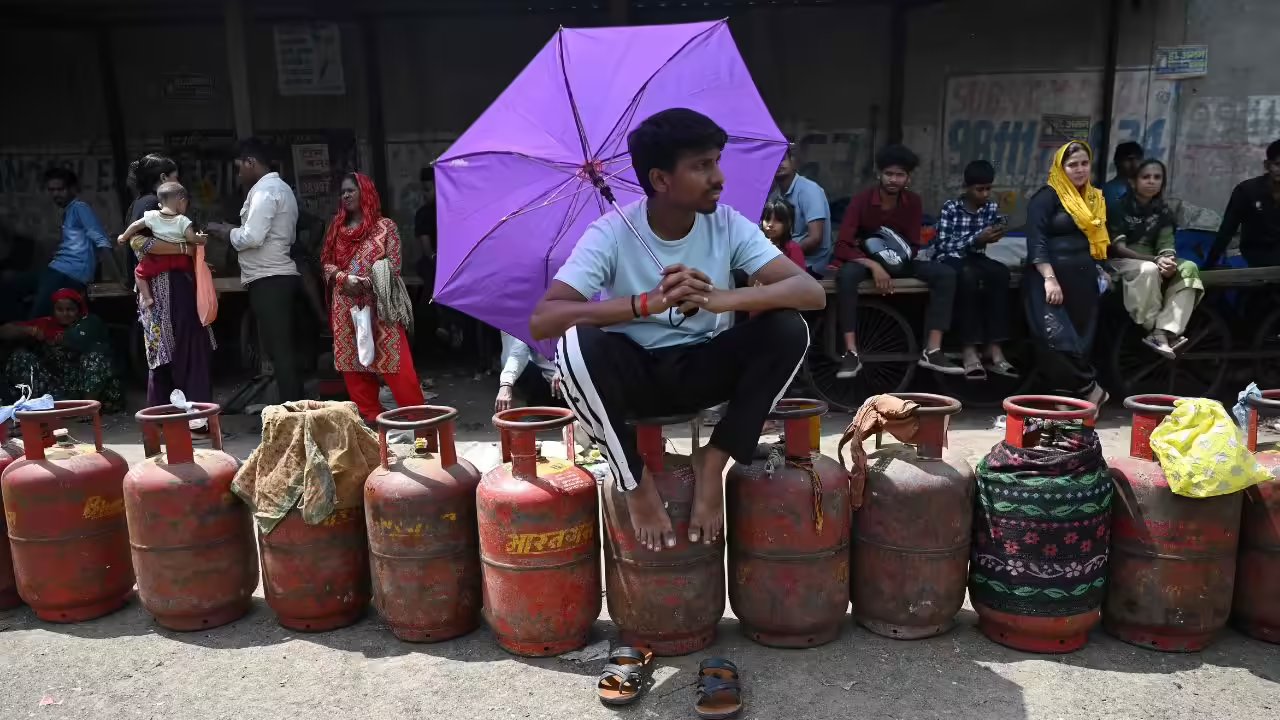
One month into the US-Israeli assault on Iran, the conflict has produced outcomes few anticipated or desired. Indirect peace talks between Washington and Tehran — facilitated through Oman and Qatar — were still active when the strikes began on February 28. Goalposts shifted weekly: from degrading Iran’s nuclear programme to neutralising proxy networks or enforcing regime change, before narrowing to a belated priority — restoring navigation through the Strait of Hormuz, a waterway Iran subsequently mined because of the strikes.
The result is self-inflicted irony: the war’s only surviving objective — keeping Hormuz open — is precisely what the war has undone.
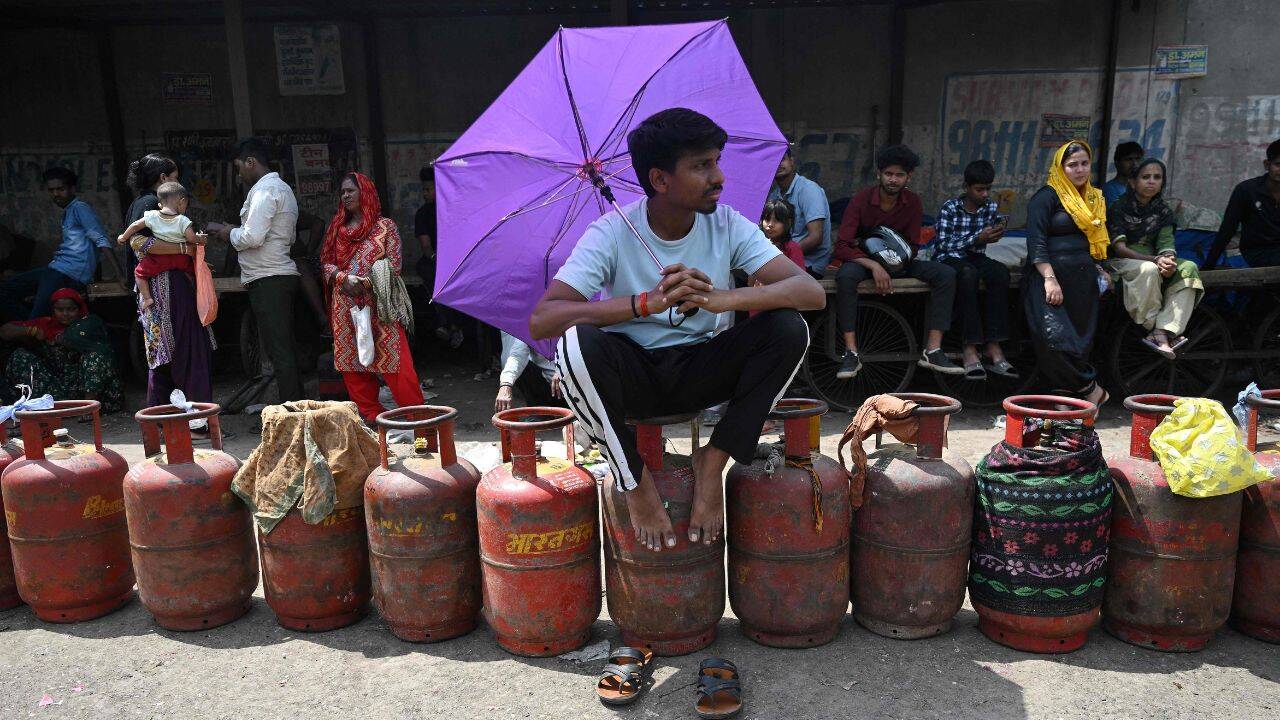

The energy crisis has prompted India to diversify its sources
In his prime-time address, President Trump declared that the core strategic objectives of Operation Epic Fury were nearing completion and conditioned any ceasefire on Iran reopening the Strait of Hormuz.
Tehran’s response was unambiguous: Iran’s foreign ministry said no negotiations were underway and that the country would defend itself for as long as strikes continued.
The gap between Washington’s proclaimed victory and Tehran’s determination to fight captures the war’s fundamental paradox. The likely outcome is a face-saving framework — supervised restrictions on enrichment, a partial reopening of Hormuz, a US declaration of success — leaving every underlying tension unresolved.
The conflict has exposed fractures in every alliance it was supposed to fortify. Most NATO allies declined direct involvement, prompting Trump to question the utility of the alliance.
The GCC states found themselves in the most invidious position: while Gulf leaders publicly called for diplomacy, Saudi Arabia and the UAE privately urged Washington to press the campaign until Iran’s capabilities were decisively degraded.
These same states bore the brunt of Iranian retaliatory strikes on their cities and oil infrastructure for hosting US bases they could neither vacate nor protect. The promised US security umbrella proved porous; Saudi Arabia’s Strategic Mutual Defence Agreement with Pakistan reflects the hedging now underway, while China’s Gulf engagement remains anchored in economics rather than military commitments.
Compounding Gulf unease is Prime Minister Netanyahu’s declared ambition to make Israel the “region’s superpower”. He has repeatedly invoked the “Greater Israel” vision, consolidating control over southern Lebanon and expanding settlements under the cover of the war. For Gulf capitals, replacing one existential threat with another — a regionally dominant Israel armed with permanent American legitimacy — has sharpened the strategic calculus.
In a strong pushback, Turkish President Erdoğan strongly opposed US-Israeli attempts to recruit PKK and PJAK-linked Kurdish fighters as ground proxies inside Iran, warning that ethnic destabilisation in Tehran would have cascading regional consequences.
The war has laid bare the calculations of every major power. Russia benefits from the conflict continuing every week: surging revenues and attention diverted from Ukraine.
China is the quiet net beneficiary — buying discounted Iranian crude, settling in yuan rather than petrodollars, and watching rivals exhaust themselves in a war Beijing neither initiated nor needs to fight.
The near-closure of the Strait of Hormuz triggered the most severe energy shock since 1973, accelerating a structural shift: Gulf bypass pipelines are being expanded, LNG terminals are being fast-tracked, and alternative supply corridors are attracting fresh investment.
For India, the war has been a crisis, an opportunity, and a reflection of its foreign policy.
The closure of the Strait of Hormuz, through which about 50% of India’s crude imports are carried, triggered a severe energy crisis and prompted a major restructuring of its energy security options: diversifying sources, expanding strategic reserves, and giving a fresh impetus to domestic exploration.
Crude imports from Russia surged to a post-sanctions record of over two million barrels per day in March, while the US — now India’s second-largest LNG supplier — continued delivering record volumes to Indian terminals.
India navigated the crisis with tactical dexterity, though the diplomatic arithmetic is less straightforward. India co-sponsored UNSC Resolution 2817 — adopted on March 11 with 135 co-sponsors, a Security Council record — which condemned Iran’s attacks on GCC states in the strongest terms but made no reference to the US-Israeli strikes that triggered the conflict.
As India remained silent on the violation of Iran’s territorial integrity, capitals in the Global South observed how a nation claiming non-alignment’s moral heritage exhibited a foreign policy driven more by constraints than by convictions.
The way forward does not require an impossible choice between Tehran and Riyadh, or between Washington and strategic autonomy.
It requires consistency: applying the same standards of territorial integrity and international law regardless of the power concerned, and deploying those relationships not to hedge alone, but to shape outcomes. India’s value as a partner rests on its perceived independence.
Preserving that perception, in word as well as deed, is not merely a moral aspiration; it is a national interest. The war nobody wanted has produced an opening that no one anticipated—for a credible, principled voice to help build the architecture of a durable peace in an emerging world order. That role is India’s to claim, or to forfeit.
Disclaimer
Views expressed above are the author’s own.
END OF ARTICLE