
Massive x1.4 solar flare erupts just days before Artemis II launch: Here’s what NASA says |
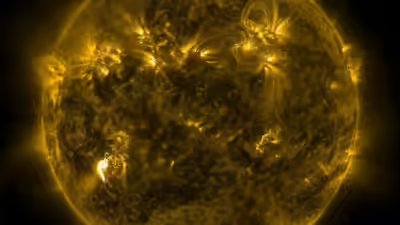
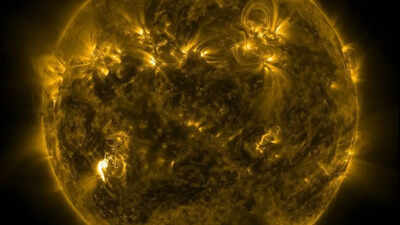
A powerful burst of solar activity briefly caught attention this week, arriving just days before one of the most closely watched space missions in recent years. The Sun released an X1.4-class solar flare, strong enough to disrupt radio signals across parts of Asia and Australia and trigger concern about possible risks to astronauts. For a moment, the timing felt awkward. NASA’s Solar Dynamics Observatory, which watches the Sun constantly, captured an image of the event. But what about the upcoming Artemis II launch on April 1, 2026? Will it cause any impact on the mission? NASA reveals.
How the recent solar flare and CME could have affected the Artemis II launch
NASA reveals that the solar flare erupted late at 11:19 pm EDT on March 29, quickly classified as an X-class event, which is the most intense category scientists use to measure solar storms. These flares can release large amounts of radiation and energy, sometimes strong enough to interfere with satellites or communication systems on Earth. In this case, a short-lived radio blackout was reported across parts of Asia and Australia, which is consistent with what experts expect from a flare of this magnitude, as reported by Space.com.Alongside the flare, the Sun also released a coronal mass ejection, often shortened to CME. This is essentially a cloud of charged particles pushed out into space. When directed towards Earth, it can interact with the planet’s magnetic field. That interaction can sometimes cause geomagnetic storms, which might affect satellites or power systems. Still, experts say the key factor here appears to be timing.
Kennedy Space Center says CME will not impact launch
As reported by Space.com, officials speaking at Kennedy Space Center appeared calm and measured when addressing the situation. Amit Kshatriya told reporters during a press briefing that the CME linked to the flare is not expected to create any meaningful impact on the mission. He noted that the team is not tracking any concerns that would delay or cancel the launch.In addition to this, NASA experts also clarified that currently, no anticipation is expected to impact the Artemis II missionThe mission management team has already reviewed the latest space weather data and decided to proceed. Everything, as of now, seems within acceptable limits. The launch is scheduled for 6:24 p.m. EDT on April 1, and forecasts suggest there is a strong chance of favourable weather conditions at the launch site.
Artemis 2 prepares radiation shelter protocol to protect astronauts
Even with reassuring updates, space agencies do not take solar activity lightly. Radiation exposure remains one of the biggest risks for astronauts travelling beyond Earth’s natural protective shield. This is especially true for missions heading towards the Moon, where protection from Earth’s magnetic field is reduced.Because of this, Artemis 2 includes a built-in safety test. The astronauts will practise setting up a radiation shelter inside their spacecraft. This is a designated area designed to offer additional shielding in case radiation levels rise unexpectedly.