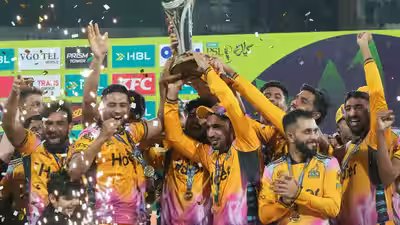
Dhurandhar, gold, and a Bhadralok at the polo ground



Hello and welcome to another edition of the Weekly Vine. This week, we explain how Dhurandhar shows that Bollywood has learnt the art of myth-making, examine why gold is facing a ‘tough time’, decode why gold prices are plunging, explore the curious history of the Church of England (which is set to get its first female head), and recount what happened when a Bhadralok turned up to watch polo.
The art of myth-making


Aditya Dhar’s duology rejects Bollywood’s mass, formulaic approaches to war movies or spy thrillers, eschewing escapist item-number fantasies or surreal jamborees, with a level of peak detailing that would gladden Frederick Forsyth’s heart. The movie uses enough real-life examples to serve a delicious Quentin Tarantino-style revenge fantasy, the kind we have seen in Inglourious Basterds, Django Unchained, or Kill Bill.
The music is sublime, mixing hits old and new, from far-off genres. Golden-era Bollywood classics jostle with qawwalis, as Punjabi pop, Arabic rap, Indian hip-hop, and Western rock come together, coupled with a background score that could have been developed by Hans Zimmer.
There are so many scenes – subtle and not-so-subtle – that go out of their way to push the phantasmagoria of revenge, the kind that Hollywood has used to sublime effect over the years. All in all, it is competent myth-making. And your availability heuristic will decide whether it is myth-making for a particular spymaster, regime, religion, nation, or civilisation.
This is not the first Indian movie to do that. The Baahubali duology and RRR are both sublime artefacts of civilisational pride wrapped in grand filmmaking, but the difference is that they are either set in fantastical lands or in history. Dhurandhar, on the other hand, is set in contemporary times – in the not-so-distant future – one that is the lived reality for many people watching the movie.
Gold not glittering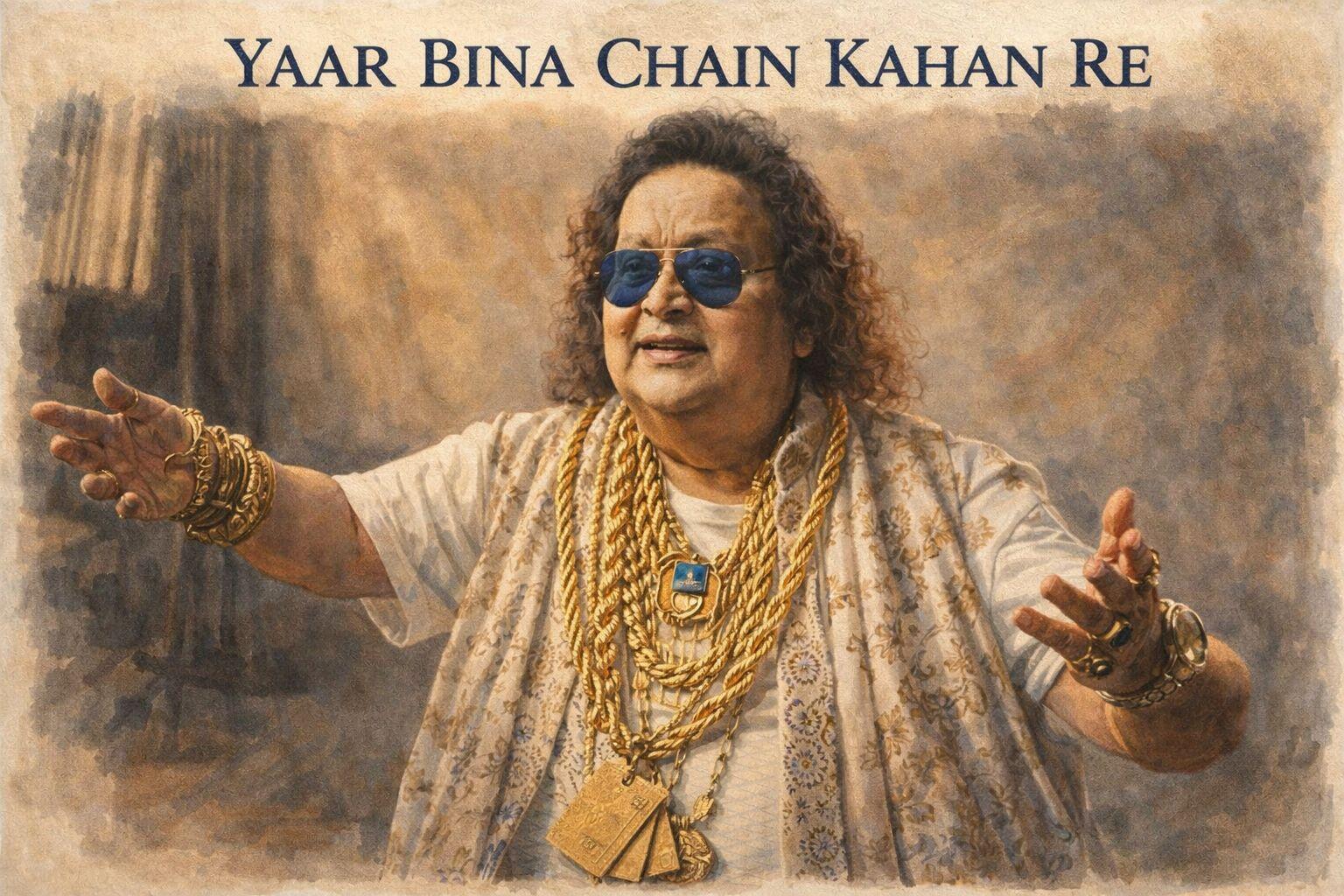
Robert Plant once sang, “There’s a lady who’s sure all that glitters is gold…” That is until it doesn’t. In a world of uncertainty, fear, panic, and a trigger-happy US president, gold is anything but stable.
When oil becomes more expensive, it pushes up inflation. Higher inflation can lead to higher interest rates, and when returns after inflation improve, investors suddenly have better options than holding a piece of metal that has to compete with higher bond yields and dollar strengths.
But India, as per use, is never for beginners. In India, gold is not just gold but also an import, so you are not buying only gold, but gold multiplied by the rupee-dollar exchange rate. As gold fell, the rupee weakened as well. A higher crude bill means India needs more dollars, and more demand for dollars weakens the rupee.
And this is the bit that people who say ‘gold is safe’ leave out. Safety depends on what you are measuring in, so in dollar terms gold prices corrected. In rupee terms, they arrived diluted. Because it is never just about the gold, but quietly deciding how much of the fall you are allowed to feel.
To quote our main man Bappi Da: “Yaar bina chain kahan re…” Or, to use another of his lines: “It’s a tough time.”
A brief history of the Church of England


In Yes Minister, when Jim Hacker finds out that Italian terrorists have access to British-made weapons, Sir Humphrey Appleby tries to mollify him by pointing out it’s not their department’s problem. British weapons in the hands of foreign terrorists were outside the Ministry of Administrative Affairs’ jurisdiction. Probably a Defence Ministry problem, or a Foreign Office problem, the unflappable bureaucrat points out, before a beleaguered Hacker hits back: “I am talking about good and evil.” This leads Sir Humphrey to point out that made it a “Church of England” problem.
That quip, while hilarious, stands the test of time, because knowing the difference between good and evil is a heavy cross to bear for an institution created by a megalomaniac king who wanted a divorce.
Now, the Church is in the news for getting its female Archbishop of Canterbury for the first time in its nearly 1400-year-old history. In classic ecumenical tradition, her predecessor had to resign over an abuse scandal involving hundreds of boys.
But why does England have a separate Church?
Postscript by Prasad Sanyal: The Bhadralok at the Polo Ground
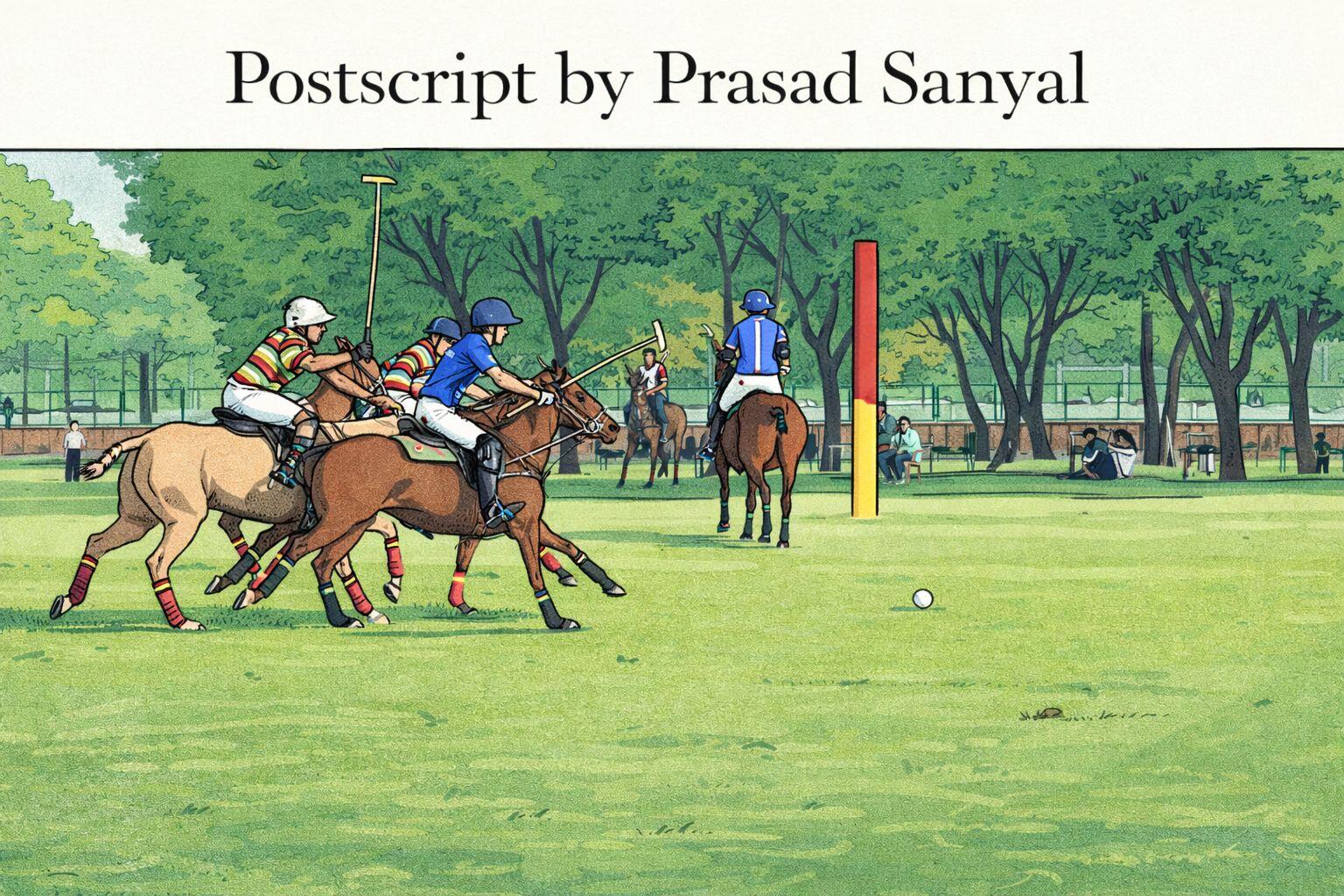
Sunday afternoons, in a certain version of India, still carry the faint echo of hooves. Not the hurried, honking chaos of our usual lives, but a slower, more deliberate rhythm. Leather on grass, mallet meeting ball, conversations that pause mid-sentence because something elegant has just happened in the distance.
Polo, like many good things, refuses to shout. It does not trend. It does not explain itself. It simply unfolds, with the quiet confidence of something that has never needed validation from a dashboard.
And yet, even such afternoons are no longer entirely immune to the administrative imagination. Somewhere in Delhi, the Jaipur Polo Ground, that improbable stretch of colonial memory and ceremonial leisure, has been asked to vacate. Not dramatically, not even controversially, just a notice. A quiet reminder that history, in modern India, is often a tenant on a short lease.
Post Postscript
Word of the Week: Salt
Book of the Week: Avenger
Meme of the Week: Bacha hai tu mera
Disclaimer
Views expressed above are the author’s own.
END OF ARTICLE