
This child’s unusual drawing shocked her dad: Here’s what it teaches parents about kids’ minds
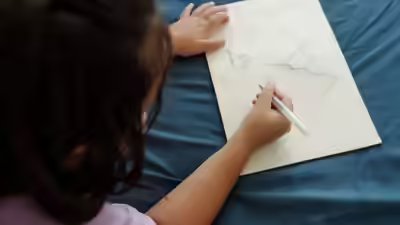
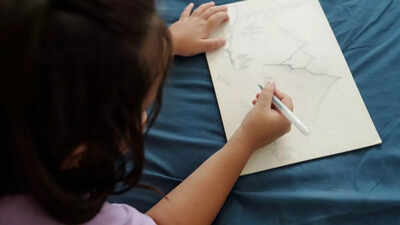
A father recently shared his child’s drawing online, and it quickly caught people’s attention. It looked simple at first, stick figures, a house, a family scene. But then came the detail that made everyone pause: the father was shown falling off the roof, smiling, while the rest of the family looked sad.The internet reacted in all ways, some laughed, some worried, some tried to decode it. But behind the viral moment sits a deeper question: what do children really express through drawings, and how should parents read them?
The drawing that sparked a thousand interpretations
In the sketch, the family stood together on a rooftop. The child had drawn each member with minimal detail, but the emotion stood out. The father’s figure appeared to be falling, or jumping, off the edge, smiling widely. The rest of the family looked still, almost solemn.For adults, this can feel alarming. The instinct is to look for meaning quickly: Is something wrong? Is this a sign of fear, anger, or distress?But children don’t always draw in straight lines of logic. Their imagination blends reality, emotion, and fantasy in ways adults often forget.
What children actually do when they draw
Drawing is not just about what a child sees. It is about what they feel, remember, and imagine, often all at once.A child may mix:
- A real moment (like a parent leaving for work)
- A feeling (missing them, or wanting attention)
- A fantasy idea (flying, falling, superhero-like actions)
So a falling figure does not automatically mean harm. It could mean movement, change, or even excitement.That smiling face in the drawing matters. It hints that the child did not see the moment as scary.
Why adults often misread children’s art
Adults look for clear stories. Children create emotional snapshots.A parent might see danger in a drawing like this. A child might simply be showing:“Dad goes away sometimes”“Dad is doing something big”“Dad is different from the rest of us in that moment”Children also exaggerate scenes to make them interesting. A roof becomes a stage. A goodbye becomes a dramatic action.The mismatch happens because adults read with logic, while children create with feeling.
The hidden lesson: children express more than they explain
One quiet truth stands out here: children often express things they cannot fully say.A drawing like this may reflect:
- A child noticing absence or distance
- A playful imagination around “leaving” and “coming back”
- A need to process emotions in a safe, creative way
Does it always mean something serious? No. But does it always mean nothing? Also no.The real value lies in staying curious, not reactive.
What parents should do when a drawing feels “off”
The goal is not to panic or dismiss. It is to understand gently.Instead of asking, “Why did you draw this?” try:
- “Tell me about what’s happening here.”
- “What is everyone feeling in this picture?”
- “What happens next in the story?”
Children often reveal their thoughts when they feel safe, not questioned.And sometimes, the answer is surprisingly simple. The “falling” dad could just be “going somewhere,” and the smile could mean excitement, not fear.
The bigger picture: art is a child’s first language
Before children learn to explain themselves clearly, they draw.These sketches become:
- A record of their emotional world
- A space where they test ideas
- A way to connect with parents without using perfect words
Moments like this viral drawing remind parents of something important: not every strange detail is a warning sign. Sometimes, it is just a window into how differently a child sees the world.