Seven stellar wonders at Pundoles

The Pundoles Fine Art Sale on March 12th , 2026 , is a testimony to an art lover’s paradise in terms of acquisitions as assets of multiple orders and moods. Collecting art is a passionate and well loved pastime that reveals personal choices. In 71 lots that go under the hammer here are seven stellar wonders of historical and vintage value at Pundoles.
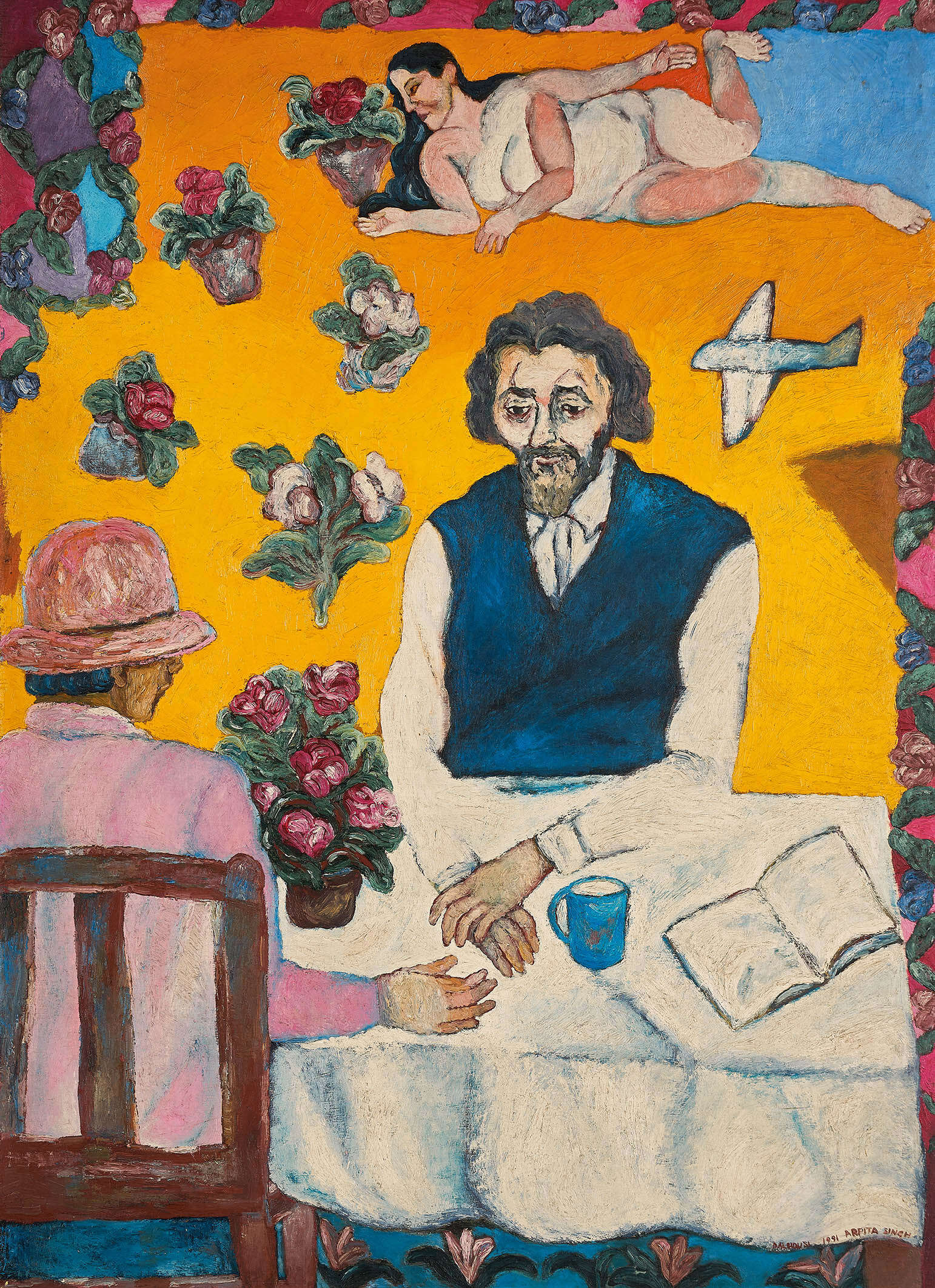

Arpita Singh’s portrait of Manjit Bawa
Amongst my favourites is Arpita Singh’s portrait of her long time friend Manjit Bawa. This 1991 oil on board was created as part of an ideological retreat for artists organised by Manjit Bawa in Dalhousie in 1991. Inspired by fellow artist Vivan Sundaram’s artist programs at the Kasauli Art Centre that had begun in the mid-1970s, Manjit was keen to re-create a similar stimulating atmosphere of thinking and creativity with artists that shared a common philosophy.
While we gaze at Manjit we also realise it holds multiple layers of meaning, centred around a narrative that is open ended. Arpita revels in subtle moments of consciousness suspended in time, adrift with fleeting and mixed memories that are reflected just for a flash.Within the gestural and the intuitive we see a simplicity and directness that is ingenuous and direct.
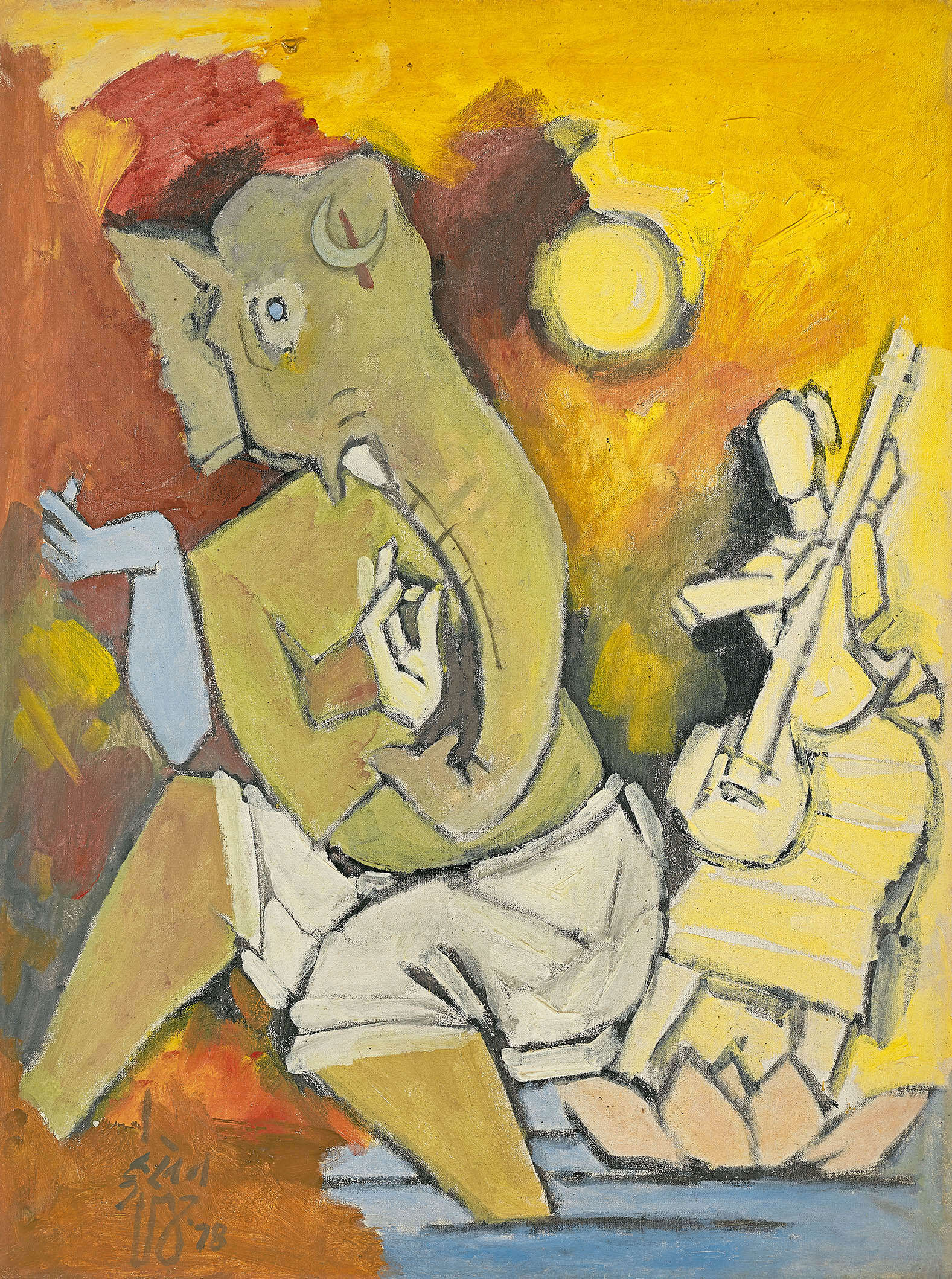

Husain’s Ganesha and Vyasa
Amongst Pundole’s masterpieces is MF Husain’s 1978 oil on canvas Ganesha from the Mahabharata.
Here is Vyasa dictating the Mahabharata to Ganesha.Husain’s love for Ganesha was both in form and fervour. From the 1960’s onwards, Husain painted a series of works that combined Lord Ganesha and Mahabharata amongst his favorite themes. Works from this series explored the relationship between the aesthetics of modern painting and those of Indian mythical and religious narratives. This work is a reflective residue of Husain’s attempt to convert the three-dimensionality of sculptural forms onto a flat surface and Ganesha was more than a mere emotive essence with the addition of the feminine form with sitar and lotus . In addition, Ganesha’s grace is seen in gestures of the hands, his poise and the addition of the feminine form that conveys definite meanings in traditional Indian art and music.
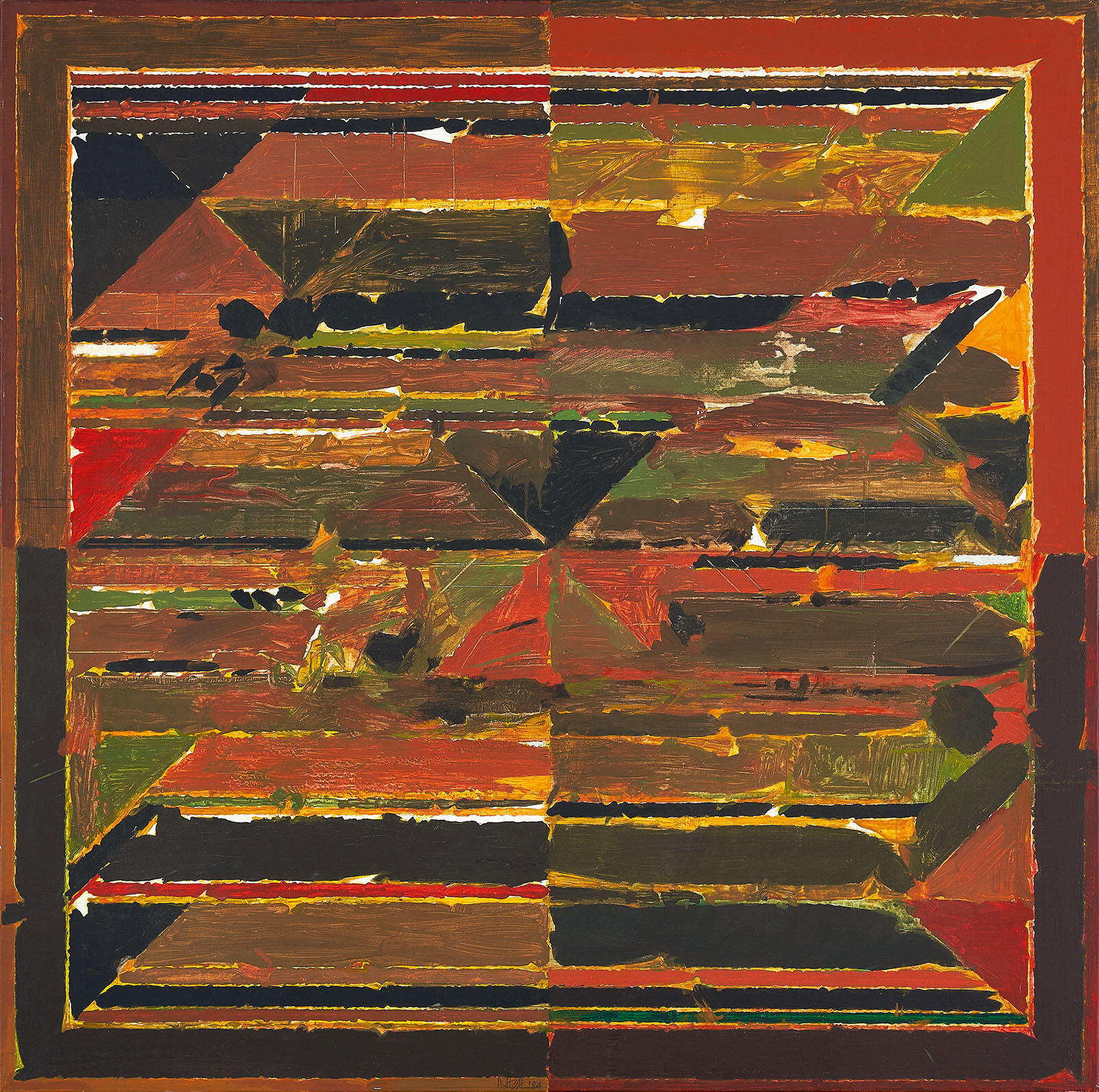

Raza’s Satpura
Sayed Haider Raza’s Satpura beams like an earthling in tones of terra natura. Satpura (previously published as Terra Amata) from 1984, is a powerful example of this mature phase of work inspired by both the geography of his birthplace and symbols from Indian cosmology and philosophy. It is a fusion of Raza’s profound understanding of Western modernist modes of expression as well as a deep connection to his Indian heritage. Within a controlled network of intersecting lines and planes, the structure is dominated by triangles formed by diagonals that converge at a central point. Horizontal and vertical lines create a grid-like organisation that impose both an aesthetic order on the composition, but also reflect the forms of yantras that are prescribed as the basic underpinnings of meditative training in the Hindu scriptures.
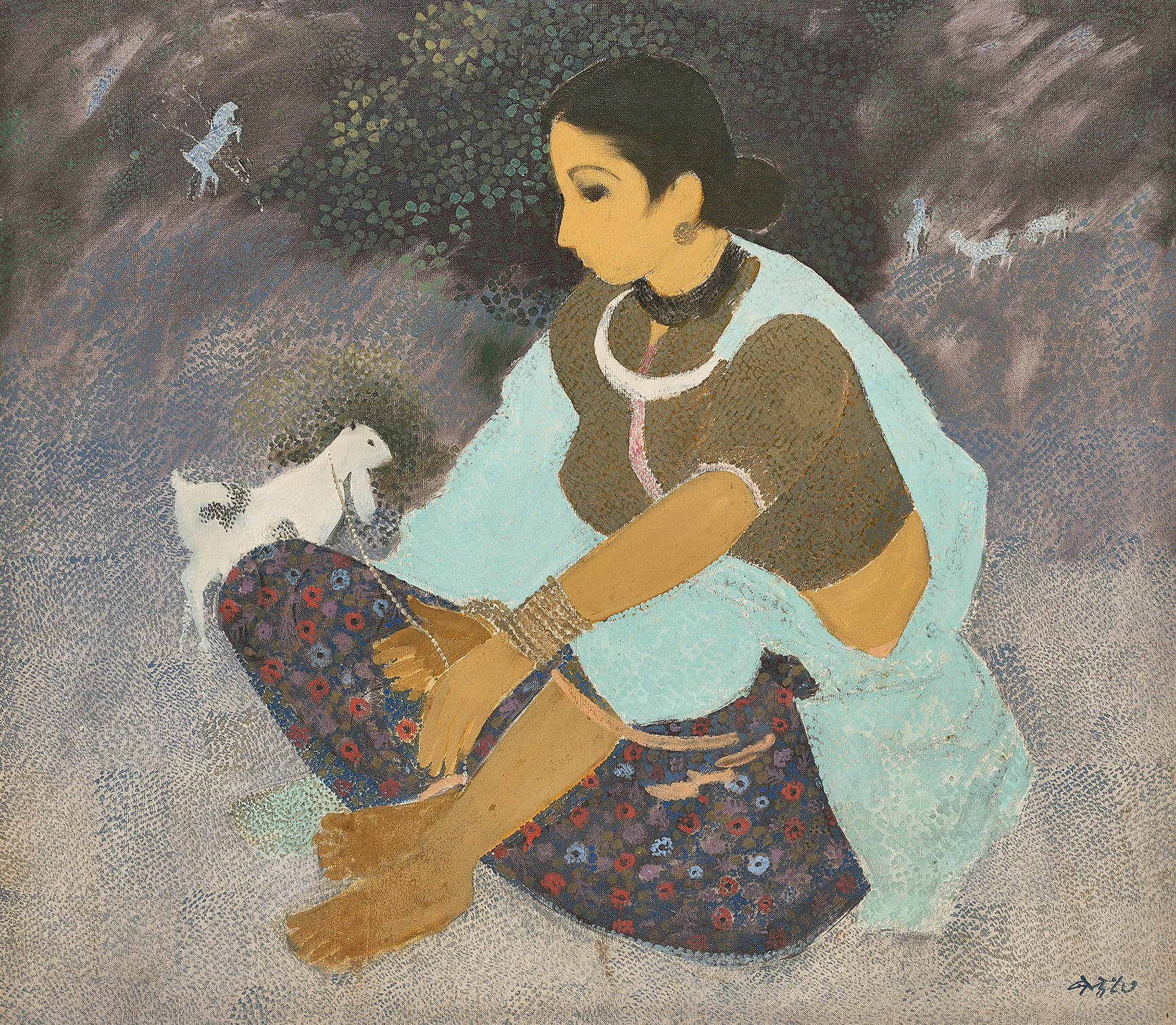

Jamini Roy’s Santhal girl with flower
In the study by Jamini Roy we see the rejection of Western academic realism and the reflection of India’s indigenous accents and rural rhythms. Roy’s Santhal girl with a flower in her hair is an eternal beauty in terms of the intensity of projecting India’s rural and indigenous community. This gouache on paper reflects his love for folk idioms, and invites us to gaze at figuration , lyrical lines and idyllic pastoral scenes that evoke a certain kind of feeling and mood.
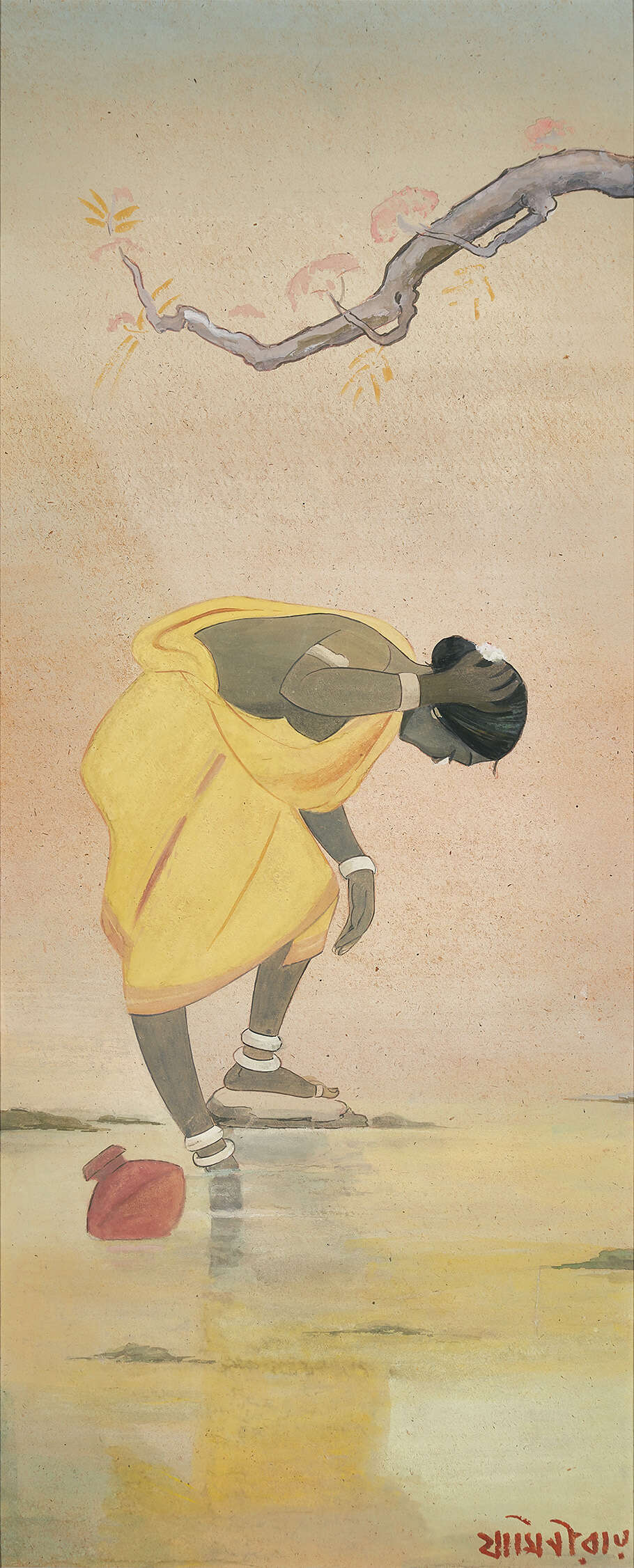

Bendre’s portrait of a maiden
In NS Bendre’s Pointillist painting from 1987 he captures the tender image of a young shepherdess sitting in the fields, as her goat frolic around her. Bendre created poignant compositions, relying on the importance of human connections . Here, we see the graceful features accentuated by the low-swept bun , adorned ears and neck. Her simplicity is echoed in the light blue odhni, shades of which are echoed in the animals grazing and playing behind her. She appears to be contemplative and calm, her hand holding the rope tied to a small goat that stays close to her.
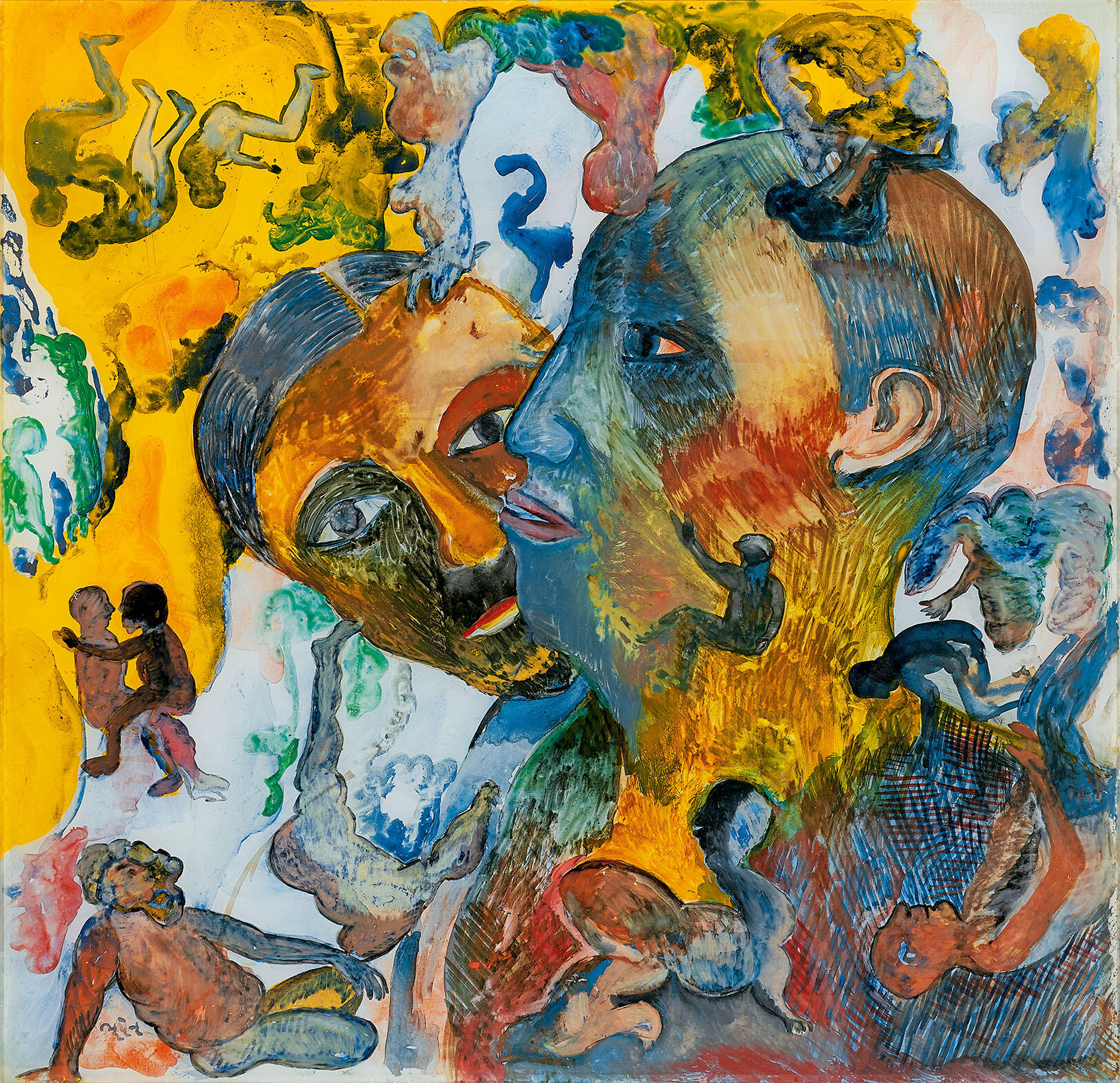

Bhupen Khakhar’s Lovers
Bhupen Khakhar’s Lovers is an expressive work that reflects how he learned to gradually respond and react to his present circumstances, in his personal life. Unlike accepted norms of patterns of socialisation and coupling, in his paintings we see a coalescence of marginal and popular, erotic and sacred – all of which reflects a sensibility truly representative of his own personal way of being. Suffused with togetherness… layered, dense, fantastical and realistic, this is a tender, moving geography. A truly aesthetic declaration of what he wanted – live on his own terms , without limits.
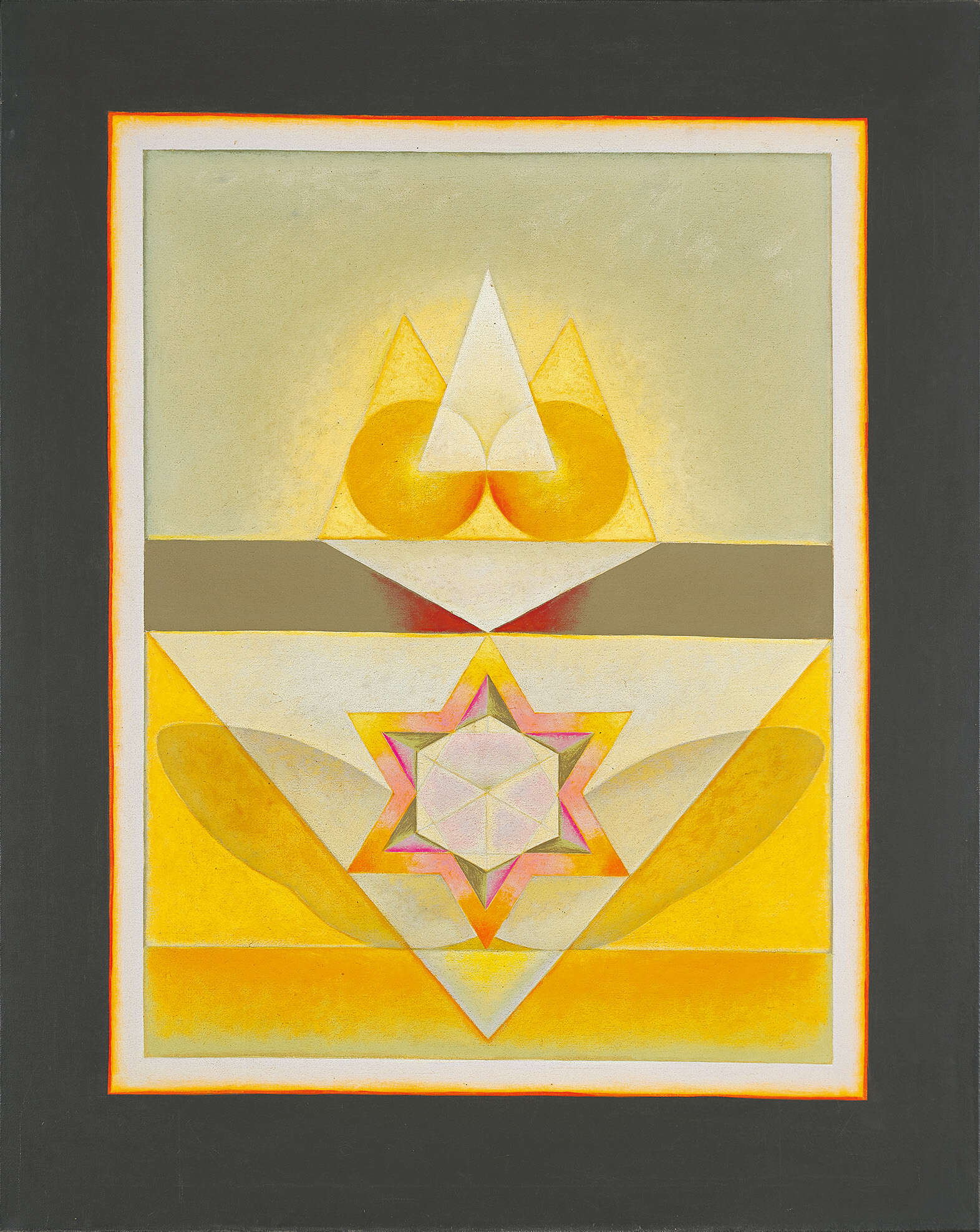

Gulam Rasool Santosh, 1981
Gulam Rasool Santosh’s 1981 abstract wonder is a study in meditative symbolism, we see an upper register of a triadic configuration of triangles, the central form rendered in white and flanked by translucent yellow forms. Beneath two circular shapes in warm golden tones intersect and overlap.
A horizontal band bisects the composition; an earthy hue interrupting the chromatic intensity above and below, grounding an otherwise radiant palette. Santosh creates corollaries within geometric constellations. Crystalline hexagonal forms are contained within a central six-pointed star (shatkon), outlined in soft pinks, yellows, and greens. Encircling this core are translucent, elongated, curved shapes, suggesting the ‘female form, seated in padmasana, the lotus position.’ The female torso and Shakti were intrinsic subjects he painted with silent verve and meditative mysticism.
Disclaimer
Views expressed above are the author’s own.
END OF ARTICLE