
Meet Shannon Hoffman, the South African conservationist raising bone-eating vultures to protect one of the region’s most threatened birds, with fewer than 400 remaining in the wild |

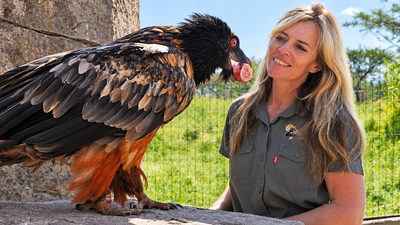
Fewer than 400 bearded vultures remain in the wild across South Africa and Lesotho, and conservationist Shannon Hoffman is working to give the unusual birds a chance of survival. Through the Bred 4 the Wild Bearded Vulture Breeding Programme, Hoffman has spent more than a decade developing a specialised captive-breeding effort intended to build a population that could eventually help strengthen numbers in the wild. The work has taken her team into the remote Drakensberg mountains to collect eggs from nests, with one expedition ending in a helicopter crash from which Hoffman and her companions survived. The challenge is considerable: the birds reproduce slowly, while poisoning, power-line electrocution and habitat pressures continue to threaten their southern African population.
Who is Shannon Hoffman?
Hoffman is a South African raptor conservationist and a National Geographic Explorer who leads the Bred 4 the Wild Bearded Vulture Breeding Programme. Her interest in birds of prey developed after she spent time learning to fly falcons near Dubai. Returning to South Africa, she became involved in the rehabilitation of injured raptors and public education about their protection.A turning point came in 2012, when the African Bird of Prey Sanctuary received a bearded vulture named Leseli. The bird had been confiscated from a traditional healer who had kept her in a small cage. Although Leseli could not be returned to the wild, Hoffman recognised that she might help raise young vultures in captivity. The experience helped inspire the breeding programme, which was formally launched in 2015.
Why is the bearded vulture known as a bone-eating bird?
The bearded vulture, also called the lammergeier, is unusual among birds of prey because bones make up most of its diet. While many vultures feed on the soft tissues of dead animals, the bearded vulture has adapted to consume skeletal remains.It can carry bones into the air and drop them onto rocks, breaking them into smaller pieces that it can swallow. Its highly acidic digestive system helps it process this material. The species also has a distinctive appearance, with feathering around its head and a reddish-orange colour that comes partly from bathing in iron-rich soil.Bearded vultures play an important role as scavengers, helping break down animal remains and recycle nutrients in their mountain ecosystems. The southern African population is genetically distinct and is concentrated in the Maloti-Drakensberg mountain region along the border between South Africa and Lesotho.
How Hoffman’s breeding programme works
The Bred 4 the Wild programme aims to establish a genetically diverse captive population that could eventually support the recovery of wild bearded vultures. Its work includes collecting eggs from remote nests and raising chicks under carefully managed conditions.The approach takes advantage of a behaviour known as cainism. Bearded vultures typically lay two eggs, but the first chick to hatch often kills its younger sibling. By collecting the second egg in suitable circumstances, the team hopes to raise a chick that would otherwise be unlikely to survive, without removing a bird that could have lived to adulthood in the wild.Raising the chicks also requires care to prevent them from becoming too accustomed to humans. The team uses a vulture-shaped puppet during early feeding before gradually introducing the birds to their natural diet of rodents, bones and animal carcasses. The goal is to prepare them for eventual reproduction and, if conditions allow, possible release into the wild.
Why fewer than 400 bearded vultures remain in southern Africa
The southern African population of bearded vultures faces several threats, including poisoning, electrocution from power lines and pressure from human development. Poisoned carcasses can kill vultures that feed on them, while birds may also be targeted by people seeking to prevent circling scavengers from revealing the locations of poached animals.Their slow reproductive cycle makes recovery particularly difficult. Bearded vultures generally do not begin breeding until they are around eight years old, and successful pairs typically raise only one chick a year. This means population losses can take a long time to reverse.The figure of fewer than 400 birds refers to the population across South Africa and Lesotho, rather than the species worldwide. The southern African population is genetically distinct, making its conservation especially important.
How a helicopter crash revealed the risks of her work
Hoffman’s conservation work has involved expeditions into the rugged Drakensberg mountains, where reaching nests can require helicopter journeys and difficult climbs. One such mission ended in a serious accident when a helicopter carrying Hoffman and three companions crashed on a mountain escarpment while the team was attempting to collect a bearded vulture egg.The group survived, and a rescue helicopter eventually reached them. The incident highlighted the physical challenges involved in accessing remote nests, where collecting an egg requires careful planning and specialist skills.Such expeditions form part of the programme’s wider effort to raise birds that might eventually contribute to the species’ recovery. However, the risks involved do not guarantee success, and the long-term value of the programme will depend on whether its captive birds reproduce and can ultimately help strengthen wild populations.
Can captive breeding help bring the birds back?
Hoffman’s programme has reached an important stage, with some of its oldest birds approaching reproductive maturity. According to National Geographic, the programme had 26 bearded vultures in its care, with five pairs moved into dedicated breeding chambers. At the time of the report, none of these pairs had produced chicks.The next milestone is therefore not simply to raise more birds, but to establish a breeding population capable of producing offspring. Hoffman hopes that these birds could eventually be released into the wild, helping to support the threatened southern African population.There are encouraging examples elsewhere. Captive-bred bearded vultures have been released into the Alps since the 1980s, contributing to the return of the species to a region where it had disappeared. However, that programme’s experience does not guarantee the same outcome in southern Africa, where the population and conservation challenges are distinct.
The challenge extends beyond raising chicks
Even if Hoffman’s birds begin reproducing successfully, captive breeding alone cannot address the threats facing wild bearded vultures. Poisoning, dangerous power lines and habitat pressures will still need to be tackled to improve the birds’ chances of survival.Hoffman has also worked to raise awareness of vultures among communities in South Africa and Lesotho. Her outreach has included giving local children vulture-themed hats made by older volunteers, an effort to encourage interest in wildlife and conservation among the next generation.For now, the programme’s future depends on whether its breeding pairs produce chicks and whether those birds can eventually contribute to a viable wild population. Hoffman’s work offers a potential route towards recovery, but the decisive results are still to come. The aim is to give one of southern Africa’s most unusual birds a future beyond the remote mountain cliffs where it continues to survive.


