
Decade after reintroduction, Satpura reserve’s Barasingha population tops 300, corridors planned | Bhopal News
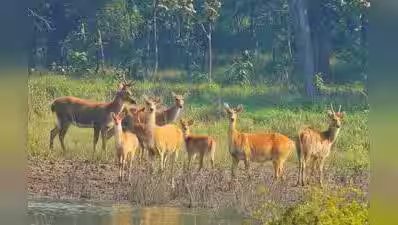
BHOPAL: A decade after Madhya Pradesh forest department began reintroducing hard-ground barasingha in Satpura tiger reserve, the endangered deer has returned in strength, with its population growing to around 303 and three population units established across the landscape. The next phase of the conservation programme will focus on linking at least six grasslands through dedicated corridors to allow the animals to move between feeding and breeding habitats.The recovery marks a major step in efforts to secure the future of the hard-ground barasingha (Rucervus duvaucelii branderi), which had disappeared from the Satpura landscape because of habitat loss and hunting. Kanha tiger reserve remained its principal natural stronghold, making the creation of a second population important for reducing the risks of depending on a single landscape.Satpura tiger reserve field director Rakhi Nanda said the recovery reflected the combined efforts of frontline forest personnel, senior officers, scientific collaborators and communities that voluntarily left their ancestral homes for wildlife conservation.“The establishment of a breeding population of more than 300 barasingha and three meta populations is one of the most encouraging examples of successful wildlife reintroduction in the country,” Nanda said. She said the next priority was to strengthen habitat connectivity and develop grassland corridors to secure the species’ long-term future.The Satpura programme demonstrates how wildlife reintroduction can move beyond the transfer of animals to the establishment of a naturally breeding population. The challenge now is to ensure that habitat availability, connectivity and protection keep pace with the growing herd, she added.The forest department launched the reintroduction programme in 2015, bringing animals from Kanha to Satpura. Between 2015 and 2026, approximately 135 barasingha were translocated to the reserve. Initially, the animals were kept in a predator-protected enclosure in the Bori landscape to help them acclimatise, breed and adapt before being released into the wild.The programme’s success is now reflected in natural breeding and the growth of successive generations born in Satpura, say officials. The population has expanded to around 303, demonstrating that the reintroduced animals have adapted to local ecological conditions.The three population units are associated with the Bori enclosure, Bori grasslands and Malini grasslands in the Churna range. Establishing multiple populations reduces dependence on a single location and creates opportunities for the species to expand across suitable habitats, officials say.With the population crossing 300, forest managers are turning their attention to habitat connectivity. The proposed corridor network will link at least six grasslands, allowing barasingha to move between habitat patches in search of seasonal forage, water and breeding grounds.The initiative is intended to reduce pressure on individual grasslands as the population grows. Better connectivity could also facilitate dispersal between population units and support demographic and genetic exchange, provided animals move safely between the habitats.Developing the corridors will require identification of suitable movement routes, management of intervening habitats and regular monitoring of animal movement. Ensuring adequate forage, water and protection from disturbance throughout the year will be crucial to their success.The recovery has also been supported by grassland restoration, including areas made available after villages were voluntarily relocated from the reserve’s core area. These landscapes have provided opportunities to restore wildlife habitats and reduce pressures associated with grazing and human activity.Management measures include promoting palatable native grasses, removing invasive weeds, maintaining open grasslands and improving water availability. Forest managers are also focusing on breeding and fawning areas, where adequate cover and protection are essential for the survival of young animals. As the population expands, the availability of connected grasslands and the carrying capacity of the habitat will become increasingly important.