In 2014, divers chased a possible shipwreck nearly 6,200 feet down and found six giant asphalt petals rising from the seabed |
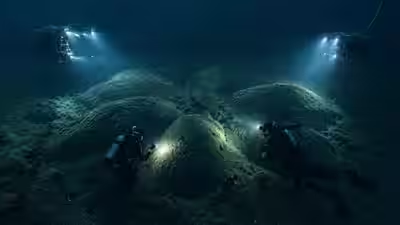
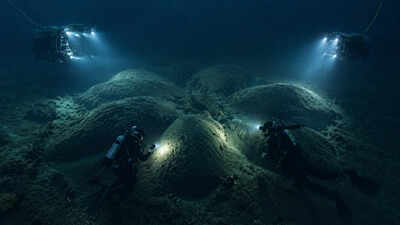
The deep sea has a habit of turning ordinary expectations upside down. In 2014, scientists exploring the Gulf of Mexico sent a remotely operated vehicle towards what sonar suggested could be a shipwreck. Nearly 1,900 metres below the surface, however, the cameras revealed something far stranger: a giant, flower-like structure made not of metal or rock, but hardened natural asphalt.The discovery came during the NOAA Gulf of Mexico 2014 expedition. Side-scan sonar had detected a cluster of large structures on the seabed, with the target appearing to be roughly 60 metres long. When the remotely operated vehicle Deep Discoverer reached the site, the apparent wreck quickly turned out to be a geological formation. Scientists eventually nicknamed it a “tar lily” because several curved slabs of asphalt spread from the seabed like petals.A shipwreck that was not a shipwreckThe surprise started with the sonar image. At depths exceeding 6,200 feet, the ocean floor is far removed from the beaches and reefs where most people imagine shipwrecks. Thus, any large and clearly defined object was worth closer examination. In its dive log, the NOAA describes how the team approached the object through a fairly level, sediment-rich seabed. Almost immediately after the first sighting of the alleged wreck, the scientists were aware that it was a natural formation.This structure was not the only one of its kind. The exploration team found a second formation that also resembled a flower, though less clearly. Both structures were photographed and studied in three dimensions, which made it possible to create visual documentation of such structures. At the site, the researchers had not seen anything quite like them. Instead, the formation consisted of large rounded plates spreading out in all directions. There were even inner layers inside the petals.How does asphalt form at the bottom of the sea?Asphalt is generally associated with roads and paving materials, but natural asphalt is a geological material. In parts of the Gulf of Mexico, heavy oil can migrate upwards through the seafloor and reach the ocean floor. In the case of the tar lilies, researchers found that asphalt had reached the seafloor and spread outward. When it came into contact with the cold seawater, the material gradually became more rigid. At the same time, lighter components of the petroleum could be removed from the exposed material through processes such as dissolution and diffusion, leaving behind a heavier, more viscous residue. As the asphalt accumulated and changed over time, these processes contributed to the formation of the distinctive layered and curved structures.This phenomenon is known as asphalt volcanism. Unlike a conventional volcanic eruption, it does not involve molten rock. Instead, heavy hydrocarbons migrate towards the seafloor, where they can spread out and harden into unusual flows and mounds. According to a study in Marine and Petroleum Geology, exposed asphalt deposits in the Gulf of Mexico may gradually lose volume, develop cracks and break apart as they weather over time.
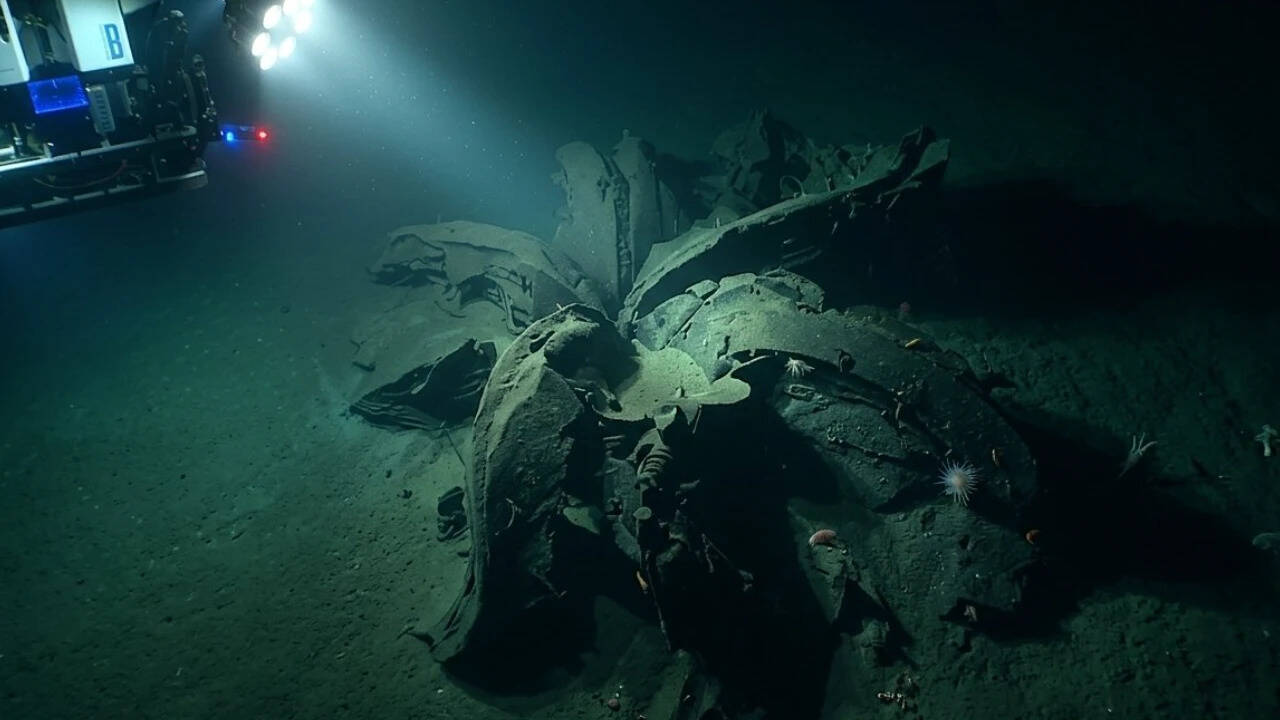
During NOAA Ship Okeanos Explorer’s Gulf of Mexico 2014 expedition, scientists went in search of a possible shipwreck and instead found the remnants of two asphalt volcanoes, dubbed the “tar lilies.” Known to exist in other areas of the world, this marks the first discovery of these geologic features in the Gulf of Mexico. Image Credits: Wikimedia Commons.
A strange home for deep-sea lifeThe tar lily was more than just a geological phenomenon; its tough skin provided a platform for marine creatures. The NOAA scientists found many organisms living on and near the asphalt, among which were anemones, sponges, goose neck barnacles, sea pens, octocorals, bamboo corals, and squat lobsters. They also discovered organisms that thrive due to chemosynthesis, such as tubeworms, bacterial mats, and Alvinocaris shrimp. This matters because deep-water ecosystems do not depend on sunlight. At hydrocarbon seeps, microbes use chemicals escaping from the interior of the Earth for energy production.The asphalt itself was a source of another useful feature: solid ground. In the depths of the ocean where there is only sediment, a solid base is an opportunity for the settlement of corals, anemones, and many other species. There are similar examples of such interaction in other parts of the Gulf as well. The studies of asphalt formations suggest that the fresh asphalt formation is home to chemosynthetic communities, which include bacteria and giant tube worms.The search that began as a hunt for a wreck revealed something else entirely. The tar lily showed how subsea geology can create an unusual habitat on the ocean floor. At about 1,900 meters below the surface, what looked like a sunken ship from above turned out to be a geological structure shaped by petroleum, pressure and cold seawater and colonised by living organisms.