‘It’s all about balance and discipline’: At 10, he left conventional school and started studying the Vedas at a gurukula; years later, Kerela’s Govind Krishnan became an ISRO scientist
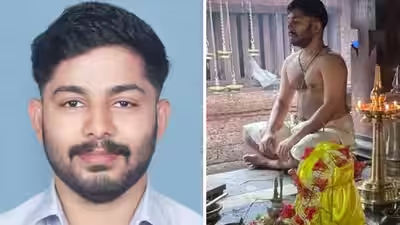
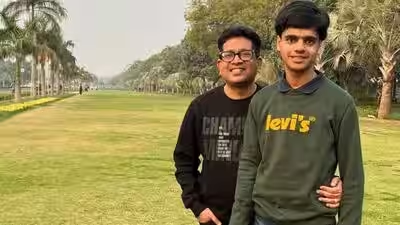
For four years, Govind Krishnan M’s mornings began not with the familiar routine of school bells, textbooks and classrooms, but with Vedic chants, spiritual practices and a schedule governed by discipline. At 5 am, his day at a traditional gurukula in Thrissur would begin.There were no textbooks or visual aids for much of his Vedic education. Learning happened orally, with students listening to their guru and committing what they heard to memory.Years later, the Kannur native found himself on a very different academic path – one that led him through JEE Main and Advanced, to the Indian Institute of Space Science and Technology (IIST), and eventually to the Vikram Sarabhai Space Centre (VSSC), ISRO’s lead centre at Thumba, Thiruvananthapuram.In June 2025, as he prepared to join ISRO as a scientist, Govind reflected on a journey that brought together two worlds often perceived as opposites.“I am deeply aware of the common misconception that Vedic education limits career opportunities. People often think spirituality and science don’t mix. But I’ve proven they can. It’s all about balance and discipline,” Govind told Onmanorama in June 2025.“In one phase of my life, I gave my best to Vedic learning, and in another, I gave my all to science. But I never completely let go of either,” he added.
When Class 4 led to a gurukula
Govind’s unusual educational journey began after he completed Class 4 at Kendriya Vidyalaya in Payyannur. In 2011, he left regular schooling and joined Bhramaswam Madham in Thrissur, where he underwent traditional gurukula education.The decision came after his father, Hareesh Kumar, a former Indian Navy officer who had taken voluntary retirement in 2009, decided to introduce him to Vedic learning. The family had earlier moved between naval bases, including Kochi, Lonavala and Mumbai, before returning to Kaithapram in Kannur.Govind’s upanayanam, or sacred thread ceremony, was performed while he was in Class 4. Soon afterwards, his gurukula journey began. “It was a five-year course, but I completed it in four,” he said.The transition was not easy. He was young, away from his family and entering a completely different educational environment. “The early days were tough, especially being separated from my family for the first time,” he recalled.There were only five students in his batch, and they chose to study the Yajurveda. The first four years were largely devoted to gurukula learning. Though he was enrolled in a nearby government school, he attended it mainly for the final examinations. “We were five students in my batch, and we chose Yajurveda,” Govind said.The rhythm of life at the gurukula was markedly different from that of a conventional school. “Days at the gurukula started at 5 am and were filled with Vedic chants, spiritual routines, and strict discipline. Everything was scheduled. There was no written material. It was all about listening and memorising,” he said.
Studying in two worlds
By the fifth year of his training, Govind returned to regular schooling while continuing his gurukula education. He joined Vivekodayam Boys Higher Secondary School in Nadakkavu for Classes 8 to 10.The challenge was no longer choosing between two forms of education. It was finding a way to accommodate both. “My routine remained the same. Gurukula sessions would go on till 8.30 in the morning and till 9 at night, after school, and then I’d study school subjects till around 11 pm, before waking up again early next morning,” he said.The demanding schedule did not prevent him from excelling academically. Govind completed Class 10 with full A+ grades. After leaving the gurukula, he joined Alva’s College in Moodbidri, Mangaluru, for his higher secondary education. He also prepared for engineering entrance examinations and cleared both JEE Main and JEE Advanced.His JEE Advanced performance took him to IIST at Valiamala, Thiruvananthapuram, where he joined the BTech Electronics and Communication programme in 2021. The transition from a traditional Vedic school to an institution focused on space science and technology was striking, but for Govind, the two experiences were not necessarily contradictory.
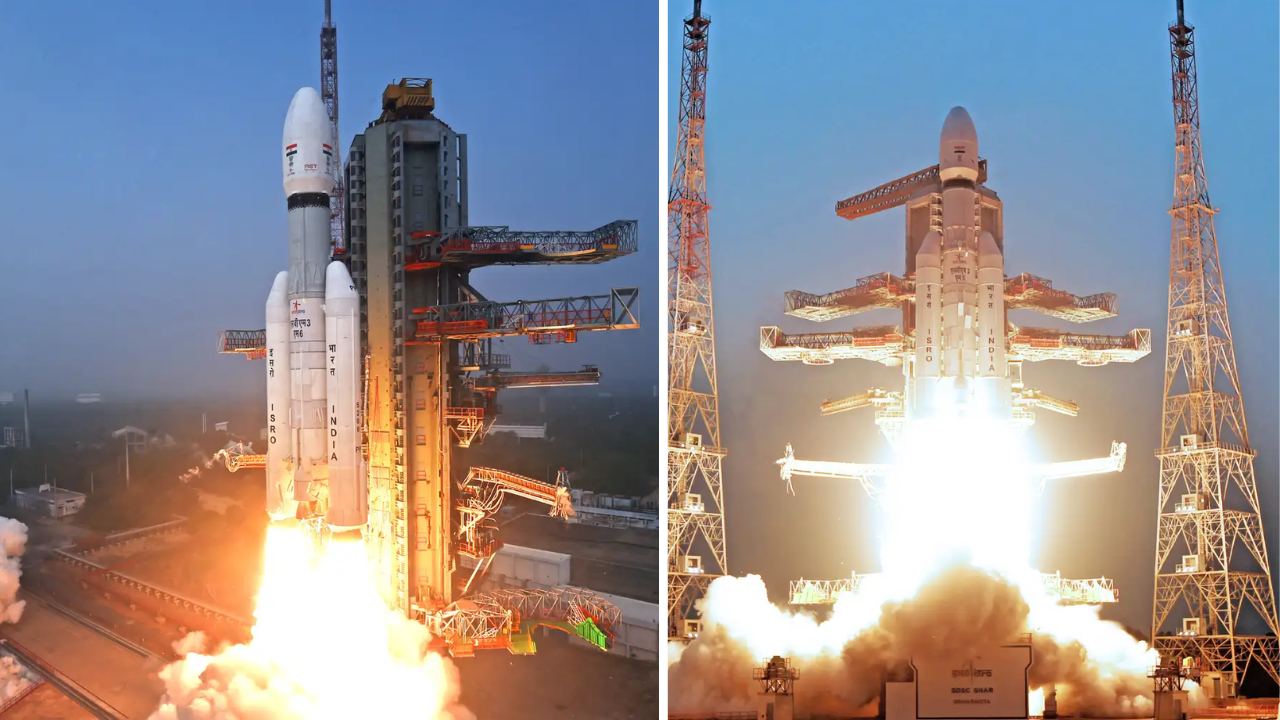
Govind was selected through ISRO’s ICRB process and was scheduled to join the Vikram Sarabhai Space Centre in 2025.
‘Like going to the gym – but for the mind’
Even after leaving the gurukula, Govind continued the spiritual practices he had learned there. “I continued my routine for at least an hour a day,” he said. Over time, the practice became less about following a rigid schedule and more about maintaining a habit.“Now, I just practise it – it doesn’t take much time. It’s like people going to the gym; while they work on physical strength or muscles, I focus on mental clarity, concentration, and memory,” he explained.That balance became a defining feature of his journey. While his academic path was taking him towards engineering and space science, the practices acquired during his childhood remained part of his daily life. His gurukula classmates, meanwhile, followed the more traditional path associated with their families. “The others from my gurukula batch went into the priesthood, as their families were traditionally involved. I’m the only one who took a different path,” Govind said.He also clarified that studying the Vedas does not automatically qualify someone to become a temple priest. While he knows basic rituals such as Ganapathihomam and Thevaram, he said additional training is required for temple priesthood.
From Vedic chants to VSSC
By 2025, Govind’s unconventional educational journey had reached another milestone.He was selected through the ISRO Centralised Recruitment Board (ICRB) process, which, according to the Onmanorama report, included interviews and additional criteria. He was scheduled to officially join the Vikram Sarabhai Space Centre in July 2025.For someone whose early education had been centred on oral transmission of the Vedas, the prospect of working as a scientist at one of India’s major space centres represented a striking turn.Yet Govind did not see the new chapter as requiring him to leave the old one behind. “I don’t know how much time I’ll get once I join, but I hope to devote at least an hour or two daily,” he said when asked about continuing his spiritual practices after joining ISRO.There was also a longer-term ambition – to pass on what he had learned. “In the future, I’d love to teach children what I’ve learned, but I’m not sure when or how that will happen,” he said.For Govind, the value of his gurukula education goes beyond the possibility of a conventional career. It is something he believes continues to influence the way he approaches his work and life. “There’s nothing to lose in learning the Vedas. They’ve given me focus, discipline, and strength,” he said.That may be the simplest way to understand his unusual journey. Govind did not have to choose between the identity shaped by his childhood education and the scientific career he pursued later. Instead, he carried elements of both with him – from a 5 am gurukula routine and years of memorising Vedic verses to cracking JEE Advanced, studying electronics and communication at IIST, and being selected for a career at ISRO.His story, as he himself puts it, is less about choosing one world over another and more about finding balance between them.And as he prepared to step into his new role in 2025, the boy who once left conventional school in Class 4 was preparing to enter one of India’s most recognisable scientific institutions – without leaving behind the lessons he had gathered much earlier in a gurukula in Thrissur.