Psychology says children who copy their parents are building their identity through everyday habits and emotions they observe at home
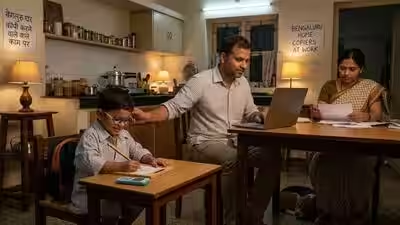
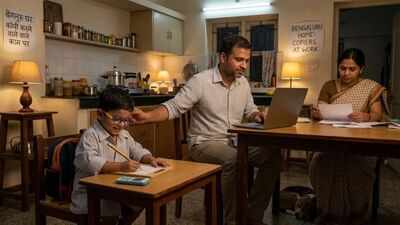
A child pretending to speak on the phone exactly like a parent, copying the way they sit or repeating a phrase they hear every day may look like simple imitation. But these small moments can reveal an important part of how children learn. Psychology has long recognised that children learn by observing people around them, particularly the adults who care for them. Parents are among the people children encounter most frequently, which means everyday behaviour at home can become an important source of information about how to communicate, respond to situations and interact with others. This does not mean children simply become exact copies of their parents. Their development is shaped by many influences, including temperament, relationships, peers, school and the wider environment. But what they repeatedly see at home can become part of the behavioural patterns they learn and practise.
Psychology says children learn by watching before they understand everything
22 Sept 2026 | 14:56
Does your child tell you everything about school? What helps them open up?
One of the best-known explanations for imitation comes from psychologist Albert Bandura’s work on observational learning. His research helped establish the idea that people can learn behaviours by watching others rather than experiencing every behaviour themselves. For children, parents and caregivers can therefore become important behavioural models. A child may watch a parent cook and later pretend to cook during play. They may see a parent exercising and imitate the movements. They may observe how adults greet guests, speak to service workers, respond to mistakes or deal with frustration. The same process can apply to less obvious behaviours.Children may notice whether adults say thank you, apologise after making a mistake, listen when someone is speaking or become impatient when things go wrong. Over time, repeated observations can provide children with examples of how people behave in everyday situations. This is one reason the ordinary moments of family life can matter. Children do not need a formal lesson for every behaviour they learn. The Harvard Center on the Developing Child also emphasises the importance of responsive relationships between children and caring adults. Its research-based resources describe “serve and return” interactions, in which adults respond to children’s sounds, gestures, expressions and interests. These back-and-forth interactions help support early social, emotional and language development.
Children can also learn how to handle emotions by watching parents
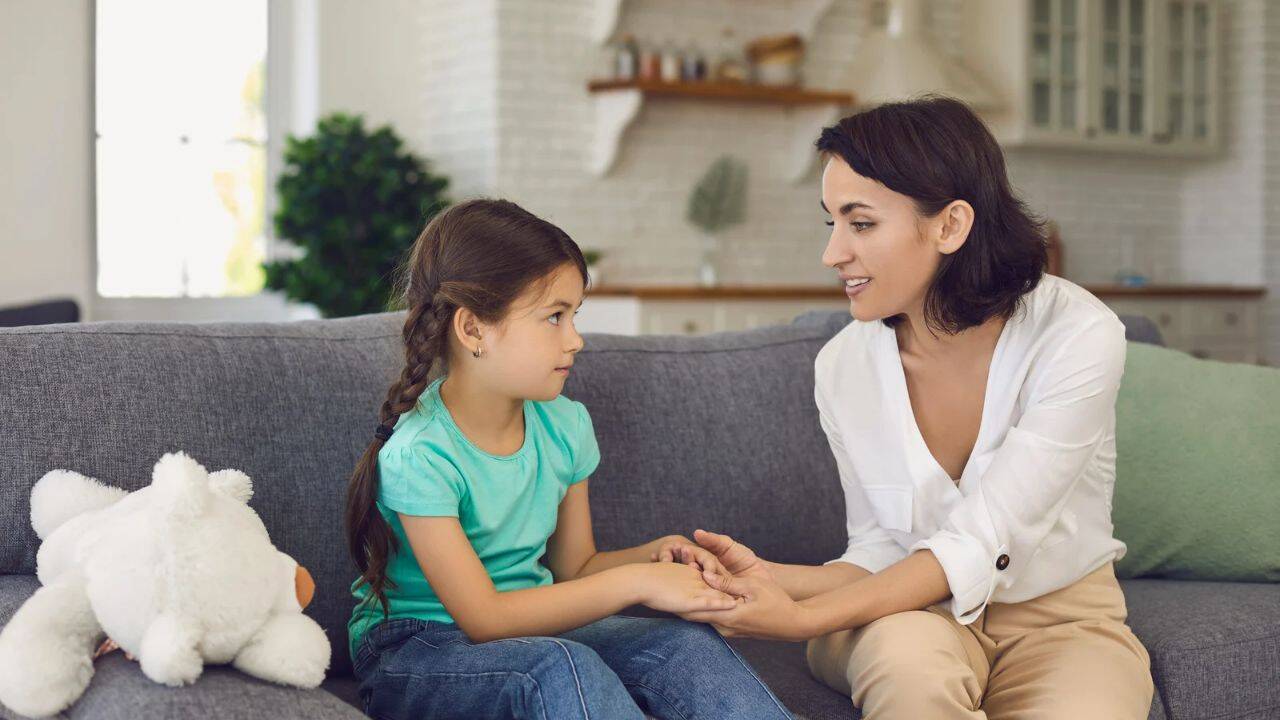
Imitation is not limited to physical actions. Children also observe emotional responses. A child who repeatedly sees an adult calmly deal with a stressful situation may learn that frustration can be managed without immediately reacting. Similarly, seeing adults acknowledge their mistakes and apologise can provide an example of accountability. This does not mean parents need to hide every difficult emotion. In fact, children can learn useful lessons when they see adults experience frustration, sadness or uncertainty and then handle those feelings appropriately.The important factor is the overall pattern. A parent who loses patience and later says sorry is demonstrating that mistakes can be acknowledged and repaired. A parent who asks for help can show that needing support is normal. A parent who listens carefully can demonstrate how respectful communication works. The Harvard Center on the Developing Child notes that responsive relationships help provide a foundation for healthy development and can also help buffer children against the effects of stress. This does not mean every parental behaviour will automatically be copied. Children interpret what they observe, and different children can respond differently to the same environment. Still, repeated experiences can become meaningful parts of their learning environment.
Parents do not need to be perfect role models
The idea that children are always watching can sometimes make parents feel that they must behave perfectly. Psychology does not support such an unrealistic expectation. Parents will make mistakes, become frustrated and occasionally respond in ways they later regret. What can be valuable for children is seeing what happens afterwards. When a parent apologises, explains what went wrong and tries again, the child receives another lesson: mistakes do not have to be hidden, and relationships can be repaired. The Harvard Center on the Developing Child describes early experiences and relationships as important influences on developing brain architecture and later learning, behaviour and health. It also stresses that development is shaped by a broad range of experiences, not by one isolated interaction.So when a child copies a parent’s expressions, routines or reactions, it may be more than an amusing family moment. The child is experimenting with behaviours and learning what different actions mean. Parents are not their children’s only teachers, and children eventually develop their own personalities, beliefs and choices. But the patterns children repeatedly encounter at home can give them an early framework for understanding relationships, emotions and everyday life. That is why the smallest habits can sometimes carry the biggest lessons. A child may appear to be simply copying a parent, but behind that imitation is a developing person trying to understand the world and find their own place in it.