Small cars show signs of revival after GST boost
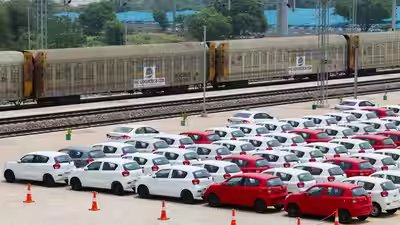
CHENNAI: Following a two-year decline in volumes, the small car segment is showing signs of revival, helped by GST rate cut on small cars. The lower tax burden has reduced the price barrier for buyers at the bottom end of the market, making entry-level cars more affordable.Overall small car sales fell from 16.4 lakh units in FY23 to 14.5 lakh units in FY24, a decline of 11.4%, followed by a further 11.7% drop to 12.8 lakh units in FY25. In FY26, however, sales edged up to 13.2 lakh units, showing a 3.2% year-on-year recovery. In the first five months of the current fiscal, small car volumes grew 27% to 5.9 lakh units, according to Siam data.“The potential of the small-car segment remains strong. Sales of small cars grew 58% this year, resulting in share of first-time buyers rising from 44% to 54%, back to levels seen in FY19,” said Partho Banerjee, senior executive officer, marketing & sales, Maruti Suzuki India.He said for entry-level cars, where a buyer is upgrading from a two-wheeler to four-wheeler, the priority is not a sunroof or other premium features, but simply owning a car. That makes the small-car market particularly sensitive to increases in costs.Since GST 2.0 revision, starting prices of Maruti’s key small-car models have remained unchanged, despite significant commodity and input-cost pressures. “This has translated into a strong market response, with growth in volumes and share of first-time buyers,” Banerjee added.Following GST rate revision, sales of cars attracting 18% GST have been growing at around 30%, compared with about 22% for vehicles attracting 40% GST. “After GST 2.0, the growth is clearly stronger among people buying lower-priced vehicles, whose purchasing power is more limited,” said an analyst at a brokerage firm. “Majority of players have reported positive growth in hatchback sales in this fiscal. There is a huge amount of interest among people who want to buy a four-wheeler. Affordability is what is holding them back,” he said. “There is also a need for more launches in this segment to keep the excitement alive. There aren’t enough models to excite customers, as most of the launches have happened in the UV segment.”However, Banerjee said Maruti would continue to introduce refreshes, irrespective of whether the market is growing faster or slower, citing the recent unveiling of the Baleno with added features. He also pointed to the WagonR, which has been selling about 21,000 units a month despite the SUV boom.Hyundai, too, has indicated that it plans to launch an upgraded i10 in the near future. India has a two-wheeler parc of around 27 crore, while car penetration remains at just 34 cars per 1,000 people. In developed markets such as Japan, higher levels of motorisation have been driven by a combination of rising aspirations and improving affordability, enabling more consumers to convert their aspirations into vehicle ownership, said Banerjee.