Henri Matisse: Quote of the day by Henri Matisse: “You must forget all your theories, all your ideas before the subject. What part of these is really your own will be expressed in your expression of the emotion..”
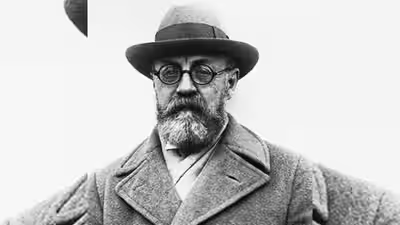
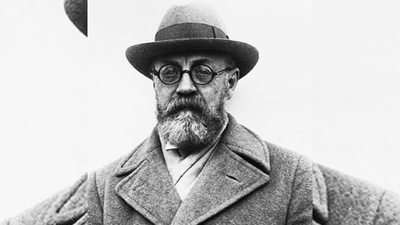
Henri Matisse was a French painter, sculptor, and printmaker who is well regarded as one of the most important artists of the 20th century who defined modern art. He originally trained and worked as a law clerk, but everything changed in 1889, when appendicitis kept him bedridden for months; then his mother gave him a box of paints to pass the time, and he later said he felt he had “found paradise.” He abandoned law and enrolled in art school in Paris.Later in his life, ill health confined him to a wheelchair; it is then that he began making paper cutouts, creating some of his most renowned work entirely with scissors.At one point or another, an artist asks themselves that holw much part of what they create is actually their own?Growing up with so many ideas, inspirations, and concepts, an artist can often stand at a crossroads, confused about what it actually is. This isn’t just an art-world problem; others may also feel it in their pursuits whenever someone tries to write honestly, solve a new problem, or simply notice something without immediately filing it under a familiar label, and facing difficulty in developing something novel and just following the guidelines.
Quote of the day
You must forget all your theories, all your ideas before the subject. What part of these is really your own will be expressed in your expression of the emotion awakened in you by the subject
Henri Matisse
What does the quote mean?
The line comes from his 1908 essay “Notes of a Painter,” published in the French magazine La Grande Revue, which was Matisse’s personal manifesto on art. At the time, French painting was crowded with schools of thought, and each had its own rules about how colour, light, and form should be used, following only a set of written rules.Matisse’s did not want to resort to the ordinary, and his words convey that he just wanted to stop trying to paint according to a system.The core message of the thought actually lies in the second half of the sentence. He does not mean that theory and knowledge are worthless. He says that whatever is genuinely yours- your real perspective, influenced by everything you’ve studied and lived, it will not be lost to forgetting on its own.You don’t need to consciously insert your “originality.” If you’re honest and present with the subject, the true self can be seen automatically in the painting or any form of art through the painting, sculpture, or paper cutout.
The idea holds relevance even today
This idea is quite relevant even today, as we live surrounded by references and preset work or templates, trends, other people’s experiments on social media, and the algorithm suggests what goes viral or works for others.In such cases, even if it’s easier to produce something that looks competent without it containing any real perception of your own, the world actually loses its unique creativity. A photo edited to match a trending filter, a business strategy copied from a competitor. Even though all are technically “correct,” all are hollow in the way Matisse was warning against.