300 push-ups and 300 squats with no sugar and no medicines: Inside the strict lifestyle of Telegram CEO Pavel Durov

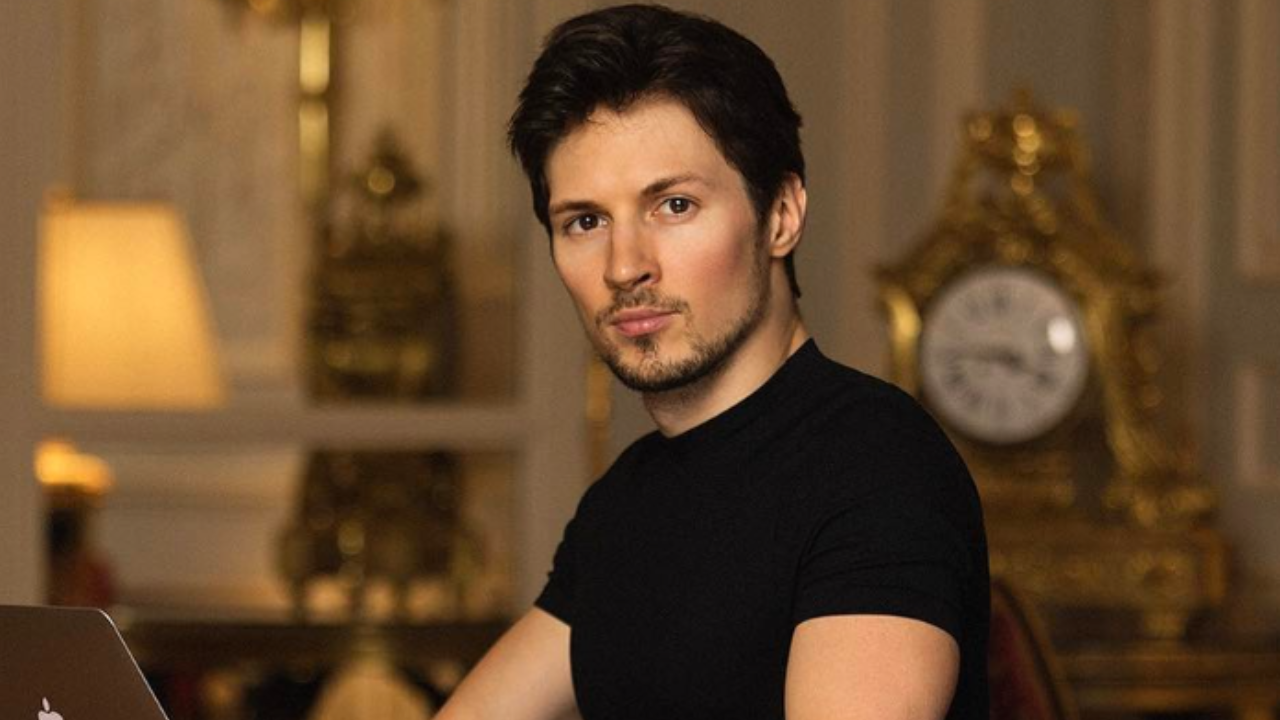
Telegram CEO Pavel Durov has spoken openly about the unusual rules he follows around food, exercise, technology and everyday habits. In a conversation with computer scientist and podcaster Lex Fridman, Durov (41) described a lifestyle built around avoiding several substances, limiting his dependence on his phone, exercising every day and spending quiet time without digital distractions. Durov said he has stayed away from alcohol, tobacco, coffee, pills and illegal drugs for more than 20 years. He also said he does not eat processed sugar, fast food or drink soda, has stopped eating red meat and follows intermittent fasting.
“Sugar is pretty easy because it’s addictive”
Durov also said he stopped eating red meat around 20 years ago because of how it made him feel.
When Fridman asked Durov about his diet, he described a fairly restrictive approach. He said he avoids processed sugar, fast food and soda and sometimes follows intermittent fasting, eating only within a six-hour window or sometimes eating only once a day. “Well, sugar is pretty easy because it’s addictive. The more sugar you consume, the more you want it, and the hungrier you get,” Durov said. “So, if you want to stay efficient and healthy, why consume processed sugar? You’ll just end up snacking all the time.”Durov said intermittent fasting also gives structure to his day and eating habits. “Intermittent fasting, eating only within six hours or not eating for 18 hours every day, also brings structure into your day and into your eating habits. So, you don’t crave sugar anymore.” At the same time, he clarified that he is not completely rigid about naturally sweet foods. “Now, I’m not militant about sugar. You can eat berries and fruit if you feel your body needs them. But it’s not true to think that it’s necessary to consume sweet things, not for children and not for adults.”Durov also said he stopped eating red meat around 20 years ago because of how it made him feel. “Red meat, I stopped eating it about 20 years ago because I just felt heavy every time I had it. So, I guess it’s individual.” He explained that he sees it as a personal response to food rather than a universal rule. Instead, he said seafood and vegetables form the basic part of his diet. “So, I normally eat seafood of all kinds and vegetables. This is the basic source of calories for me.”
His approach to headaches: “Identify the real cause”
Durov also explained why he generally tries to avoid taking medicines. He gave the example of a headache. According to him, taking a painkiller can make the pain disappear without necessarily addressing whatever caused it. “Yes, and trying to identify the real cause of an issue you’re experiencing,” he said. “If you’re experiencing a headache, one solution would be to take a pill, and then the headache disappears.” He continued: “What this pill would actually do, in most cases, is mute the consequence, your feeling of pain. It’s a painkiller.”Durov said people should instead ask themselves what might be behind the problem. “So, you have to ask yourself, ‘What is causing this headache? Do I need to drink some water? Is the air quality here bad? Do I need to start getting more sleep? Is there something wrong with the people around me that are stressing me out?’” “There must be some reason why you’re experiencing a headache.”“There are obviously some diseases that you can only fight with antibiotics, for example, so I’m not suggesting we go back to the Middle Ages. But what I’m saying is that we overuse pills,” he added.
“My success and health are the result of 20-plus years of discipline”
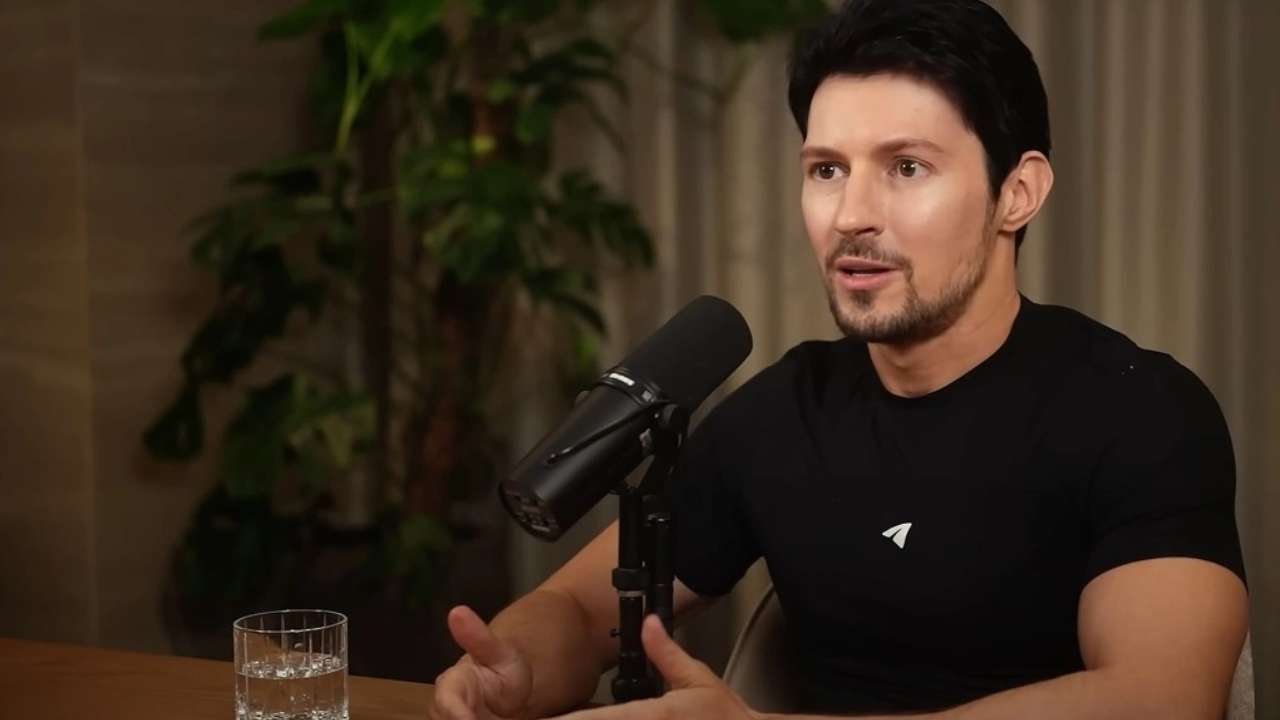
Durov described a lifestyle on a podcast with computer scientist and podcaster Lex Fridman.
Fridman brought up a statement Durov had previously written about his lifestyle. “If you want to reach your full potential and maintain clarity of mind, stay away from addictive substances. My success and health are the result of 20-plus years of complete abstinence from alcohol, tobacco, coffee, pills, and illegal drugs. Short-term pleasure isn’t worth your future.”Asked specifically about alcohol, Durov traced his thinking back to childhood. “When I was 11 years old, my biochemistry teacher gave me a book he had written. It was called The Illusion of Paradise,” he said. According to Durov, the book explained the biological and chemical processes associated with different substances. He said the experience shaped his attitude towards alcohol and other addictive substances.Durov said the book made him think about alcohol in terms of its effects on the brain and long-term consequences. “So think about this. If your brain is the most valuable tool you have on your journey to success and happiness, why would you destroy this tool for short-term pleasure? It sounds ridiculous.”When Fridman asked whether Durov found it difficult to refuse alcohol at parties or social gatherings, he said, “For me, not at all. I’ve always been ready to stand my ground and say no when I feel something isn’t right.”
He does not use a phone like most people
Durov’s approach to technology is another unusual part of his routine. Fridman said that during the time he spent with Durov, he barely saw him use a phone in the way most people do, particularly for social media. Durov said, “I don’t think a phone is a necessary device.” He recalled growing up without a mobile phone and said he also did not have one when he was a university student. “When I finally got to use a mobile phone, I never used phone calls. I was always in airplane mode or on mute. I hated the idea of being disturbed.”He said he wants to decide for himself what deserves his attention. “My philosophy here is pretty simple. I want to define what is important in my life. I don’t want other people or companies, all kinds of organisations, telling me what is important today and what I should be thinking about.”
He gives himself time to lie in bed and think
Durov also said he deliberately tries to allocate as much time as possible for sleep. But he does not necessarily spend all that time sleeping. “Now, even if I allocate, say, 11 or 12 hours for sleep, I won’t sleep for 11 or 12 hours. So, what I end up doing is lying in bed thinking.” “Some people hate it. They say, ‘Oh, you have to take a sleeping pill,’ but I never take pills.” “I love these moments. I get so many brilliant ideas, or at least they seem brilliant to me at the moment, while I’m lying in bed, either late in the evening or early in the morning. That’s my favourite time of the day.” He said he sometimes gets up and takes a shower without reaching for his phone. “Sometimes I wake up and go take a shower, still without the phone. Beautiful ideas can come to you while you’re doing your morning exercise or your morning routine without a phone.”
300 push-ups and 300 squats every morning

Durov also explained why he generally tries to avoid taking medicines.
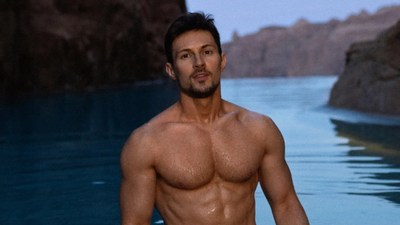
Durov’s exercise routine is equally demanding. When Fridman asked about his daily workout, Durov said: “I do 300 push-ups and 300 squats every morning.” That is in addition to his gym routine. “And in addition to that, I normally go to the gym five or six times a week, spending between one and two hours every day.” Durov said the push-ups and squats are not necessarily about changing his body. “I’m not sure they do a lot in terms of changing your body, but they’re definitely a good way to practise self-discipline.” He sometimes adds ice baths to the routine for the same reason. “When I can, I also take an ice bath because it’s another exercise in self-discipline.” For Durov, discipline is more important than simply building muscle. “I think the main muscle you can exercise is this muscle, the muscle of self-discipline. You know, not your biceps or your pecs or anything else. Because if you train that one, everything else just comes by itself.”
Why he likes ‘Banya’ and cold plunges
Durov also spoke about his experience with Banya, a traditional Eastern European steam bath involving intense heat, followed by cold exposure. Fridman, who had accompanied him to a Banya, described Durov as unusually comfortable with the extreme temperatures. Durov said he had simply become accustomed to it. “Banya is this extreme kind of sauna practised by Eastern Europeans. But it is done in a way that maximises heat, and they also use all kinds of herbs and branches. It’s a much more holistic and natural experience.”He said the cold plunge is an important part of the experience. “Then, a necessary part of it is that you take a cold plunge and then go back.” Durov acknowledged that the experience can be uncomfortable. He compared the experience with alcohol, describing them as opposite forms of short-term sensation followed, in his view, by different longer-term effects. “In a way, you can look at it as alcohol in reverse. Alcohol will give you this short, fleeting pleasure for an hour or a couple of hours, but then you will be paying for it with long-term negative consequences.” “I’d rather do Banya, a traditional Russian steam bath, and an ice bath,” he added.