
In 1959, Soviet scientists began breeding silver foxes only for tameness; within decades, descendants had floppy ears, curled tails, shorter legs and patchy coats |
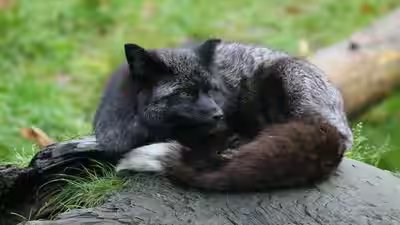
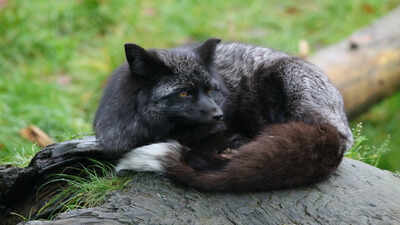
In 1959, Soviet geneticist Dmitri Belyaev began an experiment designed to study domestication as it happened. He selected silver foxes, a color variant of the red fox that had long been bred on fur farms, and used tameness toward humans as the sole criterion for choosing which animals would reproduce. The experiment was established at the Institute of Cytology and Genetics in Novosibirsk and has continued for decades.A risky experiment beginsBelyaev was working at the newly established Institute of Cytology and Genetics in Novosibirsk when he began the fox experiment in 1959. Genetics remained politically sensitive in the Soviet Union at the time, and a Lysenkoist committee scrutinized the institute that same year, placing the new project at risk of closure. He collaborated with fellow geneticist Lyudmila Trut, who would later take over the programme for decades after his death. Their strategy was intentionally basic. In each generation of fox pups, they selected only a small number that were the least fearful and most friendly towards humans and bred those individuals together to generate the following generation. A later history of the experiment in Evolution: Education and Outreach describes the original hypothesis: selecting foxes for calm behavior toward humans could reproduce some of the early steps of domestication.Tame conduct yields surprising qualitiesThe behavioral changes appeared remarkably quickly. Within six generations, some foxes began seeking contact with people, wagging their tails and whining when humans moved away. By the eighth to tenth generations, researchers also documented physical changes that had not been selected for directly, including floppy ears, curly tails and altered coat patterns.The offspring of the most docile foxes grew up with droopy ears rather than the sharp ears of wild foxes, tails that curled up instead of hanging down, spotty coats rather than solid, with white patches replacing solid colour, and structural modifications including shorter limbs and different skull shapes. Belyaev started to suspect that selection for tameness alone was somehow upsetting a common set of biological switches that also control pigmentation, cartilage formation and hormone regulation, a theory now widely known as domestication syndrome. Later research on the foxes documented associated changes in body shape, coat pattern and other traits alongside the behavioral selection.
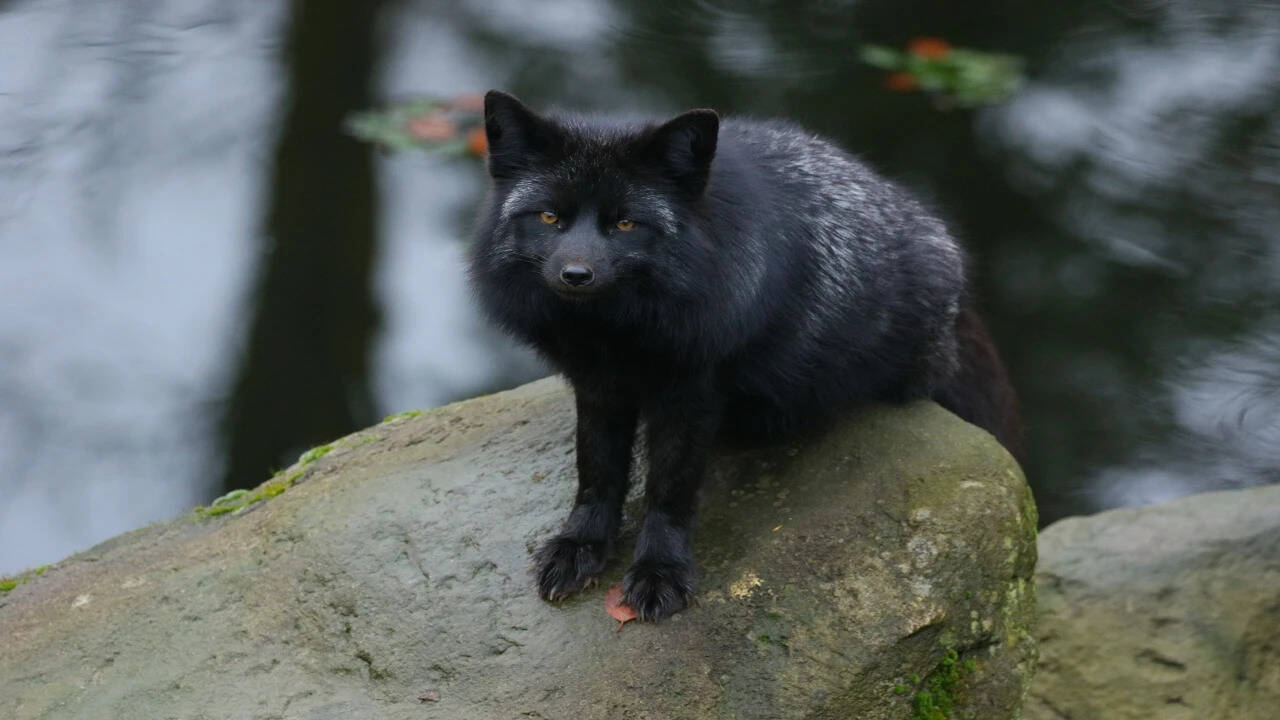
A silver fox (Vulpes vulpes), shown in close-up with its distinctive black-and-silver coat and amber eyes. Credits – Wikimedia Commons
A living experiment that lives on todayWhen the Soviet Union dissolved in 1991, the project came under severe financial pressure as government funding for science declined. Finally, the experiment was given renewed international attention when DNA sequencing technology had progressed to the point that the genomes of the tame and aggressive lines of foxes could be compared side by side. An international research team has also used genomic comparisons of tame and aggressive foxes to investigate genetic differences associated with their contrasting behaviors, according to research shared via the Siberian Branch of the Russian Academy of Sciences.Today, the facility near Novosibirsk still houses about a thousand foxes, both tame and wild, kept side-by-side for this very kind of comparison. More than six decades after Belyaev began the experiment, researchers continue to use the fox populations to study the relationship between behavior, genetics and physical development.