Arizona’s Apache trout was pushed toward extinction by habitat loss and non-native trout; after decades of recovery it was delisted, and a new barrier protects 22 miles of habitat
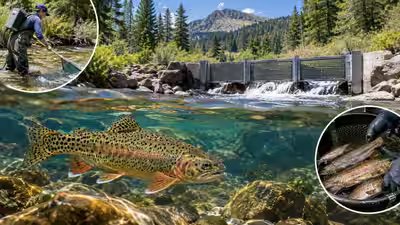
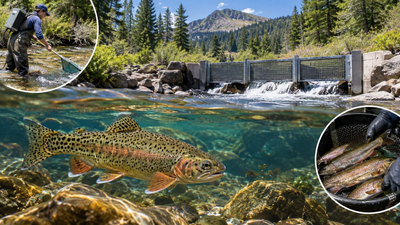
Arizona’s Apache trout has made a remarkable recovery after decades of pressure from habitat degradation, overfishing and introduced trout. The native fish was once close to disappearing from the cold mountain streams of eastern Arizona, but long-term conservation led by the White Mountain Apache Tribe and supported by state and federal partners helped rebuild its populations. According to the U.S. Fish and Wildlife Service (USFWS), the Apache trout was officially removed from the federal list of threatened and endangered species in September 2024 after meeting recovery goals. The latest milestone is the completion of a new barrier on Big Bonito Creek, which now protects nearly 22 miles of stream habitat from invading non-native trout.
A native trout facing multiple threats
The Apache trout is found naturally only in the mountain streams of eastern Arizona, particularly around the White Mountains. It is one of only two trout species native to Arizona and is also the state fish. The species depends on cold, clean streams flowing through mountain forests and meadows. Its decline began long before modern conservation programmes were established.The fish faced pressure from overfishing, habitat degradation caused by activities such as timber harvesting, road construction and grazing, as well as wildfires. However, one of the most serious threats came from trout that had been introduced into Arizona waters for fishing and other purposes. Introduced brook and brown trout could compete with Apache trout for food and habitat, and they could prey on them. Rainbow and cutthroat trout created another problem because they could hybridise with Apache trout, threatening the genetic identity of the native fish. The combination of these pressures pushed the species towards extinction and eventually led to federal protection.
Conservation began before federal protection
One of the most important parts of the Apache trout recovery story began in 1955, before the Endangered Species Act existed. The White Mountain Apache Tribe recognised that native trout populations were declining and closed fishing in reservation waters containing remaining Apache trout populations. That early intervention helped protect some of the last surviving populations. Conservation work later expanded to include habitat restoration, captive propagation, removal of non-native fish and construction of barriers designed to keep invasive trout away from Apache trout streams.The Apache trout was listed as endangered in 1967 under the federal Endangered Species Preservation Act and later received protection under the Endangered Species Act in 1973. In 1975, it was downlisted from endangered to threatened after conservation efforts helped establish additional populations. Over the following decades, the recovery programme expanded across tribal, state and federal lands.
Reaching the goal for recovery
The recovery effort eventually reached a major benchmark. According to USFWS, the recovery plan called for 30 genetically pure, self-sustaining populations with sufficient habitat. A species status assessment completed in 2022 confirmed that this goal had been achieved. The progress was the result of decades of cooperation involving the White Mountain Apache Tribe, Arizona Game and Fish Department, USFWS, U.S. Forest Service, Trout Unlimited and other partners.In September 2024, the Apache trout was officially removed from the federal list because of its recovery. USFWS describes it as the first sport fish and first trout species to be delisted from federal protections because its populations had recovered. But delisting did not mean the conservation work was finished.
New barrier protects 22 miles of habitat
A key part of continuing that protection is preventing non-native trout from moving back into streams where Apache trout have recovered. The Big Bonito Creek Barrier was originally built decades ago to prevent non-native trout from moving upstream into Apache trout habitat. Over time, the old structure deteriorated and could no longer provide the protection required.USFWS and its partners therefore helped fund its replacement. The new barrier was completed in 2025 and is designed to protect nearly 22 miles of stream habitat. According to the agency, that represents roughly 18% of all remaining Apache trout recovery habitat. The project involved funding and support from the White Mountain Apache Tribe, the Arizona Fish and Wildlife Conservation Office, the Desert Fish Habitat Partnership, the Bureau of Reclamation, the National Fish and Wildlife Foundation and other USFWS programmes.
Keeping invasive trout out
Barriers are only one part of the strategy. Conservation teams also actively remove non-native trout from Apache trout waters. Biologists use backpack-mounted electrofishing equipment to capture and remove invasive fish. Environmental DNA, or eDNA, sampling can then be used to identify traces of non-native trout that may remain in streams. This allows crews to target areas where additional removal is needed.Other fish-passage projects are also being developed to improve connectivity within Apache trout habitat. One USFWS project involves removing or replacing outdated barriers and culverts, with the potential to reopen more than 52 miles of habitat while creating larger connected populations. The challenge is therefore a careful balancing act: some barriers are essential because they keep invasive trout out, while others can be removed when they unnecessarily fragment native fish habitat.
A recovery that still requires protection
The Apache trout’s return from the edge of extinction demonstrates what decades of coordinated conservation can achieve. Yet the species remains dependent on active management because the threats that contributed to its decline have not simply disappeared. USFWS plans to continue monitoring the fish after delisting, while conservation partners maintain barriers, control non-native trout and protect its remaining habitat. The agency plans post-delisting monitoring for at least 10 years.For Arizona’s native trout, the new Big Bonito Creek barrier is therefore more than another piece of infrastructure. It represents another layer of protection for a species that survived decades of pressure and now has a stronger foothold in the mountain streams where it evolved.