Meet Adrian Borsboom: The Australian ecologist who lifted a rock and found a snake that looked like a worm; 34 years later, no one has found another | World News
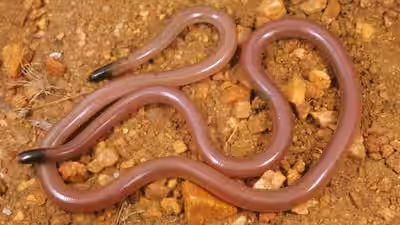
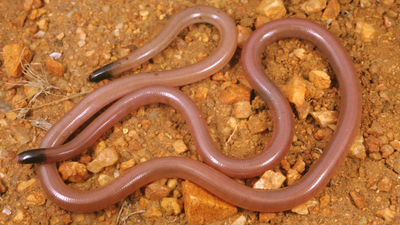
In 1992, Australian ecologist Adrian Borsboom lifted a rock near Warrill View, outside Brisbane, expecting little more than another routine wildlife find. Instead, he uncovered a tiny, pale-pink creature that looked remarkably like a worm. A closer inspection revealed smooth scales, a forked tongue and a distinctly unpleasant smell signs that this was no worm, but a blind snake unlike anything held at the Queensland Museum. The discovery became the first and only recorded sighting of the Fassifern blind snake. More than three decades later, scientists have searched for another, but the elusive reptile has never been found again, leaving its fate uncertain.
The snake remained missing after years of searching
Blind snakes are notoriously difficult to locate, even when they are not particularly rare. Their underground lifestyle makes them elusive, and many are discovered accidentally rather than through targeted searches. Amey put it simply: “Blind snakes are very hard to survey for, deliberately. You generally find them when you’re looking for something else, especially ones that are so small.”The search for Borsboom’s snake eventually became more deliberate. Researchers received funding to look for the Fassifern blind snake from 2021 to 2023, in the original property and surrounding areas. They checked beneath rocks and logs, dug through soil and used specialised pitfall traps. Yet despite those efforts, the species remained missing. Blind snakes can also behave much like worms, emerging after rain, which makes wet-night searches one possible way of encountering them.
Why blind snakes are difficult to locate
According to Australian Geographic, the Queensland Museum did not immediately make the discovery official. With only one specimen, researchers lacked basic information about the snake, including its size, variation and distribution. As Amey explained, “When you describe a species, you want to know how big it gets, how it varies within the species and also where it occurs. But we only had one data point for it, only one place where we knew it occurred.” Even the age of Borsboom’s specimen remains uncertain, because scientists cannot tell whether it was a juvenile or an adult.The circumstances of the discovery also raised concerns about what might have happened to the species. The snake was found on cattle-grazing land that was probably cleared of its original forest habitat about 70 years earlier. Cattle continued to graze the property, while weeds had spread through nearby remnants of forest. The specimen was eventually formally classified as Ramphotyphlops insperatus in 2015, later becoming Anilios insperatus, with its species name derived from the Latin word for “unexpected”.
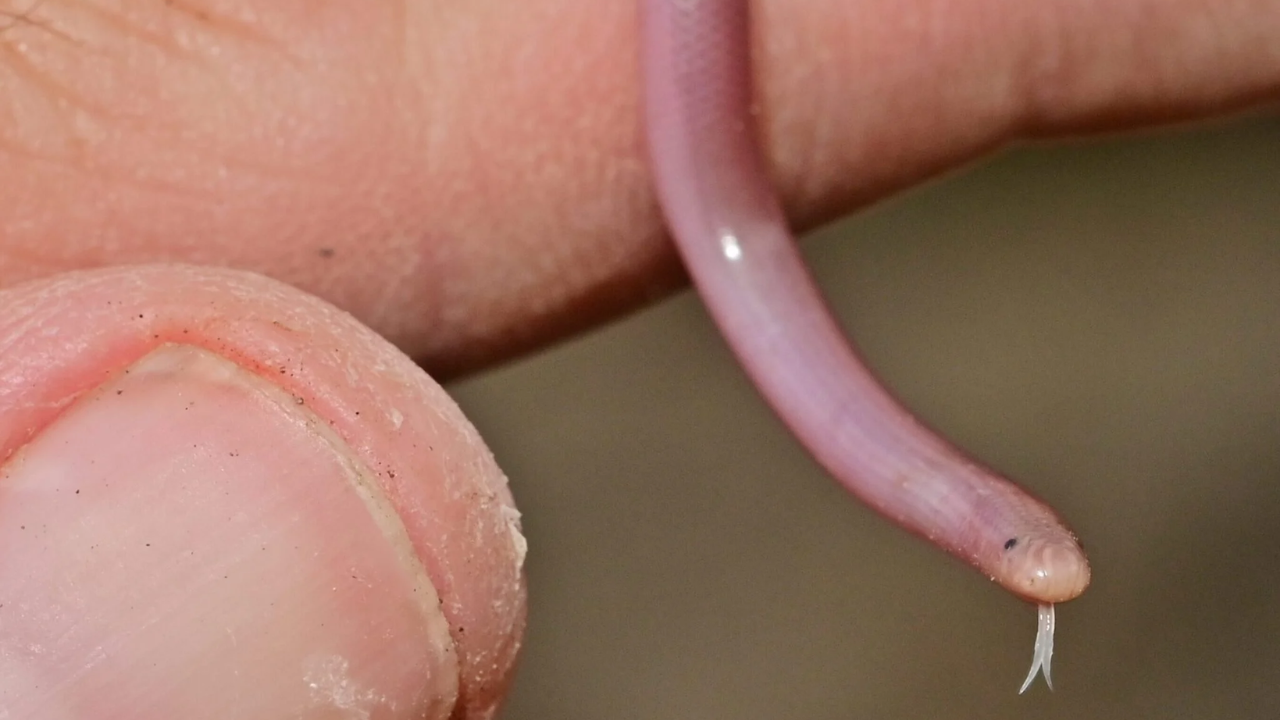
PC: Australian Geographic
Australia’s mysterious one-specimen blind snakes
The Fassifern blind snake is not Australia’s only blind snake known from a single specimen. Australia has 47 known native species, and scientists continue to encounter new examples as genetic and molecular techniques improve. Another one-specimen species, the Barrow Island blind snake, was discovered by chance when it was pulled from considerable depth while a well was being maintained. At 30 centimetres long, it was described by Amey as looking “for all the world, like a boot lace”, another reminder of just how strange these subterranean reptiles can be.For the Fassifern blind snake, the lack of sightings is both the mystery and the conservation problem. With so little known about where it lives or what threatens it, proving that the species needs protection is difficult. The same lack of information may be a consequence of extreme rarity. The species was listed as critically endangered eight years after its classification and is considered highly likely to be declared extinct within the next 20 years. Still, Amey remains hopeful: “I think it’s still around. Well, I hope so.”