
Daily sugary drinks may double stomach cancer risk? Doctor explains what the study really means and why cutting back could benefit long-term health |

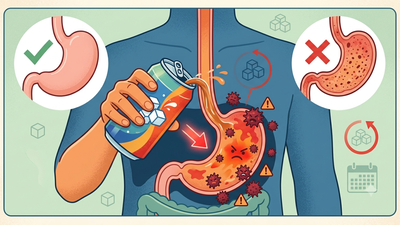
Daily sugary drinks may be more than just a concern for your waistline. A large recent study has found that people who consume sugary beverages every day may have more than twice the risk of stomach cancer compared with those who rarely drink them.That sounds alarming, especially for anyone who reaches for a cola, packaged juice or sweetened tea every day. But there is an important distinction hidden inside the headline: the study shows an association, not proof that sugary drinks directly cause stomach cancer.Still, the finding adds to a growing body of concern around frequent consumption of sugar-sweetened beverages and their long-term impact on health.“This does not mean that having a sugary drink causes cancer. Cancer is never that simple. However, it adds to the growing evidence that regularly consuming sugary drinks may not be a healthy long-term habit,” says Dr. Vishal Khurana, Principal Director & HOD – Gastroenterology Department, Metro Hospital, Faridabad.
The everyday drink that can quietly become a habit
The problem with sugary beverages is often not a single glass. It is the repetition.A cold cola with lunch, packaged fruit juice in the morning, an energy drink during a busy workday or sweetened tea several times a day can gradually become part of a person’s routine. Unlike a whole fruit, many sugary drinks provide substantial amounts of added or free sugars without offering the same level of fibre and satiety.And because beverages are easy to consume quickly, it can be surprisingly easy to take in a significant amount of sugar without feeling as though you have eaten much.Dr. Khurana advises against making such drinks an everyday habit.“As a gastroenterologist in Faridabad, my advice is simple: don’t make sugary drinks an everyday routine. Colas, packaged fruit juices, energy drinks and sweetened teas are better kept as occasional treats rather than daily beverages,” he says.
So, should you stop drinking cola completely?
Not necessarily because of this study alone.A stomach cancer diagnosis cannot be traced back to one drink or one food in most cases. Cancer develops through a complex interaction of genetic, environmental and lifestyle factors over time.That is why the new finding should not be interpreted as: Drink one cola and you will get stomach cancer.Instead, researchers are looking at whether long-term patterns of consumption may be associated with cancer risk.This distinction is particularly important when interpreting observational studies. People who consume sugary drinks frequently may also differ from infrequent consumers in several other ways, including overall diet, physical activity, body weight and other lifestyle factors. Researchers can account for some of these factors, but such studies cannot establish cause and effect as conclusively as a randomised trial.
Why sugary drinks still deserve attention
Even without the cancer question, there are good reasons to reconsider frequent sugary drinks.Regular consumption can make it easier to consume excess calories, which may contribute to weight gain. Excess body weight and metabolic problems are, in turn, associated with a range of chronic diseases.That is why the bigger health message is not about demonising one beverage. It is about looking at the overall pattern.“Frequent intake can contribute to excess calorie consumption, weight gain and metabolic problems, which themselves are linked to several chronic diseases,” Dr. Khurana explains.This is also why replacing a daily sugary beverage with water can be a relatively simple lifestyle change.
What should you drink instead?
For everyday hydration, water remains the simplest choice.Dr. Khurana also suggests options such as unsweetened nimbu paani, chaas and plain tea or coffee.The key word is unsweetened. Turning a traditionally healthy drink into a sugar-heavy beverage can change its nutritional profile considerably.For people accustomed to sweet drinks, the transition does not have to be dramatic. Gradually reducing the amount of sugar in tea or coffee, choosing smaller portions of sweetened beverages or making water the default drink with meals can help reduce overall intake.
Cancer prevention is bigger than one drink
The new findings may make sugary drinks an easy target, but cancer prevention cannot be reduced to eliminating a single item from the diet.“Cancer prevention is not about avoiding one particular food or drink,” says Dr. Khurana.He points instead to the broader lifestyle picture: maintaining a healthy weight, staying physically active, eating enough fibre, avoiding tobacco and limiting alcohol.That may be the more useful way to interpret the study.If someone occasionally enjoys a cola or sweetened tea, there is no reason to panic over one drink. But if a sugary beverage has quietly become an everyday ritual, that is where the finding offers a practical reason to pause.“This does not mean that drinking one cola, juice or sweetened tea will ‘cause’ stomach cancer. Cancer is a complex disease, and many factors come into play over years. Studies like this show an association, not proof that one particular drink directly causes cancer,” Dr. Khurana says.“However, the finding adds to the growing evidence that regularly consuming sugary drinks is not a good habit for long-term health.”In the end, the most useful takeaway may be remarkably simple: you do not need to overhaul your entire diet overnight. Making water your everyday drink and keeping sugary beverages for occasional occasions is one small change that can support a healthier overall lifestyle.As Dr. Khurana puts it, “Small changes, when followed consistently, can make a big difference.”


