
In 2018, Annapolis covered its old 57-acre landfill with 52,416 solar panels; six years on, they supply 40% of city power and cut 13,000 tons of CO₂ yearly |

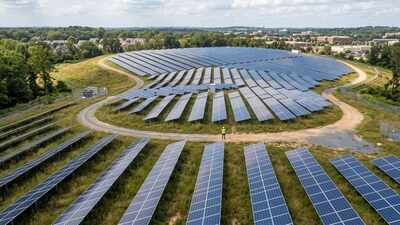
Annapolis, the capital of Maryland, spent decades searching for a use for its old municipal landfill, a capped and grassed-over hill on the edge of town that was too contaminated for housing and too large simply to fence off and forget. The city eventually found one, and the result has become one of the most closely watched examples anywhere in the country of turning a landfill liability into a source of clean electricity.For nearly forty years, city garbage trucks rumbled up a winding route off Route 450 to a mountaintop landfill just outside the town. By 1989, the site was full, capped and covered with grass, and it sat quietly for close to three decades with little to show for its past beyond a few venting pipes protruding through the dirt. City planners eventually recognised that the hill, while otherwise useless, had one good quality: its high elevation and open, treeless land made it nearly ideal for solar power.From a capped dump to a working power plantThe city, Building Energy and Anne Arundel County turned the area into the Annapolis Renewable Energy Park by 2018. The park is about 57 acres in size and features 52,416 solar panels with a combined direct current capacity of 18 megawatts, according to the City of Annapolis. The panels were placed on ballasted racking systems that rested on the surface rather than being driven into the ground below since engineers had to construct around the landfill’s protective membrane cap, which could not be breached for foundations.A power source that keeps growing in importanceSix years into operation, the solar park now provides a meaningful share of the electricity used to run Annapolis and the surrounding county, with city officials pointing to it as a model other municipalities can copy. Jacqueline Guild, the city’s deputy manager for resilience and sustainability, told visiting state officials during a tour that the project turned a contaminated site into an asset generating revenue, inexpensive power and lower local emissions all at once, a description carried by Maryland’s Department of Natural Resources. Ownership of the park has since passed from Building Energy to Novis Renewable Holdings, which continues to run the site and has kept it feeding power directly to city and county buildings. Officials in Annapolis now estimate the array supplies around 40 per cent of the electricity used to run the city’s own municipal operations.
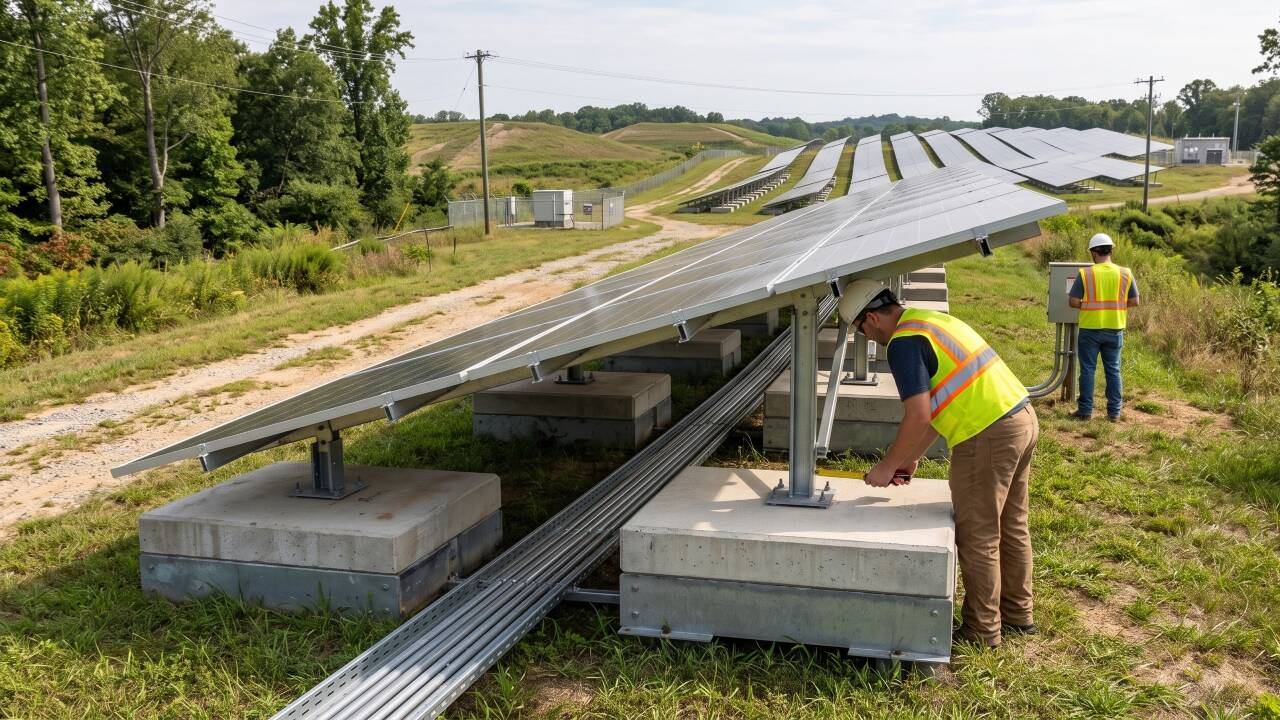
An AI-generated representative image showing how solar equipment was installed on the capped landfill while protecting the membrane covering the buried waste below. Credits – Google gemini
Cutting carbon and offering a model for other citiesThe project’s power generation also brings environmental benefits. Now fully operational, the park offsets generation equivalent to about 13,000 tonnes of carbon dioxide annually, roughly the climate impact of taking between 2,800 and 3,100 passenger vehicles off the road each year, based on standard EPA conversion figures. The Annapolis project has since been held up by state planners as a template for other local governments sitting on similar brownfield sites, since it required no new greenfield land, generated a long-term lease income for the city and avoided the community pushback that often accompanies utility-scale solar builds on farmland.The U.S. Environmental Protection Agency lists the Annapolis Renewable Energy Park as a solar photovoltaic project completed in 2018 on a municipal solid-waste landfill. The place has also become a little haven for pollinators. Officials have suggested planting native Maryland wildflowers around and underneath the panel rows as part of a statewide policy that honours solar sites for supporting bees and other pollinating insects, rather than leaving the ground underneath the arrays as bare gravel. Such landfill solar is still rare across the country, with only a few hundred of these projects installed nationwide so far, but the number has climbed gradually since Annapolis showed the concept could work at scale.


