
Native birds see record-high sightings at Pallikaranai | Chennai News

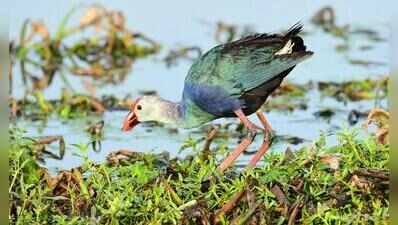
Chennai: From white-faced common coots to the long-toed grey-headed swamphens and snake-necked oriental darters, native birds of Pallikaranai marshland have been sighted in large numbers ahead of this year’s migratory bird season.As many as 3,091 common coots, typically identified by their lobed toes and white patches on their face, were sighted in the month of Aug — the highest figures recorded for the month since 2014-15. As for swamphens, known for their striking purple-bluish and red colours, a record-high sighting of 3,597 was logged in the month of Aug, data provided by The Nature Trust say.Further, as many as 252 oriental darters — the near-threatened birds known for their slender, curvy necks and swift dives — were sighted in Aug. Nearly 25 active nests of the birds were found along the marshland, with up to 3 chicks per nest. “This assumes significance as typically, waterbirds are known to breed well during the northeast monsoon. But for the last two years, oriental darters have shown strong breeding activity during the southwest monsoon. That too, this year, the monsoon has been below par and yet, the breeding of these threatened birds has been healthy,” said K V R K Thirunaranan, founder of the trust.The trust has been working with the Tamil Nadu Forest Department to monitor and document the birds in the marshland since 2012.Though forest officers were unable to pinpoint a reason behind the record-high numbers, Chennai District Forest Officer V A Saravanan said that it indicated that the marshland biodiversity and hydrological conditions were conducive for birds. “Breeding indicates a favourable environment and food and resting sights. Migratory birds will also start to arrive by Sept-end. The marshland has always been a haven for birds and will continue to be so,” he added.At present, the marshland has the presence of stagnant water in several patches. “While the prevailing water conditions could have led to the increase in numbers, it is only a hypothesis. Other factors could have contributed too. Further, for a marshland, presence of stagnant water for a prolonged period can be harmful even if they are conducive for a few birds,” said Thirunaranan.The migratory bird season will go on from Aug/Sept to Apr/May 2027.


