
This is how this metal foil can ease your life in the kitchen |

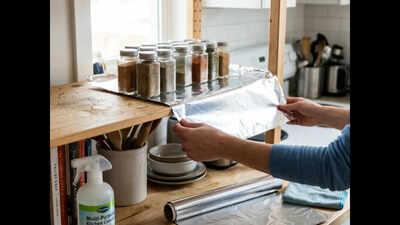
There’s no denying that cleaning the dirt, grime, and grease from the kitchen can be the most daunting thing ever, but what if we tell you that the solution to this is right in your kitchen? Few kitchen chores are as frustrating as scrubbing a pan coated in burnt, baked-on grease. You can soak a utensil for hours, use half a bottle of dish soap, and press down until your arm hurts, only to find the charred layer barely budging. Before throwing away a ruined pan or ruining your hands with harsh chemical sprays, there is a remarkably effective kitchen hack that uses something you likely already have in your pantry: plain aluminum foil.Why friction beats chemical cleanersThis technique relies on basic physics and mechanical friction to deliver impressive results. When you ball up a piece of aluminum foil, it creates dozens of firm, rigid edges that bite directly into tough, carbonized grease. Unlike a wire bristle brush, aluminum is soft enough to yield slightly, allowing it to conform to the curves, corners, and rivets of your cookware. Because aluminum is a relatively soft metal, it provides intense friction on sturdy materials like glass, cast iron, and stainless steel, stripping away grease layer by layer without gouging the base metal underneath.Simple supplies for the jobTransforming a piece of foil into a powerful, non-toxic scrubbing tool requires only a few basic items. You will need a roughly twelve-by-twelve-inch sheet of household aluminum foil, warm to hot water, and a bit of standard dish soap or baking soda for extra abrasive power.Step-by-step restoration processTo restore your greasy cookware, start by placing the item in your sink and filling or submerging it with hot water, adding a few drops of dish soap or a couple of tablespoons of baking soda. Let it sit for ten to fifteen minutes so the top layer of hardened fat can soften and loosen its grip. While it soaks, take your sheet of aluminum foil and crumple it tightly into a ball roughly the size of a golf ball or a lime, keeping it firm enough that it will not flatten completely under pressure. Once the pre-soak is finished, pour out most of the water, leaving just a thin layer of moisture in the utensil to act as a lubricant. Hold the foil ball firmly, press it against the greasy areas, and scrub using firm, circular motions. As you work, the foil will scrape away the blackened residue, turning the wet soapy layer into a greyish paste. Rinse the utensil thoroughly under warm running water to wash away the lifted grease and debris. If any stubborn spots remain, simply add a sprinkle of fresh baking soda directly onto the spot and scrub once more with your foil ball. Finally, give the item a standard wash using a regular soft sponge and dish soap to remove any lingering grease films or aluminum residue, then dry thoroughly.Know when to use itWhile this hack works wonders on many kitchen items, keeping a few safety limits in mind will protect your cookware. It is exceptionally useful on stainless steel, glass baking dishes, cast iron, carbon steel, and even greasy oven racks or grill grates. However, you should strictly avoid using aluminum foil on non-stick or Teflon pans, as the metallic edges will strip away the coating and permanently ruin the pan. You should also skip this method on delicate enameled cookware or highly polished, mirror-finish surfaces to prevent micro-scratches.Cleaning shortcutBeyond its cleaning power, this trick is a budget-friendly and sustainable way to recycle around the house. If you have used aluminum foil from wrapping vegetables or covering a casserole provided it isn’t contaminated with raw meat juices you can simply rinse it off, crumple it up, and give your dirty pots a quick scrub before tossing the foil into the recycling bin.


