
Invasive Species India: In the 1840s, this African snail reached India decades ago and now appears in gardens and farms across the country
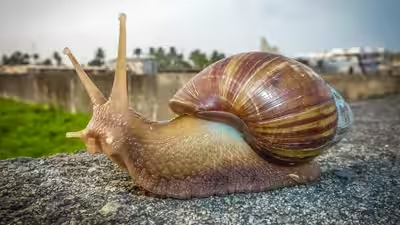
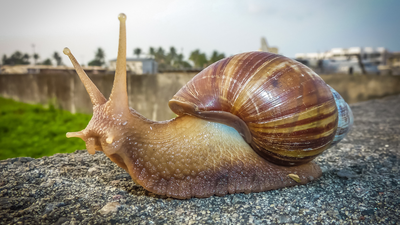
The Giant African Snail came to India nearly 180 years ago, and it seems that the creatures found their second home since then and never actually left what came in two shells, brought by a curious traveller, to garden in Kolkata.Today, this slow-moving, fist-sized mollusk can be easily spotted in monsoon-soaked gardens, vegetable patches, and even school campuses across states as far as Kerala, Andhra Pradesh, Sikkim, and Tamil Nadu.Unlike other invasive species that arrive by mistake, these snails were brought by a British naturalist who likely had no idea what he was setting in motion. From that single garden in 19th-century Calcutta, the snail’s descendants have spread across almost the entire subcontinent, chewing through hundreds of plant species.Here is the story of how a snail from East Africa became one of India’s most persistent and damaging invasive species
How did the Giant African Snail first arrive in India?
The Giant African Snail, scientifically named Achatina fulica, was brought to India in 1847 by William Benson, a British malacologist, according to a study published in PLOS One, and it has spread all across the country ever since. Benson carried two live snails from Mauritius, handed them to a neighbour in Kolkata’s Chowringhee area, who then released them into his own garden, which eventually seeded the species across South Asia.
The two shells that spread across the country today
What started off as a single pair of snails in a Kolkata garden didn’t stay contained for long. Research published by the Ashoka Trust for Research in Ecology and the Environment (ATREE) notes that the species spread throughout much of South Asia after those original two individuals were released. Today, the snail is found across eastern states like Assam, Bihar, and West Bengal, southern states including Kerala, Karnataka, and Tamil Nadu, and even reaches as far as Maharashtra, Uttar Pradesh, and the Andaman Islands, because of its remarkably high reproductive rate.
Why did these snails never actually leave India?
The Giant African Snail is listed among the world’s 100 worst invasive alien species, and in India alone, it’s known to feed on more than fifty native plant and crop species. A single snail can carry both male and female reproductive organs and lay hundreds of eggs at a time, with the vast majority hatching successfully, giving populations the ability to explode within a single monsoon season if conditions are right.
It has now become a problematic invasive species for farmers
The species has emerged as a serious threat to cardamom plantations, causing extensive crop damage. Similar outbreaks have hit papaya, guava, and chilli crops in Andhra Pradesh, while a 2022 outbreak in Kottayam, Kerala, prompted a coordinated “One Health” response from the state government, according to a report by the World Bank, after the snail strain began spreading uncontrollably and damaging crops and farmers’ livelihoods.