
Nasa’s $4 billion Roman telescope to map 2 billion galaxies and uncover secrets of the universe

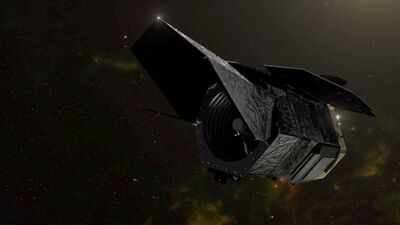
Nasa is set to launch the $4 billion Nancy Grace Roman Space Telescope, a flagship observatory designed to investigate dark energy, dark matter and planets beyond our solar system. The telescope is scheduled to launch on Sunday aboard a SpaceX Falcon Heavy from Nasa’s Kennedy Space Center in Florida.According to Reuters, the Roman will complement the Hubble and James Webb space telescopes by conducting wide-field surveys of the universe. Its main survey is expected to cover more than two billion galaxies, helping scientists study the universe’s expansion, galaxy formation and the nature of dark matter and dark energy.The Nancy Grace Roman Space Telescope is a next-generation observatory designed to conduct large-scale surveys of the universe. Unlike Hubble, which focuses on detailed observations of relatively small areas, Roman has a much wider field of view, allowing it to capture large sections of the sky in a single observation.Nasa’s senior project scientist Julie McEnery said the telescope’s reach will help researchers find the “weird, the rare and the unusual” in the universe.McEnery said Roman’s primary instrument combines high sensitivity with the ability to survey large areas of the sky quickly and efficiently. Its main survey is expected to take more than a year and cover more than two billion galaxies.According to McEnery, the survey will allow scientists to track how stars, galaxies and clusters of galaxies formed and evolved, while also measuring how the universe has expanded over time.“These are the keys that will allow us to unlock the fundamental nature of dark matter and dark energy and the fabric of the universe itself,” McEnery said.The major objective of the Roman Space Telescope is to investigate dark energy, the poorly understood phenomenon linked to the accelerating expansion of the universe. Scientists will use Roman’s observations of galaxies, supernovae and large-scale cosmic structures to track how the universe has expanded over time.The telescope will also study dark matter by observing how its gravity bends light from distant galaxies, a phenomenon known as gravitational lensing. By mapping these distortions across large areas of the sky, scientists hope to better understand how dark matter is distributed and how it has influenced the formation of galaxies.Beyond studying the large-scale structure of the universe, Roman will search for planets outside our solar system. Scientists will use the telescope’s wide field of view to monitor huge numbers of stars and look for brief changes in their brightness that could reveal the presence of distant planets.Roman is not intended to replace the Hubble or James Webb space telescopes. Instead, it will complement them by focusing on large-scale surveys rather than observing relatively small regions of the sky in extreme detail.Roman will combine high-resolution imaging with a much wider field of view, allowing scientists to survey huge areas of the sky efficiently.This combination could give researchers both the detailed observations provided by existing telescopes and the large-scale data needed to understand how the universe has evolved.