
In 2017, Indiana’s Wolf Run Golf Course closed; after plans for 560 homes and 100,000 sq ft of shops and offices stalled, a couple paid $5.5 million for its 215 acres and helped turn it into Boone County’s largest nature preserve
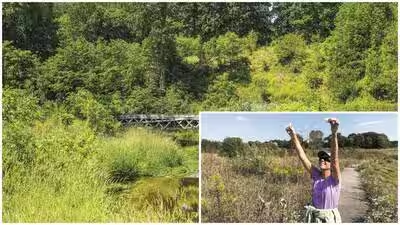
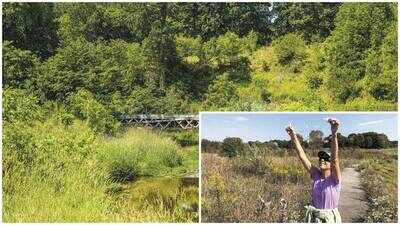
For years, Wolf Run Golf Club in Zionsville, Indiana, was known for its challenging fairways, water features, bunkers and rolling landscape. Today, many of those same fairways have disappeared beneath grasses and vegetation, while birds, deer, foxes, turtles and bats have returned to the property.The transformation is taking place at what is now called Carpenter Nature Preserve, named after the couple who purchased the land for $5.5 million in 2021 and helped pave the way for its future as Boone County’s largest nature preserve.
From golf course to nature preserve
Wolf Run opened in 1989 and was founded by dentist and amateur golfer Dr. Jack Leer. Designed by architect Steve Smyers, the course was known for its large water features, greenside bunkers and undulating terrain.But after nearly three decades, the golf course closed in 2017.The property’s then-owner, Stan Burton, subsequently submitted plans to rezone the land for a major mixed-use development. The proposal included 360 single-family homes, 200 multifamily housing units, 50,000 square feet of retail space and 50,000 square feet of office space.When those plans stalled, Zionsville officials began looking at another possibility.Mayor Emily Styron and Deputy Mayor Julie Johns-Cole toured the former golf course with Burton, and Styron began imagining the site as a large public park.“I could start to see that this could be an amazing park for Zionsville,” Styron said.She asked Burton how much it would cost to purchase the property. His answer was $5 million.
Couple steps in with $5.5 million
Styron began reaching out to people she believed might be interested in helping acquire the land.Among those she contacted were Jim and Nancy Carpenter, longtime Zionsville residents and owners of Wild Birds Unlimited, an Indianapolis-based franchisor with more than 300 stores selling bird feeders and bird food.Unlike a typical buyer, the Carpenters immediately saw the conservation potential of the former golf course.“When we saw [Wolf Run], we knew what would likely happen to it in the years to come for development, [and] we just couldn’t let that happen,” Nancy Carpenter said.The couple purchased the 215-acre property from Burton in 2021 for $5.5 million.The Carpenters had previously supported conservation projects, including donating land to the Brown County Nature Conservancy and contributing to a native pollinator meadow at Newfields.Their connection to wildlife made the Wolf Run opportunity particularly meaningful.
Nature quickly reclaimed the old golf course
Six years after the golf course closed, much of the landscape had already begun returning to nature.“The only clues that Carpenter Nature Preserve used to be Wolf Run Golf Club are the cart paths and sand traps where plants and grasses struggle to grow,” according to the Indianapolis Business Journal.The former fairways are gradually being allowed to return to woodland, while grasslands in other parts of the property are being rehabilitated to remove invasive species.Wildlife has also begun flourishing across the site.Birds, bats, deer, foxes and turtles now inhabit the former golf course. During a recent visit, an Indianapolis Business Journal reporter spotted a snapping turtle in Eagle Creek, along with orioles, blue grosbeaks, vultures and great blue herons.“This is the sixth summer, so it really takes over quickly,” Jim Carpenter said. “It’s pretty amazing what has happened, but wildlife is finding it. It’s going to be a wonderful preserve for people and nature.”
What will Carpenter Nature Preserve look like?
The nature preserve is being developed in multiple phases.The first phase includes basic infrastructure such as trails, parking and restrooms, followed by plans for a nature center and outdoor classroom.Future development is expected to include enhanced wetlands, woodlands and prairies, boardwalks, a nature-inspired playground and overlooks along Eagle Creek.The preserve will also feature multiple ecosystems, including waterways, forests and grasslands, creating habitats for a growing range of wildlife.Zionsville Parks and Recreation Superintendent Jarod Logsdon was impressed by the site’s potential when he first visited it in 2021.“My jaw dropped at the possibilities,” he said. “To have 215 acres in central Indiana is pretty unheard of.”The preserve will become the first park in rural Union Township and the largest nature preserve in Boone County.
Carpenters agree to sell land to Zionsville
Although the property is now appraised at just over $6 million, the Carpenters agreed to sell it to the town for $4.52 million.The Zionsville Town Council voted 6-1 in May to approve a $5.5 million bond to cover the property acquisition as well as engineering, surveys and construction documents for the first phase.The town has also been nominated for several conservation grants and funding opportunities, including a potential $3 million Next Level Conservation Trust grant, a $500,000 Land and Water Conservation Fund grant and $4 million in Indiana Stream and Wetland Mitigation Program credits.
A rare second life for a former golf course
Transforming a former golf course into a nature preserve is unusual. According to the Audubon Society, only a relatively small number of former golf courses across the US have been converted into preserves, wetlands or restored natural areas instead of housing and commercial developments.For the Carpenters, that rarity was precisely what made Wolf Run worth saving.“When we saw this, we recognized this is unique,” Jim Carpenter said. “You cannot find anything like this in central Indiana that will ever be available again.”As temporary caretakers, the couple has continued mowing old golf-cart paths, maintaining 24 bluebird boxes and tending two experimental pollinator gardens near the former clubhouse.The old sand traps and greens are now being viewed as opportunities for new ecosystems rather than remnants of a golf course.
‘It’s going to hopefully last for 100 years or more’
Nancy Carpenter said the project has not been without financial risk or stress, but believes the long-term reward will be worth it.“It’s been really, really rewarding to do a project like this,” she said. “It’s going to hopefully last for 100 years or more and provide people with joy and animals with habitat, and I hope it inspires others.”