One is not born, but becomes: India’s drag story, from myth to modern stage | India News
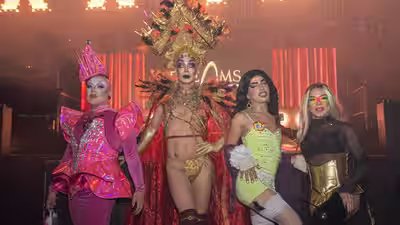
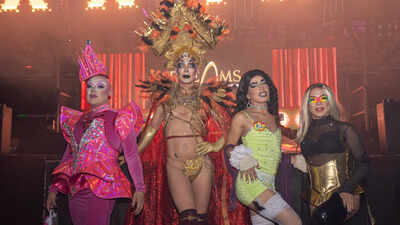
The most heavily quoted feminist scholar, Simone de Beauvoir, launched entire fields of feminist theory by writing – one is not born, but rather becomes, a woman.To be a woman, to be feminine was never purely biological, it was also societal. You are shaped into a woman, piece by piece, experience by experience.In her rejection of the arbitrariness one would often attach to what femininity means, she made space for who some would argue is very much a queer icon and a scholar.Almost half a century later, RuPaul said: we’re all born naked, and the rest is drag.It’s a strange thing, watching a philosopher and a reality show host arrive at the same conclusion from opposite directions, that gender was never the given, natural thing it pretends to be, just the costume everyone’s already wearing. De Beauvoir got there through existentialism. RuPaul got there through sequins. Both arrived to the conclusion that the performance was the point all along.
The history of ‘drag’ in India
A common practice to define drag would be to trace its historic roots in the Indian subcontinent. Women were kept out of public spaces, be it India or the West. So when women roles had to be filled in theatrical production men would dress us as them and take up that role in the public eye.India has its own unique lineage to give to this art form, be it through mythology or folk dance and other cultural performances. In the Natyashastra, men played goddesses, heroines, demonesses, styled into femininity through gesture, costume, and the trained emotionDance forms like Kathakali, Jatra and Yakshagana still carry that inheritance. These traditions though have never termed themselves as drag and only trace lineage through reductive definitions of drag being men becoming women convincingly enough to make an audience believe it.India’s mythology also builds gender transformation directly into the stories being told. In the Mahabharata’s Virata Parva, Arjuna spends a year of exile disguised as Brihannala, a court dancer and music teacher, cursed by the nymph Urvashi to live without his manhood after refusing her. Shikhandi was also born a woman, raised as a warrior, and eventually granted manhood by a Yaksha to fulfil a vow of vengeance against Bhishma.None of this stayed confined to myth and stage. In Ahmedabad, on the eighth night of Navratri, men of the Barot community drape themselves in saris and jewellery to dance garba. In Kottankulangara, Kerala, thousands of men dress as women each year for Chamayavilakku, offering prayers to the goddess Durga at a temple local legend says was born from a bleeding stone, with no women present at the founding moment, boys dressed as women to complete the ritual.Outside temple and epic, there is the tradition of Launda Naach, male dancers performing in women’s dress at weddings, in the North Indian belt. It’s argued to be India’s oldest living form of vernacular drag but it shows no interest in being called “drag”.India’s modern drag is a celebration of the feminine inside a being, a lot of what we try to say it draws its lineage from was never a celebration. In some instances it was perversion and in most it was erasure of women from public spaces.A man performing femininity is not automatically a drag queen.The historical circumstances matter. Who was performing? Why were they performing? Who was watching? Who was excluded from the performance? And, crucially, who controlled what that performance meant?
Contemporary drag
For Lush Monsoon, who was among the early generation of contemporary drag performers in Delhi, the relationship between these histories and modern drag is complicated by the question of agency.To her the art forms are exploitative, even if they are often posed as a celebration of queer history. She points to the gaze surrounding these traditions, and to the people who historically inhabit this gaze.
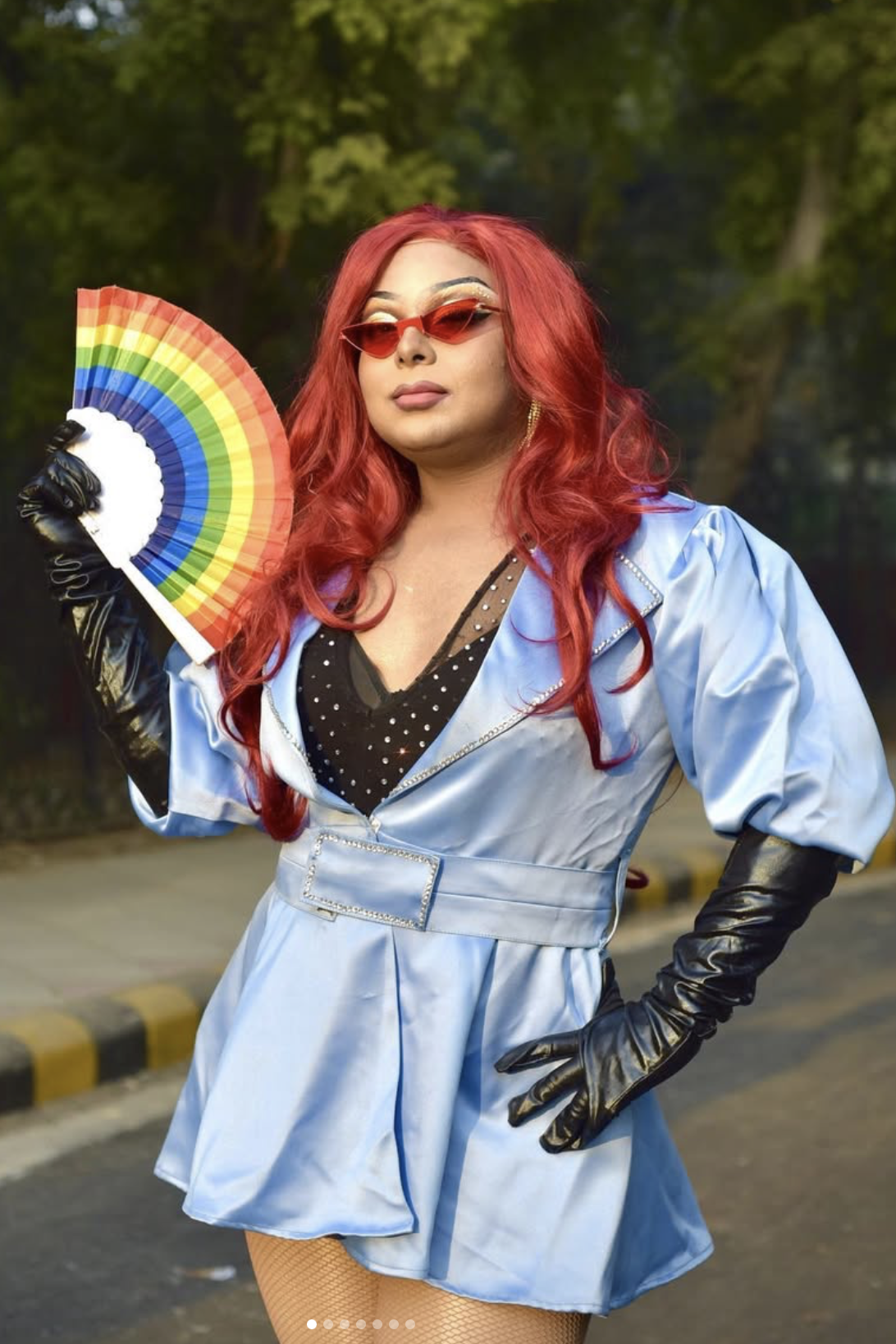
Drag queen: Lush Monsoon
“I always see them as an extension of that you are afraid of the feminine, so you are more okay with the masculine projecting as a feminine, and you putting their desire on that.”The issue, she says, is not only about the audience.A lot of the participants are queer. They are queer people from marginalised sections of society or spaces where the language of queer is not defined yet somehow exploited.A younger drag queen too, who has been in this space for around one year, held the same belief. They said that India has a culture of gender intermixing, something we can draw out as a rich queer heritage but modern drag is not a direct extension of this.“The reason that I got attracted to this form of drag, because I saw a certain amount of agency in it.”The point is not to deny India’s rich queer history but to make space for its even more vibrant present.As of today, there are only a handful of venues and spaces for drag performers. Most of the queens interviewed said Indian drag still doesn’t carry the same stature as its Western counterpart, which makes it hard to find venues, build audiences, and turn performance into a sustainable career.Venues like KittySu and the Lalit chain of hotels pioneered the space, and it’s now getting a push from queer collectives like the GaySi family and smaller creators trying to build safer rooms for queens and their audiences.Yet, reaching a wider audience in the digital era will take a digital push. Every queen interviewed named the same first encounter with drag as an art form: RuPaul’s Drag Race. The show cemented its place in queer history, but there’s a need for an Indian platform that celebrates queerness and the art form on its own terms, instead of reducing it to comedy.Older drag queens have long faced the accusation of importing a Western culture that maligns Indian heritage. But that heritage has always had space for queer stories. It was colonialism that maligned it, criminalising hijra communities and policing gender through an imported Victorian morality, codified in 1861 as Section 377, a law that stayed on the books for 157 years until the Supreme Court struck it down in 2018.Getting there took decades of work the current generation didn’t have to do from scratch. Earlier drag queens fought not just for legal recognition but for the art form itself – pulling it apart from the crass, punchline version of drag Indian television has long been comfortable with.Noor Sins, a younger queen, put it simply: that fight mattered because it meant queens her age could grow up with contemporary, Indian, queer icons to look up to, not borrowed ones.
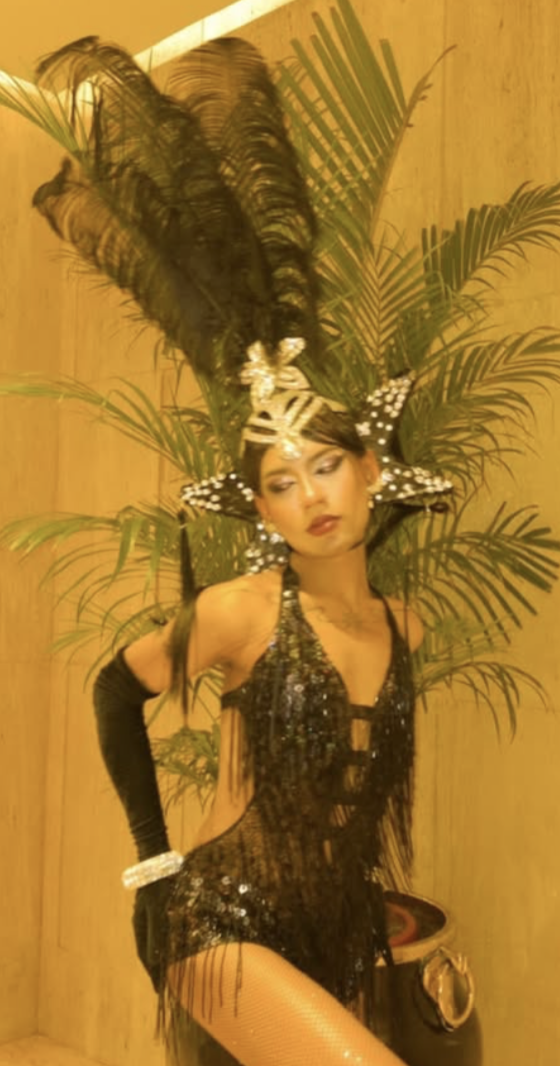
Drag queen: Noor Sins
It is perhaps here that the history of Indian drag and what Indian drag is becomes more interesting. In some sense drag always existed but for a lot of contemporary queens what did not exist was the ability to see themselves in the person performing it.
Share your thoughts in the comments
Be respectful · TOI community guidelines
The queens performing on stage are taking a form that has so often been used to make femininity into spectacle and making spectacle something they control. They are borrowing from the West without necessarily belonging to it, and drawing from Indian history without pretending that every man who ever wore a sari was a drag queen.The world is changing, the queens coming up now get to inherit something their predecessors had to build: a language, a community, spaces to perform, and most importantly, people who look like them already standing on a stage. But the stage has to become bigger, and the language more universal.De Beauvoir never wrote about drag. But she wrote the sentence that explains why it matters: one is not born, but becomes. For the queens performing in India today, that becoming is not simply about becoming a woman through makeup and dresses. It is about becoming visible to themselves, and then to one another, in a form that did not always give them someone to see.