
Apollo astronauts said moon dust smelled like burnt gunpowder; one breathed it in and developed sneezing, watery eyes and “Lunar Hay Fever” |
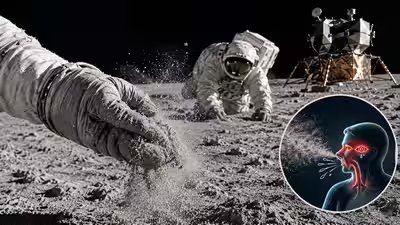
The Moon looks barren, silent and almost spotless from a distance. Up close, Apollo astronauts discovered something very different. Fine lunar dust clung to their spacesuits, coated equipment and followed them back into the spacecraft. When the dust entered the cabin, astronauts noticed an unexpected smell, comparing it to gunpowder.According to a paper in npj Microgravity, lunar dust has been produced over billions of years by meteorite impacts that fracture and pulverise the Moon’s surface. Unlike dust on Earth, these particles have not been weathered and rounded by wind and water, leaving many with sharp, irregular surfaces. Exposure to solar radiation can also give lunar dust an electrostatic charge, helping it adhere to spacesuits, equipment and other surfaces and making it easier for astronauts to carry it into spacecraft.When the dust came insideThe first Apollo crews quickly discovered that keeping lunar dust out of the spacecraft was difficult. The fine particles clung to spacesuits and equipment, allowing astronauts to carry them into the lunar module after their moonwalks. According to NASA, Apollo 16 astronaut Charles Duke described the smell of lunar dust inside the spacecraft as resembling gunpowder. During Apollo 17, Harrison Schmitt and Gene Cernan noticed a similar burnt or gunpowder-like odour after returning from the lunar surface. Because the Moon has virtually no atmosphere, the astronauts could not smell the dust while outside; the odour became noticeable only after lunar material entered the pressurised cabin. For Schmitt, the exposure had a physical effect as well. After inhaling the dust, he experienced sneezing, watery eyes and a sore throat. The symptoms were temporary, but the episode highlighted the potential respiratory and eye hazards that lunar dust could pose during future missions.Why scientists still worry about lunar dustLater research has shown that lunar dust could pose more than a temporary irritation. According to a study in Inhalation Toxicology, laboratory experiments found that lunar dust generated hydroxyl radicals and caused dose-dependent pulmonary lesions and changes in toxicity biomarkers in rats, indicating a potential respiratory hazard for astronauts exposed to the particles. The concern is greater for future missions that could keep astronauts on the Moon for weeks or months. Apollo astronauts experienced only short periods of exposure, so their experiences cannot fully reveal what repeated inhalation might do over longer periods. Understanding how lunar dust interacts with the lungs will therefore be important as NASA and other space agencies plan longer stays on the lunar surface.
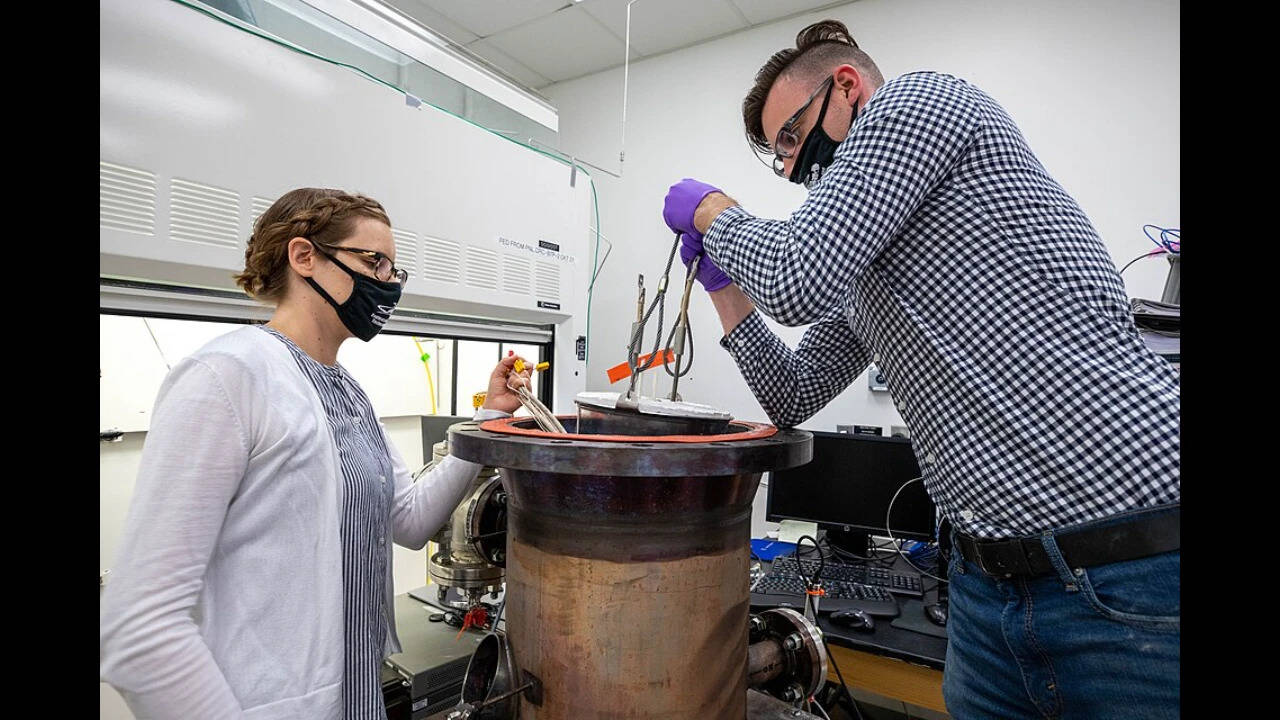
NASA researchers inspect a reactor used to test lunar-regolith simulants at Kennedy Space Centre in 2020. The work reflects continuing efforts to understand and develop technologies for handling lunar material. Image Credits: Wikimedia Commons.
The problem Artemis cannot ignoreThe Apollo experience has become part of NASA’s preparations for longer stays on the Moon. One response has been the development of technologies designed to monitor air quality inside future lunar habitats. The Space Canary, developed by Lunar Outpost through NASA’s NextSTEP programme, was designed to detect lunar dust and other airborne contaminants. The technology was later adapted for use on Earth as Canary-S, where it can monitor air pollution and emissions from wildfires.For future lunar crews, the lesson from Apollo is therefore not simply that lunar dust can cause temporary discomfort. Longer missions will require ways to monitor exposure and limit its effects on astronauts and equipment. Schmitt’s brief bout of “lunar hay fever” offered an early warning; Artemis-era missions will have to turn that experience into practical dust-management measures.