
Puerto Rico introduced small Indian mongooses to control rats in sugarcane fields; today, they are the island’s main wildlife reservoir for rabies
SSugarcane fields once dominated Puerto Rico’s economy and rats were a major pest in those fields, leading plantation owners to introduce the small Indian mongoose as a biological control measure. In the 1870s, plantation owners across the Caribbean imported the small Indian mongoose (Herpestes javanicus) from India to control rats in sugarcane fields, a decision that later created ecological and public health challenges. It seemed like a straightforward fix, but it was not.Mongooses spread rapidly across the islands where they were introduced. However, they failed to address the rat problem for which they were introduced. Rats in sugarcane fields are nocturnal, whereas mongooses are diurnal, so the timing reduced their effectiveness. Subsequent studies found that introducing mongooses caused significant harm to native birds, reptiles, amphibians and other fauna that had no defense against the predators. The mongoose became an invasive species on many Caribbean islands, including Puerto Rico. An unexpected disease reservoir The broader consequences emerged slowly. The first laboratory-confirmed mongoose rabies outbreak in Puerto Rico occurred in 1950 and represented the first major Western Hemisphere outbreak in this mongoose species. But the outbreak did not occur in isolation. Over the following decades, mongooses became the leading cause of wildlife rabies in Puerto Rico and have remained so. Recent surveillance reports from Puerto Rico attribute more than 70 percent of animal rabies cases to mongooses, although the percentage varies by year and reporting method. The species is also the primary terrestrial wildlife rabies reservoir in at least four Caribbean islands or island countries, including Grenada, Cuba and the Dominican Republic.There are currently no rabies vaccination programs for wildlife in Puerto Rico, unlike oral rabies vaccine bait programs used in parts of the mainland United States to target raccoons and foxes. As a result, mongoose-to-mongoose transmission remains uncontrolled, and studies of the species have found that surveillance data are limited.What the blood tests show However, determining the true prevalence of rabies circulating within a mongoose population in the wild is not an easy task. Postmortem analysis of brain samples from wildlife serves as the primary test for rabies virus, while the presence of antibodies in blood implies previous exposure rather than infection.In 2015, a serosurvey of 112 mongooses from two contrasting ecosystems in Puerto Rico, El Yunque National Forest and Cabo Rojo National Wildlife Refuge, found antibodies in 39% of the animals analyzed. From 2014 to 2021, researchers tested 464 mongooses at 11 sites across six habitats. Only about 17% had rabies antibodies, and the rates varied widely by habitat. Taken together, these studies indicate a consistent conclusion despite differences in figures: rabies exposure among mongooses in Puerto Rico is widespread but uneven, varying by location and habitat.
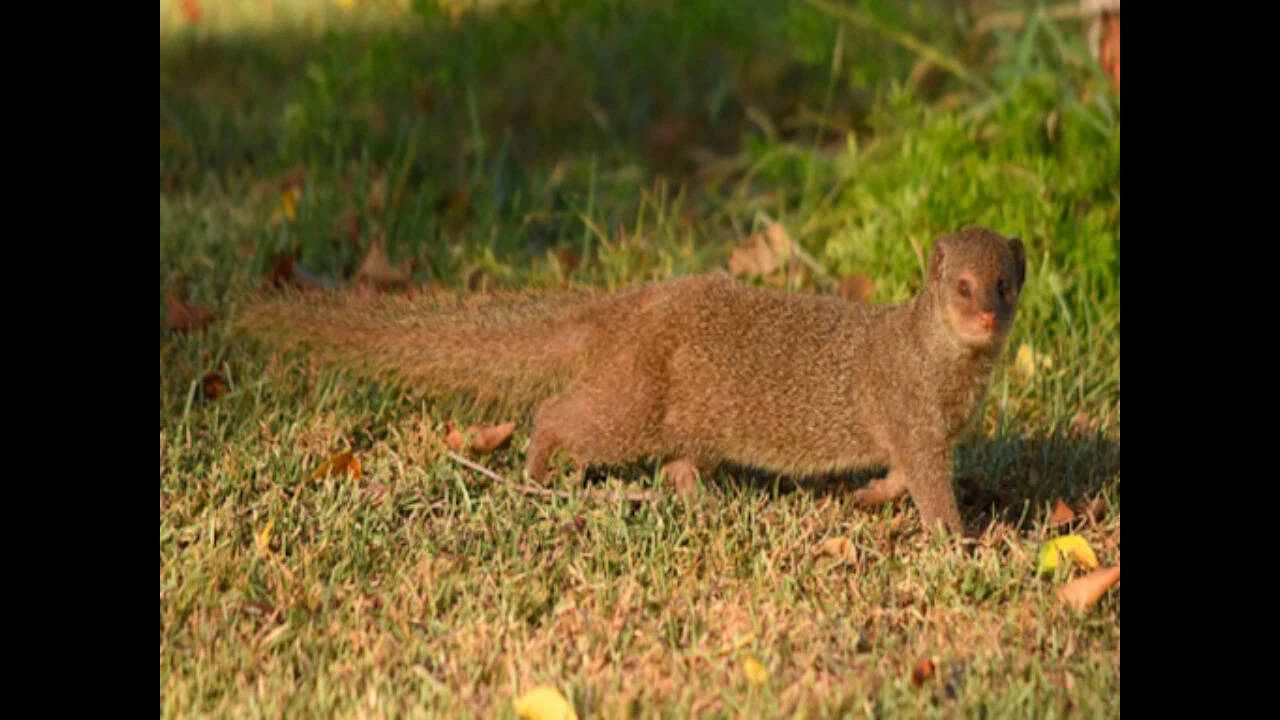
Feral small Indian mongoose (Urva auropunctata) running in Kailua-Kona, Hawaii Is., Hawaii, United States. Image Credit: Wikimedia Commons
A public health concern, not just an ecological one Mongoose bites also pose a risk to humans. Biologists who have studied the issue say that, on average, 280 people in Puerto Rico are bitten by mongooses each year. Rabies is usually fatal if left untreated, so each bite is treated as urgent and typically followed by post-exposure prophylaxis. Human deaths from mongoose-related rabies are rare, but Puerto Rico reported its first mongoose-bite death in 2015.There are several reasons why mongoose rabies is hard to manage. Small Indian mongooses are solitary but not territorial, so their home ranges overlap heavily with one another and with free-roaming domestic dogs. Furthermore, shared territories between mongooses and dogs could allow the virus to spread beyond wildlife. Mongooses can also carry other diseases besides rabies.Searching for a way to manage the problem It is not just that researchers have identified the mongoose rabies problem, some have started modeling the phenomenon, hoping to find a way to decide where a limited amount of resources devoted to surveillance and control would be best spent. For instance, in 2021, a study that appeared in the journal Viruses employed modeling of disease transmission particular to mongoose populations in the Caribbean in order to determine which knowledge gaps needed to be filled through field research.As with any intervention on a grand scale, there are obstacles involved: mongooses are abundant, have a wide range and are only partially known when it comes to their population dynamics.A century-and-a-half-old decision with a long tail Not all of this could have been anticipated by the plantation managers who initially asked for mongooses to protect their crops. It reflected a common practice at the time: introducing one species to control another without understanding how the new animal would behave in the wild. The sugarcane farming industry in Puerto Rico has greatly diminished over time, but the mongooses that were brought in to protect it are still here. What started out as an agricultural solution is now a public health and environmental issue that scientists continue to study to this day.