
Mystery of Medici Rulers’ Death Solved: Malaria, Not Poison, Found in Ancient DNA |

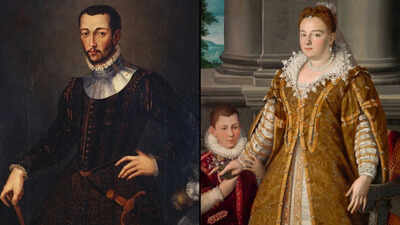
For more than four hundred years, the death of one of Renaissance Italy’s most powerful rulers and his wife, Francesco I de’ Medici and Bianca Cappello, has been wrapped in rumors. Did someone poison them? Was it a classic grab-for-power move by Francesco’s ambitious younger brother, Ferdinando, who became Grand Duke of Tuscany after their sudden passing in 1587? Historians have leaned toward murder by arsenic, until now.But now, a team of scientists (Yale University in the US and the University of Pisa in Italy) with access to DNA that’s been locked away for centuries may have finally cracked the case. Researchers working with remains pulled from Medici family tombs used advanced genetic testing and found clear evidence of something far less dramatic than poison: malaria. Their work, published in the journal iScience, points to a deadly mosquito-borne disease, not a secret assassination, as the likely cause of death for one of Europe’s most powerful rulers.
The 16th-century murder mystery : What happened?
Over four centuries ago, Francesco was no small name in Italy’s history. As the second Grand Duke of Tuscany, he ruled Florence between 1574 and 1587. The Medici family itself wasn’t just political; its legacy covered culture, science, and massive wealth. But as with any dynasty, the politics got messy, and when both Francesco and Bianca got violently ill with high fevers while staying at the Medici villa in Poggio a Caiano, near Florence. They were unwell for nearly two weeks before dying just hours apart, and everyone’s suspicion went straight to murder. Why? Because Francesco’s younger brother, Cardinal Ferdinando de’ Medici, was next in line to become Grand Duke.Historical letters and reported physical symptoms seemed to back up the poison theory. In 2006, researchers found what looked like arsenic in preserved tissue from Francesco. That discovery, plus hints of a family power struggle and Vatican correspondence describing symptoms that matched arsenic poisoning, kept the whispers alive for years.But the new research tells a different story.
What does new research say?
An international team from Yale and the University of Pisa dug into DNA from the rib bones of both Francesco and his younger brother, Cardinal Giovanni de’ Medici (whose bodies were exhumed back in 2004). Thanks to technology that wasn’t even available a decade ago, scientists hunted for lingering traces of infectious disease.What did they find? Genetic evidence of Plasmodium falciparum, the most lethal kind of malaria, in both brothers. Even more surprising, Francesco’s bones held signs of a second malaria parasite, Plasmodium malariae. Having both at once could explain why his case was so deadly.Digging through old records, this find makes perfect sense. Francesco’s doctors described his illness as “relapsing fever,” which is a classic case of malaria. Besides, Florence in the late 1500s suffered frequent malaria outbreaks, especially around marshy areas near the Medici villa, which was the perfect mosquito territory. The disease gripped Tuscany for centuries, only disappearing when big public health campaigns cleared it out in the 20th century.Previous theories about malaria were out there, but this time, it’s different. This is hard DNA proof, which is evidence preserved from the bodies themselves.
Has the murder mystery been solved yet?
Despite the new research, not everyone is ready to drop the murder theory, though. Supporters point to arsenic found in the tissue and the family’s backstabbing history. They argue that maybe he was both sick and poisoned; after all, disease and foul play aren’t mutually exclusive.However, the scientists behind the DNA work say this is the strongest scientific evidence yet. The malaria parasites are right there in the centuries-old skeletons; it’s not just guesswork based on diaries and letters.There’s another added bonus, too. The researchers uncovered never-before-seen genetic varieties of malaria from the Renaissance era. So, this work isn’t just for solving ancient murder mysteries. It also helps us understand how diseases shifted over time.What’s the verdict?None of this would’ve been possible even a few years ago. The techniques for pulling ancient pathogenic DNA out of old bones have advanced fast. Researchers can now revisit history, providing answers for mysteries once considered unsolvable, whether it’s old plagues, viruses, or now, the Medici saga.The argument between different camps might rage on, as there are plenty of scholars who’ll never give up on the idea of poison and betrayal. Still, with the new scientific findings, the balance has changed. Turns out, one of Europe’s most powerful dynasties might have been undone by a mosquito bite, not a cup of poison after all.