
Pioneering maestro P. Daroz’s lifetime affair with ceramics
The month of July saw a headline in ceramic arts in India with pioneering maestro of Ceramics and stoneware wizard PR Daroz ( Prakash Pandurang Daroz ) being awarded the prestigious Prof. MS Nanjunda Rao National Award. This rare honour was presented to him by the Karnataka Chitrakala Parishath in Bangalore in recognition of his lifelong dedication and remarkable contributions to the evolution of Indian ceramic art.

Pillars and passion
As a ceramic artist Daroz stands tall and distinguished. His pillar like wall structures, his many arches and architectural ensembles as well as pots and monumental jars and platters and bowls all come rushing back into memory from his days at Garhi studio, time at Bharat Bhavan Bhopal, as well as his slice of paradise at Aya Nagar in Delhi.
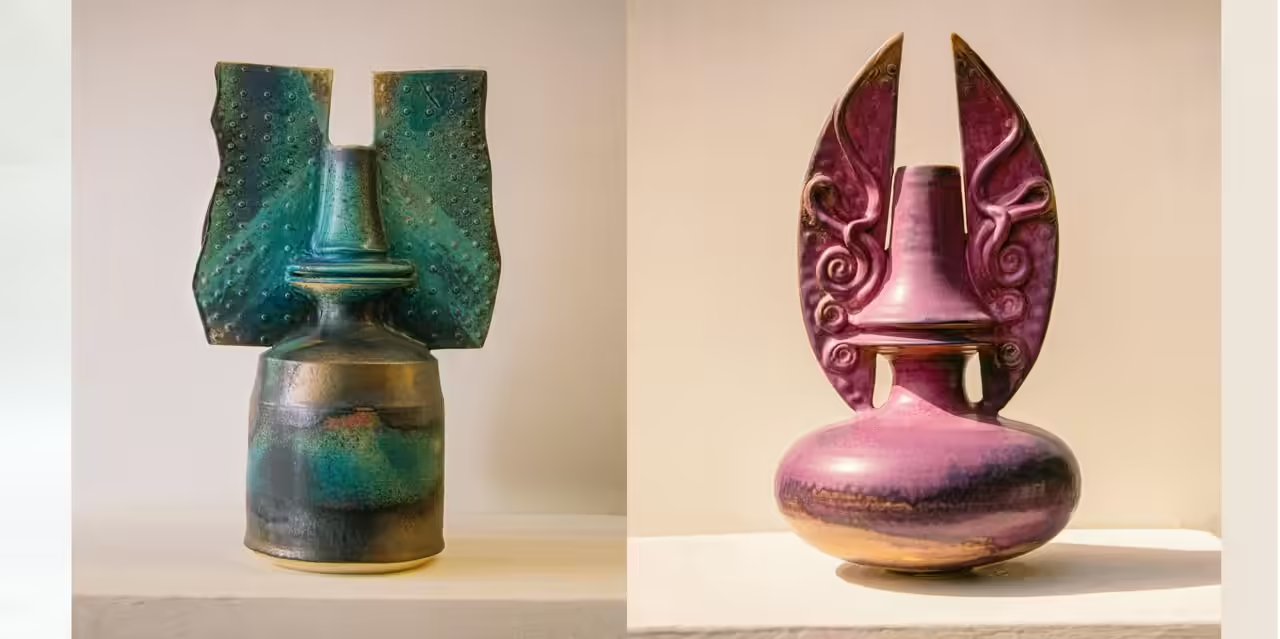
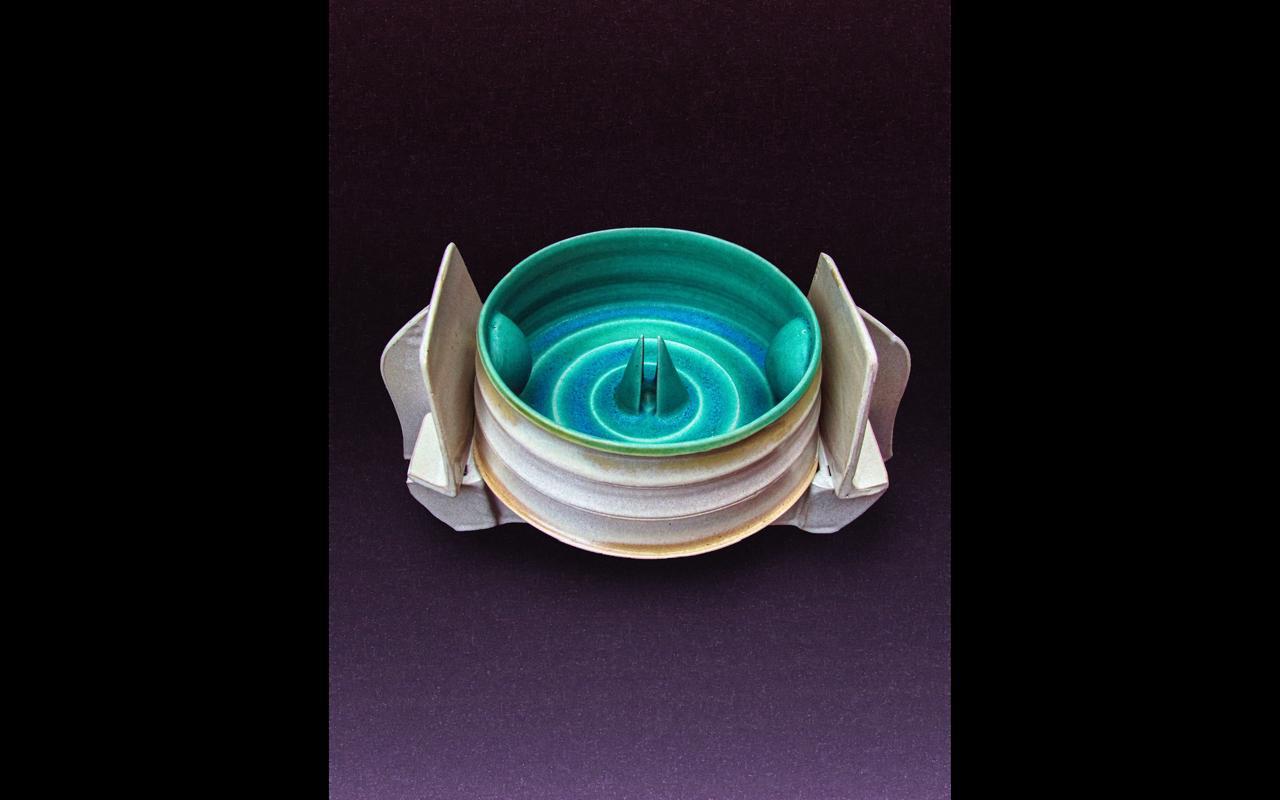
Espousing both lyrical restraint and chromatic brilliance, his life of nearly 6 decades is an exceptional early example of the highly influential artist’s most fervent series of pots fired and glazed with precision. Revelling in pure, unadulterated shades of blue and ash textural terrain , his work exemplifies Daroz’s pursuit of intensity of glazing and careful consideration of its manifold possibilities for a ceramic artist.

Pagoda series
Unforgettable were his pots seen at Shridharani Gallery Triveni Kala Sangam, in the 1990s. Daroz once described his exhibition series as “pots and platters to serve colour,” and art historian Kristine Michael eloquently notes how with this revelatory series, Daroz ‘ gave colour an unprecedented voice’. All his series have proved to be an enduring influence on succeeding generations of ceramic artists, too. A look at works reveals how he has matched the grandeur of impact and influence.
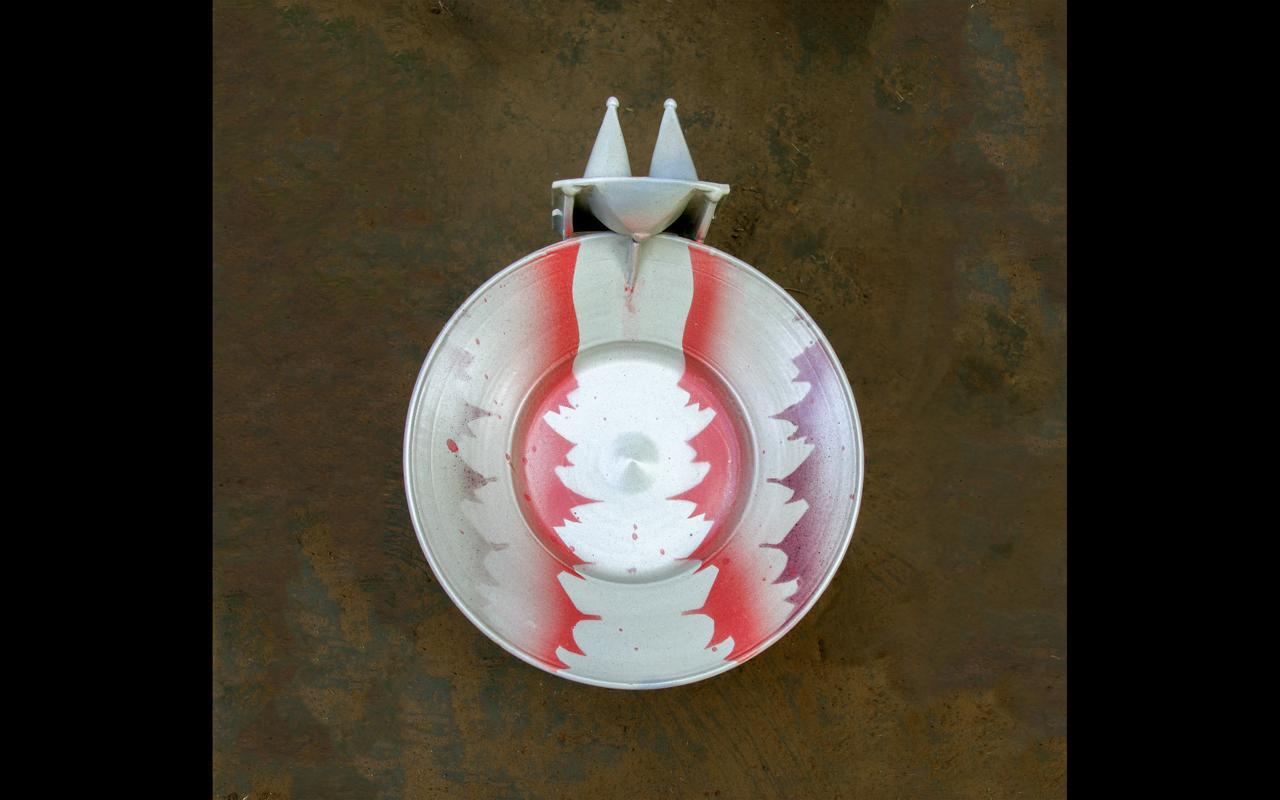

60 years of exploration
Daroz’s love and passion for clay goes back to over 60 years of explorations, discoveries and inventive odysseys. While he has created stellar creations of mounds, moulds, hand built magical pots and small quaint wonders his love for clay has created its own journey of symbolic identities.
In 2006 when I curated Terra Natura at Gallerie Nvya in Delhi he spoke of his lifelong affair with the rudiments of clay and said, “ Clay is many things to a potter. You learn to understand its softness and then work with it in tenderness. For me it has always been a medium that is both supple as well as tough. Whether I was moulding it or storing it for me it has always been alive and full of possibilities.”
Barium blue
At Garhi studios and even later he was famous for his experiments with Barium blue and his pots stood like sentinels of antiquity that held their own grace within the moulded magic of its master Daroz. Dipali Daroz states, “He abandoned oatmeal glazes for a vibrant matte Barium blue and pink. The play of visual illusion through rapid throwing movement retained the intensity of creation even after firing.”
Daroz reveled in works that were embellished in the finese of matte finishes with Barium as the key ingredient in creating beautiful, dry, and velvety matte surfaces, particularly when combined with zinc or magnesium. Vibrancy of colour and saturation were important for achieving the hues of crystalline blue and turquoise tones with hints of copper colorants. “Minerals and alkaline earths are the key to the fusion of the glaze on the clay body,” explained curator and critic Kristine Michael when she curated his solo at the India Art Fair.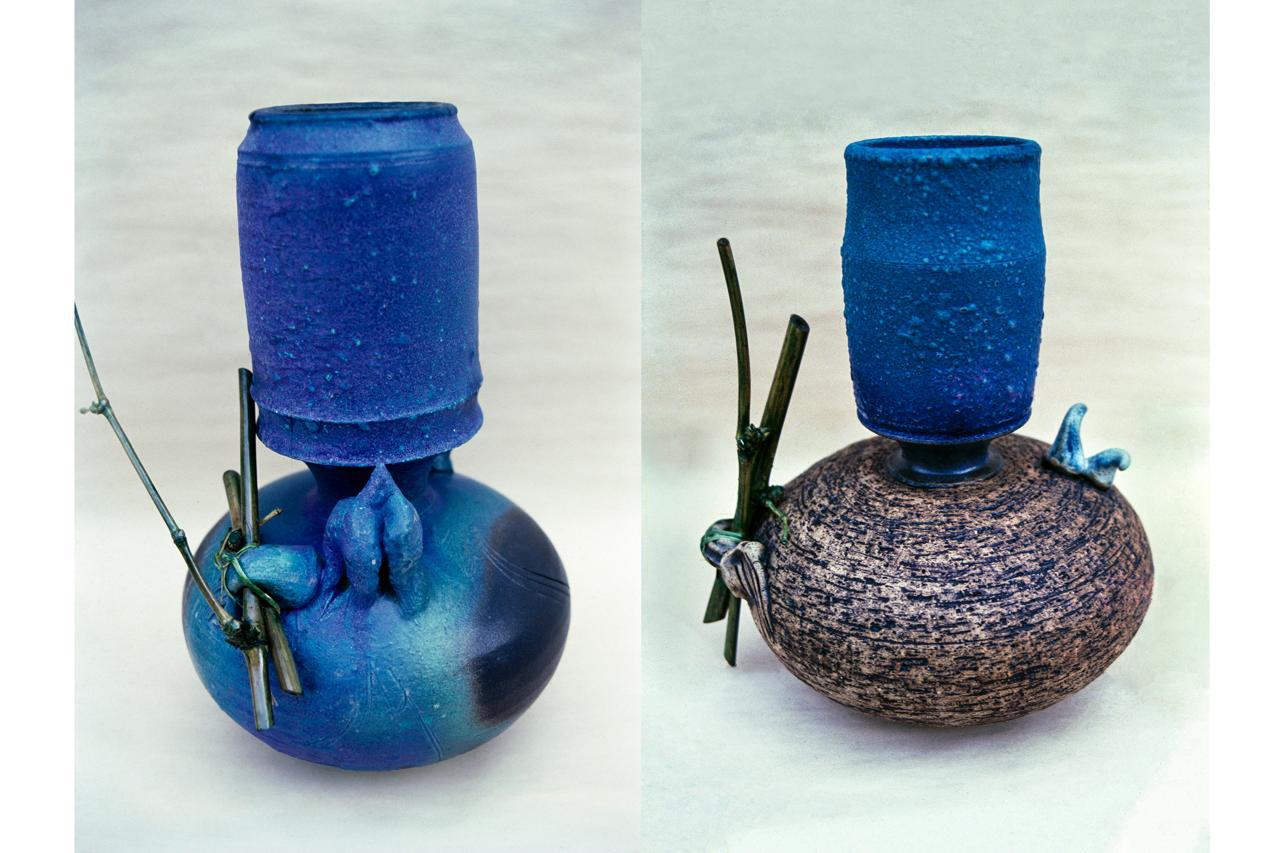

Symbiosis series
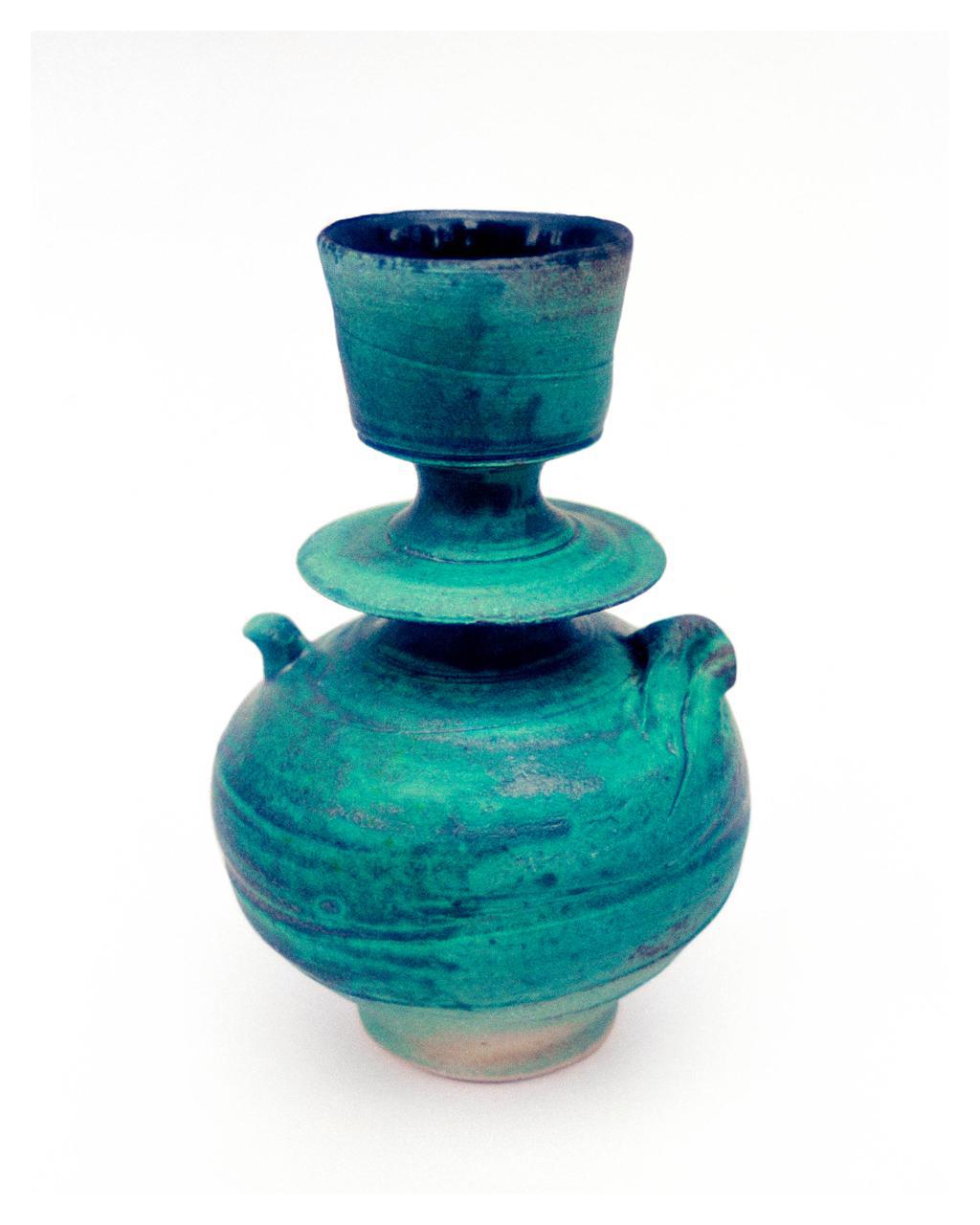
Daroz is known for his Symbiosis series created during a month long stay at Malaysia and Singapore in 1988. The Indian water pitcher and the glass lantern were both objects of inspiration and it was the moss green tones of the evergreen forests that created lush tropicana in terms of glaze and fervour in these pots. Ebrahim Alkazi was one of his greatest collectors and included Daroz in many ceramic exhibitions. The incorporation of bamboo adjuncts and soft appendages of clay all became a part of his elemental inclusions that added vivacity to his works.
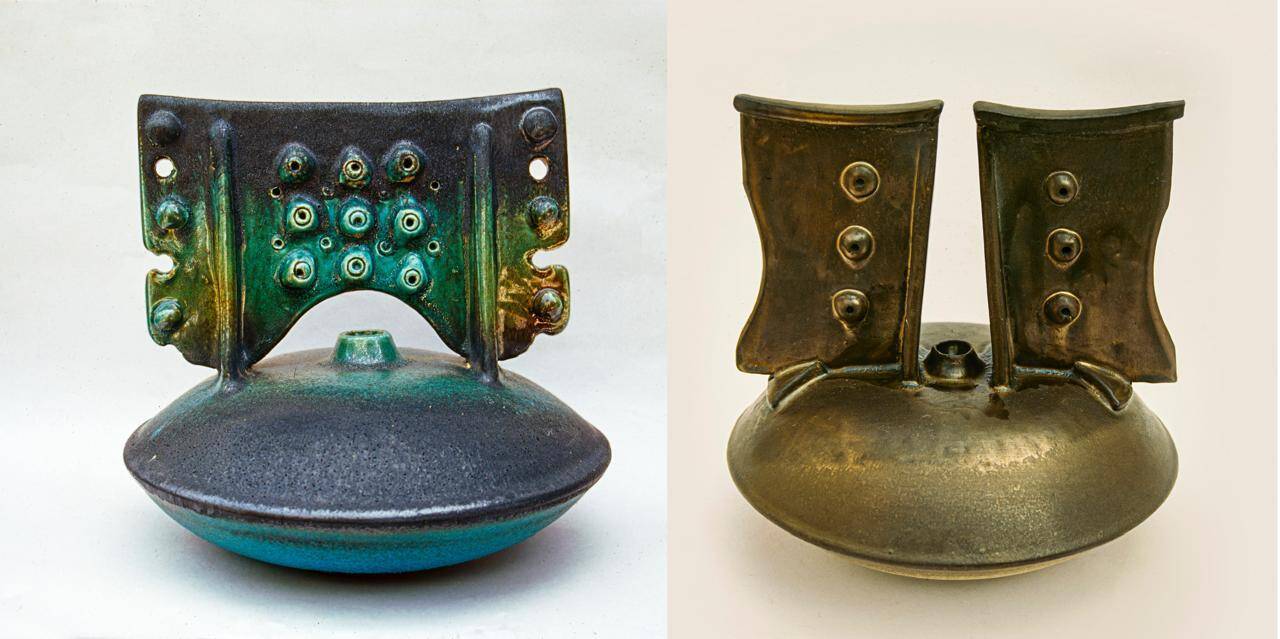
Architectural planes, voids and architectural elements all became a part of his vocabulary. Of great import was his 1991 commission at the Hyatt Regency Delhi foyer of the Head Gear series that saw the amalgam of Indian performing arts as well as South Asian accents of Samurai warriors, Yakshagana and Kathakali masks, Telangana jewellery and Buddhist stupas.
Head gear
Daroz’s Head Gear series were created with motifs from Chhattisgarhi tribal art. His integration of tribal folk idioms with modern aesthetics created a series that spoke to the past and the present. This series was fired at Bharat Bhavan Bhopal .Interestingly in the early 1980s, Daroz——was invited to set up the ceramics studio at Bharat Bhavan. These years gave him deep exposure to its famous collection of central Indian tribal arts. He was deeply influenced by their understanding and was inspired to include geometric, architectural, and spiritual emblems to his ceramic forms and contours.

Lama series
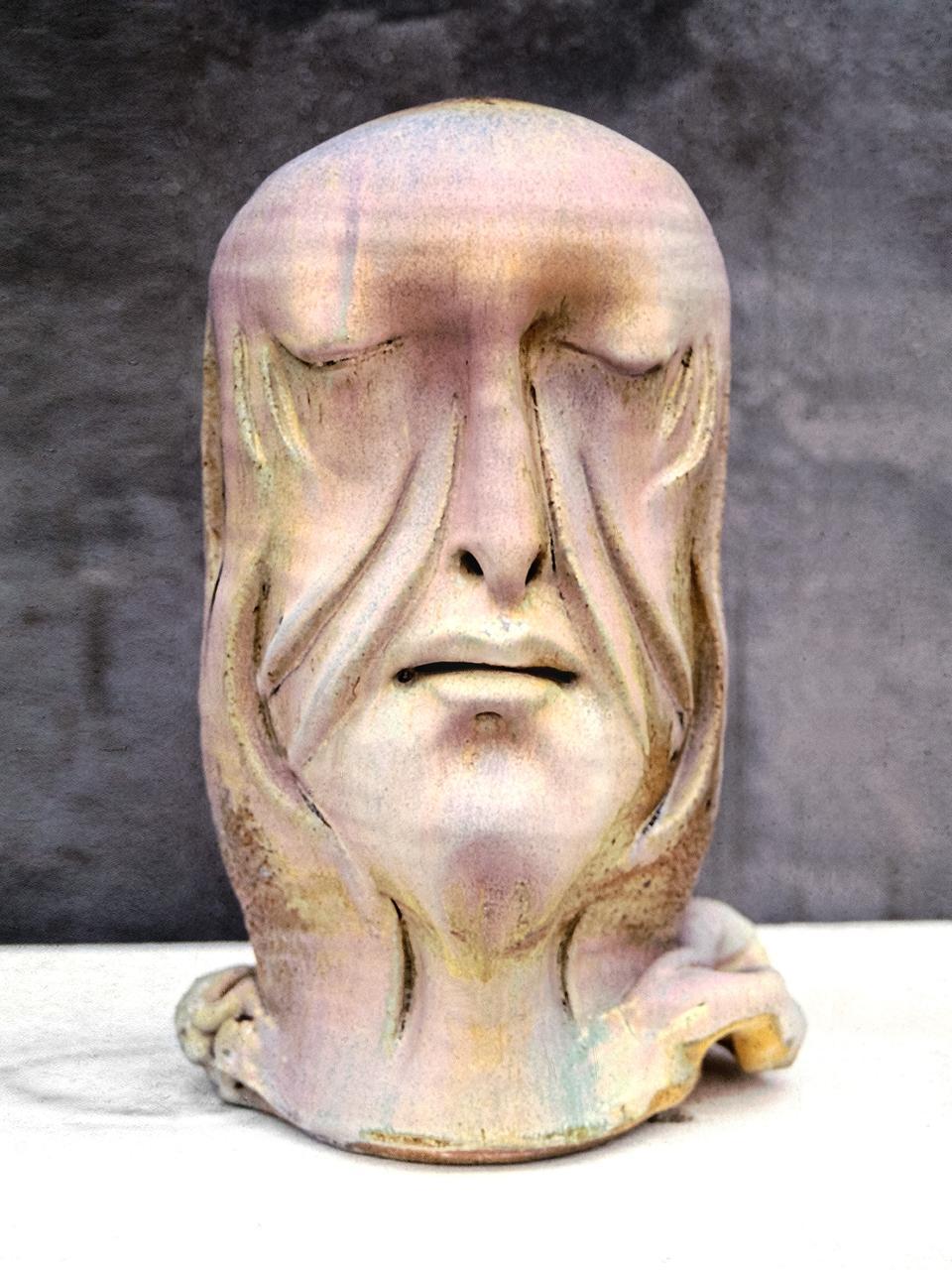
The Lama series 1987 in Dolomite were also created at Bharat Bhavan Bhopal in a wooden kiln. According to Daroz Dolomite has important qualities and properties for ceramic artists. It is highly prized for creating rich, “silky” satin-matte surfaces, stabilizing colour development, and minimizing glaze cracking while firing. This work stands apart for its emotive evocations and creates the mood of a monk in many moods.
Of historic worth are his many mosaic series created as commissions over years and influenced, in part, by research of architectural nuances all over the world. His glazing and firing practices and experience allow us to see the smallest underlying substances ever observed in the art of ceramics. Inspired by the natural world around him, his study of the natural lifestyles of tribes in India has made him translate those physical realities into his forms. He says to TOI :
“ Through all of my work, I’m searching to depict what feels essential, elemental, and universal in ceramics.
Disclaimer
Views expressed above are the author’s own.