How to make a football superpower? It takes a village, and a ladder
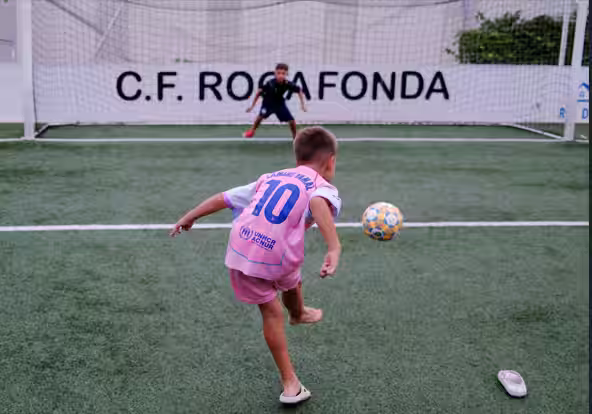
Spain will face Argentina in the final of the World Cup. But how did either country get to be a football superpower? How did Norway, with less than 6 million people —the size of Kozhikode or Lucknow—become a feared contender? Why does Ghana mount a serious challenge but not Kenya, with similar wealth and population? Conversely, why does Kenya have the best marathoners but not Ghana or Tanzania?
Not talent alone
The search for answers began in Jamaica. How had this small island nation, with just 3 million people, managed to produce its glorious succession of world-beating sprinters, including the iconic Usain Bolt? After interviews with dozens of runners, coaches, managers, journalists, sports historians, and administrators, together with visits to athletics meets, coaching sessions and archives, the story that emerged was revealing. Athletic Jamaicans have become champion runners—and not cyclists, golfers or footballers—because a ‘ladder of opportunity’ has been constructed that any child in Jamaica can easily access, which leads to successively higher levels of performance as sprinters. No similar ladder exists for the other sports.
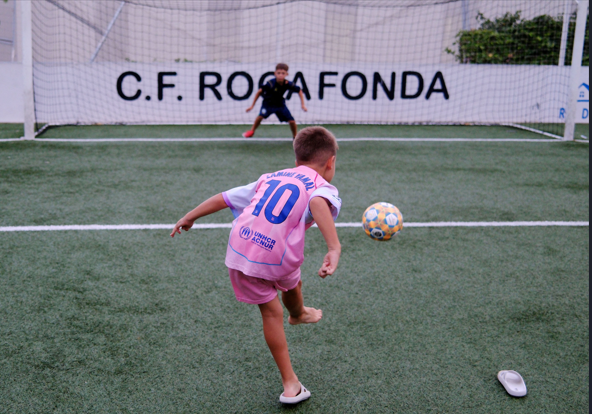

Talent is everywhere, but not opportunity. Raising talent to world-class excellence requires investing in structured pathways of a particular nature. Further research into different contexts and specialisations — such as tech entrepreneurs in Estonia, marathoners in Kenya and Ethiopia, classical musicians from Venezuela and the worldwide Sistema, wrestlers in Haryana, teachers in Finland, civil servants in China, women golf players in South Korea, and interestingly, hackers in North Korea—revealed that though there are differences among these flows, each system of excellence is built around a common core architecture.
Open access is key. You don’t know, until you find it, where a future talent may be hidden. In Jamaica, every school holds annual athletics meets, embedded within the calendar of the national athletics federation. Kids may be running barefoot on dirt tracks, but the timing equipment is world-class and the judges accountable to the national federation. If the ladder of opportunity had not been extended to the distant interior, and if nepotism had ruled instead of transparent and objective standards, people like Usain Bolt — a grocer’s son from an outback village — may never have been ‘discovered’. Creating national and state academies is useful but hardly enough. A clear pathway must lead from the grassroots to higher levels. Not every step needs to be in place at the start, but performance improves as the ladder grows stronger. Jamaica’s medals tally ratcheted upward as the ladder was built over 40 years post-independence—even as geography and genetics stayed constant. In the same manner, South Korea built a hierarchy of golf tournaments, developing world champions in a sport that had barely existed here 50 years earlier.
Sport and mobility
The production of champions is thrilling, but it is not the only, or even the most attractive, return on investment. To survive and thrive, a system of excellence must become a giant social mobility elevator. Only one in many millions will become world champion, but if everyone else were to be simply cut with no reward, including those who had devoted many years and reached the penultimate levels, then younger children considering the activity and their parents would be severely demotivated.
Alert to this danger, systems of excellence invest in building offramps leading to secure careers for the also-rans. Take Chennai, where a flow of world-class chess players has come up in the past few decades. More than 30 grandmasters live in the city, but many more, close to 10,000, individuals derive good livelihoods from chess. Lower-ranked players have set up neighbourhood centres, making around Rs 50,000 monthly; grandmaster trainers operate internationally, earning in the millions; there is a growing corps of tournament organisers, arbiters, commentators, online coaches, tour organisers, sponsors, agents, etc. Parents know that even if their child does not become the next Praggnanandhaa, they will attain secure livelihoods and respectable positions. An entire society comes together around the project, providing collective validation and generating star power and public adulation.
Winning formula
Success in football is thus not simply a function of population size, wealth, or luck, but a product of decades of collective effort, resulting in a dense ecosystem of youth academies, school and club competitions, coaching pipelines, scouting networks, professional leagues, sports science programs, and role models and elite players, and offramps leading to careers as coaches, trainers, referees, administrators, etc. Spain has built a 10-step ladder leading from the grassroots through the regional and national levels. Even as attention is focused on superstars in La Liga, future stars are constantly identified, nurtured and elevated. That’s how Argentinian football is also organised. That’s how Norway got to be a contender. And that’s how high cities like Lucknow and Kozhikode can (and should) aspire.
Disclaimer
Views expressed above are the author’s own.